
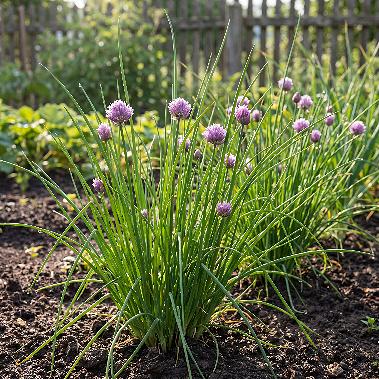
Chives
Also known as: Garden Chives, Common Chives, Civette, Schnittlauch
Chives are a slender perennial herb in the allium family, grown for their hollow, grass-like leaves and pompom lavender blossoms. Among the mildest of the onions, they bring a delicate savory freshness that brightens rather than dominates, earning them a place in the classic French fines herbes blend and at the finish of countless dishes.
spring, summer
Mild and grassy-sweet with a gentle allium warmth — softer and fresher than onio...
Allium schoenoprasum
herb
Pairs Well With
Chives are most cherished as a finishing herb: snip them over scrambled eggs, omelettes, and frittatas, or stir into soft scrambled eggs just before serving for their iconic pairing.
They are a natural companion to potatoes — scatter over boiled new potatoes with butter, fold into potato salad, or blend into the classic French pommes parmentier.
Chives form one quarter of the French 'fines herbes' blend (with chervil, tarragon, and parsley), used to season delicate egg, poultry, and fish dishes.
Stir finely snipped chives into sour cream, crème fraîche, and cream cheeses to make the classic toppings for baked potatoes, blinis, and bagels.
The edible lavender-pink blossoms make a striking garnish for salads, soups, and savory custards, and can be separated into florets and scattered whole.
Chives have been gathered and cultivated across Europe and Asia for centuries; wild chives were a familiar spring green in northern European cottage gardens long before formal cultivation.
In traditional French cuisine, chives were enshrined in the 'fines herbes' quartet, codified in the 19th century for light, refined dishes that stronger alliums would overpower.
Eastern European and Central Asian kitchens have long prized chives — both leaves and flowers — as a spring tonic and garnish for dumplings, soups, and fermented dairy.
Chinese cuisine has used flowering chive stems and garlic chives (Allium tuberosum) for millennia in stir-fries, dumplings, and savory pancakes.
European folk herbalism valued chives as a gentle digestive and circulatory tonic, believed to share — in milder form — the healthful qualities of garlic and onion.
Always snip chives with scissors or a sharp knife rather than chopping with a dull blade, which bruises the delicate hollow leaves and turns them slimy.
Add chives raw or only at the very end of cooking; prolonged heat destroys their fragile aroma and turns the bright color a dull khaki.
For the classic fines herbes blend, combine equal parts snipped chives, chervil, tarragon, and parsley, and use within a few hours while the aromatics are at their peak.
To use the flowers, break the pompom into individual florets and scatter over salads or soups; the blossoms carry a slightly stronger, more peppery allium flavor.
Fresh chives keep best standing in a glass of water in the refrigerator, or wrapped loosely in damp paper for several days; they can also be frozen in small bundles or chopped and frozen in oil cubes.
Garden chives (Allium schoenoprasum) are safe and widely eaten in culinary quantities by the general population.
Like other alliums, chives can be toxic to dogs and cats in significant amounts; keep pets away from concentrated preparations.
Individuals with known allium or onion allergies should introduce chives cautiously, as cross-reactions are possible.
Forage only from areas you are certain are free of pesticides and not contaminated by roadside runoff, and confirm positive identification, as slender grass-like plants can be confused with toxic look-alikes.
Concentrated or medicinal-strength preparations should be used modestly, particularly during pregnancy.
Chives are a hardy perennial that returns each spring, often among the first fresh greens in the garden and a welcome sign of the season's renewal.
In European folk tradition, chives were planted at the edges of vegetable beds both for the kitchen and to deter pests — their sulfur compounds were believed to ward off insects and protect neighboring plants.
Their pompom blossoms are a magnet for bees, butterflies, and beneficial insects, making chives a valued companion plant and pollinator resource in cottage and kitchen gardens.
The Romans and medieval Europeans alike associated alliums with vitality and protection, and chives were sometimes hung in kitchens as a charm of health and abundance.
Today chives remain a staple of herb borders, window boxes, and permaculture guilds, supporting biodiversity while supplying a near-continuous harvest of leaves from spring through autumn.
Available Near You
Enter your ZIP code to find farms with chives near you.
Recipes with Chives
2 recipes featuring Chives

Chicken and Herb Sausage
Celebrate the bounty of the garden with these juicy, herb-packed chicken sausages. Infused with fresh aromatics and rich butter, they are the perfect centerpiece for your next sunny, seasonal gathering.

Potato Salad with Bacon and Egg
Elevate your next gathering with this creamy potato salad, where crispy bacon and jammy eggs meet a zesty herb-infused dressing. It is the perfect, comforting side dish to celebrate any season at your table.