
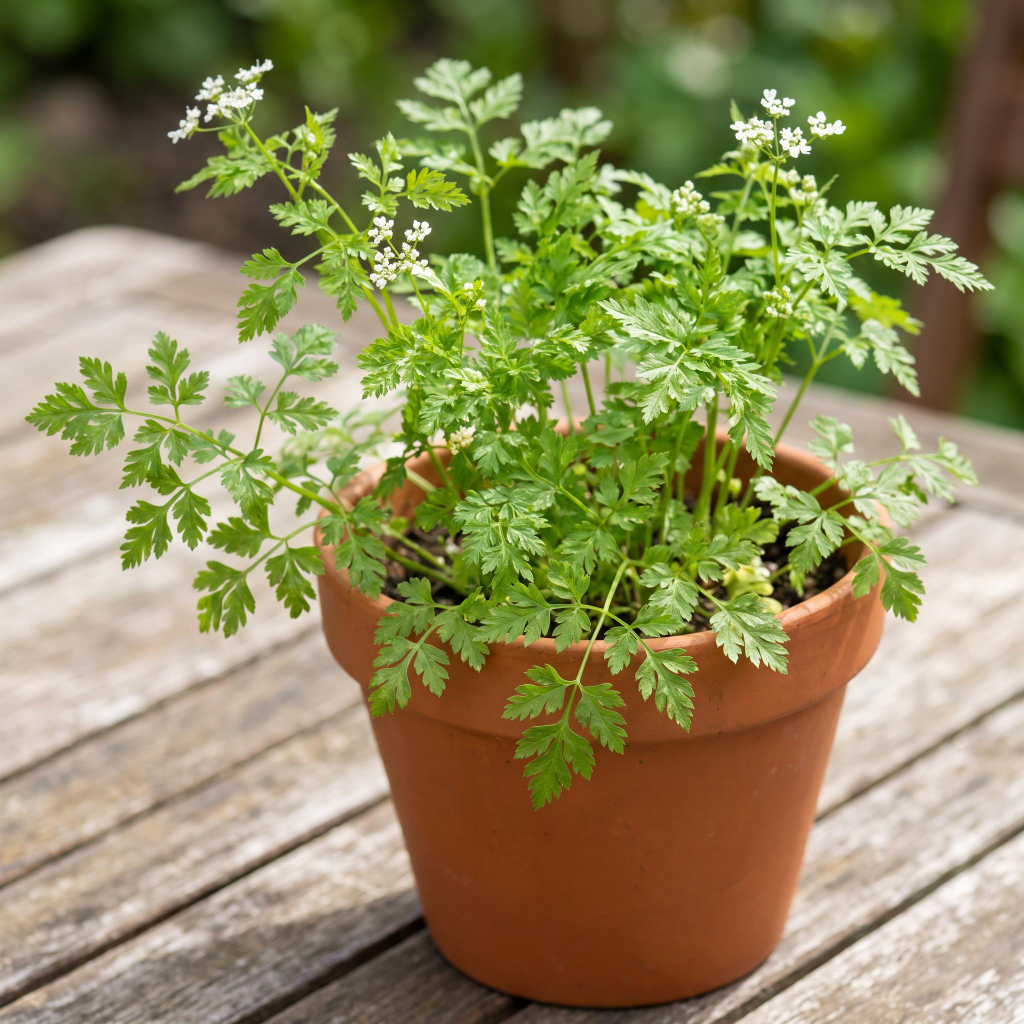
Chervil
Also known as: Garden Chervil, French Parsley, Cerfeuil
Chervil is a slender annual in the carrot family, prized in French cuisine as one of the four 'fines herbes.' Its lacy, pale-green leaves carry a fragile anise-parsley perfume that must be coaxed with gentle heat or added raw at the last moment, making it a hallmark of elegant spring cooking.
spring
Delicate and refined, with anise-like licorice notes lifted by a fresh, faintly ...
Anthriscus cerefolium
herb
Pairs Well With
Chervil is a cornerstone of the classic French 'fines herbes' blend alongside chives, tarragon, and parsley, where it contributes a delicate anise lift to omelettes, scrambled eggs, and quiches.
Stir finely torn leaves into cream sauces, veloutés, and soups at the very end of cooking — a pinch transforms a pale spring broth or potato leek soup with quiet elegance.
Chervil pairs naturally with asparagus, peas, new potatoes, and mushrooms; scatter whole sprigs over gently cooked vegetables or fold into buttered pasta and risotto.
Use it raw in salads, vinaigrettes, and herb butters, where its fragile aromatics shine without the competition of heat.
A few sprigs steeped in white wine vinegar produce a pale, aromatic infusion for dressings and deglazing.
Chervil has been cultivated in European kitchen gardens since antiquity; the Romans are believed to have used it as both a seasoning and a gentle medicinal herb.
In medieval Europe it was valued as a Lenten pot-herb, eaten fresh or cooked into pottages during the early-spring hunger gap when few other greens were available.
French cuisine elevated chervil to canonical status through 'fines herbes', a blend codified in the 19th century to season delicate egg, poultry, and vegetable dishes that stronger herbs would overwhelm.
Traditional European herbalism prescribed chervil infusions as a mild tonic, diuretic, and digestive aid, and applied crushed leaves as a refreshing skin wash.
Monastic gardens across the Continent long maintained chervil as a staple herb for both the table and the apothecary.
Handle chervil with care — its aromatics are highly volatile, so add it raw or only in the final moments of cooking to preserve its character.
Strip the lacy leaves from the stems and tear them just before use; chopping too early dulls the flavor and bruises the tender fronds.
For the classic fines herbes mix, combine equal parts chopped chervil, chives, tarragon, and parsley, using the blend within a few hours for peak freshness.
To infuse vinegars and oils, submerge generous sprigs in gently warmed (not hot) liquid and steep for several days, then strain.
Store cut chervil like cut flowers, stems in a glass of water under a loose bag in the refrigerator, and use within a few days — it does not keep as well as hardier herbs.
Garden chervil (Anthriscus cerefolium) is safe and widely eaten in culinary quantities.
It should not be confused with wild chervil (Anthriscus sylvestris) or other members of the carrot family, some of which — such as fool's parsley or hemlock — are toxic; always harvest or purchase the true garden variety.
Pregnant and breastfeeding women should avoid concentrated or medicinal-strength preparations and enjoy chervil only in normal food amounts.
Individuals sensitive to plants in the Apiaceae (carrot) family should introduce chervil gradually.
Forage only with expert guidance, and rely on cultivated chervil from trusted sources to ensure positive identification.
Chervil is a cool-season annual that thrives in the damp, dappled margins of spring gardens, often one of the first fresh greens to emerge after winter and a cherished signal of the season's return.
In European folk tradition, chervil was associated with renewal and Lenten fasting — a humble green marking the end of winter privation and the start of fresh eating.
Some folklore held that chervil brought a quiet clarity of mind, and sprigs were sometimes carried or added to spring tonics intended to 'freshen the blood.'
As a member of the Apiaceae family, chervil produces umbels of tiny flowers that attract beneficial insects and pollinators, supporting biodiversity in herb and vegetable gardens.
It is a key plant in traditional French potager designs, interplanted with lettuce and early vegetables to make the most of cool spring soil before summer heat causes it to bolt.
Available Near You
Enter your ZIP code to find farms with chervil near you.
Recipes with Chervil
Coming Soon