
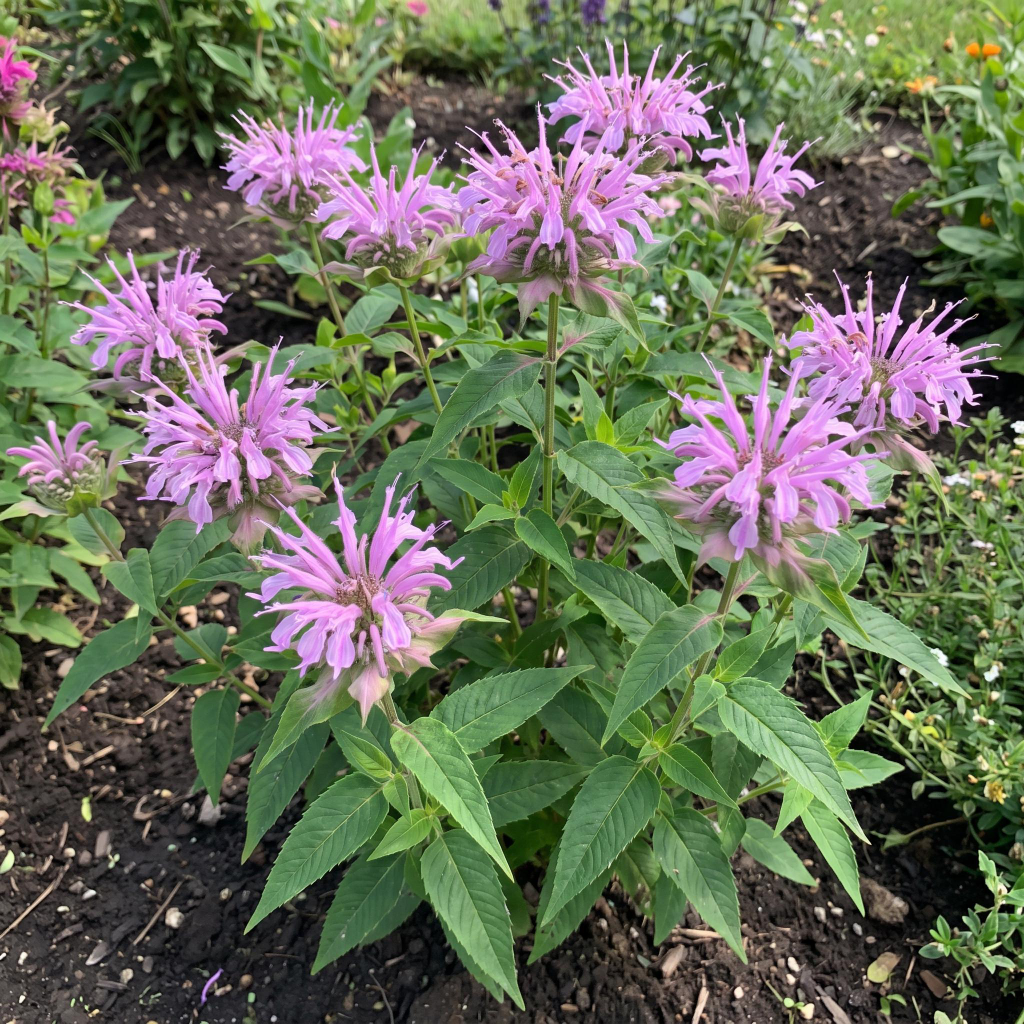
Bergamot
Also known as: Wild Bergamot, Bee Balm, Oswego Tea, Horsemint
Wild bergamot, commonly called bee balm, is a hardy North American perennial in the mint family prized for its shaggy lavender-pink flowers and intensely aromatic leaves. Long valued by Indigenous peoples and later adopted by early settlers, it lends a distinctive citrus-mint complexity to teas, jellies, salads, and savory dishes.
summer
Earthy and minty with bright citrus-floral top notes reminiscent of Earl Grey te...
Monarda fistulosa
herb
Pairs Well With
Bergamot leaves and flowers are most famously steeped into a fragrant herbal tea — the Indigenous 'Oswego tea' that early American colonists adopted after the Boston Tea Party.
Fresh leaves add a citrus-mint brightness to fruit salads, lemonades, and summer punches; torn finely they enliven butter lettuces, cucumbers, and chilled melon soups.
The flowers make striking, edible garnishes for cakes, cocktails, and sorbets, and can be candied or folded into soft butter for a fragrant spread.
Bergamot jelly, made from an infusion of the leaves and flowers, is a classic preserve served with roasted lamb, game birds, and warm scones.
A few bruised leaves added to vinegar, simple syrup, or honey infuse a warm, Earl-Grey-like perfume that elevates dressings, glazes, and desserts.
Several Indigenous nations of eastern North America — including the Omaha, Ponca, and Winnebago — brewed bergamot leaves as a remedy for colds, fevers, and respiratory complaints, and used poultices of the leaves for wounds and skin infections.
The plant's common name 'Oswego tea' comes from the Oswego people of present-day New York, who shared the infusion with colonial settlers, who in turn adopted it as a patriotic alternative to British tea after 1773.
In 19th-century American kitchen gardens, bee balm was a staple medicinal-culinary herb, used to ease digestive upset and soothe sore throats.
European herbal traditions adopted Monarda for its carminative and antiseptic qualities, often combining it with honey and lemon for winter tonics.
Modern herbalists still value wild bergamot as a gentle antimicrobial and relaxant, used in small amounts for teas and steam inhalations.
Use the youngest, most tender leaves for raw preparations; older leaves grow hairy and can be bitter, so they are better dried for tea or used in cooked infusions.
To make bergamot tea, pour just-boiled water over a small handful of fresh leaves and a few flower heads, steep 5 to 7 minutes, then strain and sweeten with honey or lemon to taste.
For syrups and honeys, lightly bruise the leaves before steeping in warm (not boiling) liquid to preserve the delicate citrus aromatics.
Add fresh leaves at the very end of cooking; prolonged heat dulls the characteristic bergamot perfume and turns the flavor muddy.
Dry intact sprigs in a single layer in a cool, airy spot out of direct sun, then crumble the leaves and store in an airtight jar for winter teas and rubs.
Bergamot (Monarda) is generally safe in culinary quantities, but it should not be confused with the unrelated bergamot orange (Citrus bergamia) used to flavor Earl Grey tea or with bergamot essential oil, which is concentrated and potentially irritating.
Pregnant and breastfeeding women should use strong or medicinal-strength preparations cautiously and in moderation.
Some individuals with sensitivity to plants in the mint family may experience mild skin or stomach irritation; discontinue use if any reaction occurs.
Harvest only from areas you are certain have not been treated with pesticides or roadside runoff, and always confirm a positive identification, as Monarda has look-alikes in wild settings.
Medicinal-strength doses are best prepared under the guidance of a qualified herbalist or healthcare provider.
The name 'bee balm' reflects the plant's deep ecological relationship with pollinators — its nectar-rich flowers are a magnet for bees, butterflies, and hummingbirds, making it a cornerstone of beneficial-insect and pollinator gardens.
Native American oral traditions hold that wild bergamot was a gift to the people, its appearance signaling the height of summer and a time of gathering.
The plant's dual identity as both wildflower and kitchen herb has made it a symbol of self-reliance in American folk culture, celebrated in garden clubs and prairie restorations alike.
Bee balm supports biodiversity in cultivated landscapes and is increasingly planted in native-pollinator conservation strips and cottage gardens across North America and Europe.
As a drought-tolerant perennial that thrives in poor soils, wild bergamot is also valued in permaculture and low-water landscape design.
Available Near You
Enter your ZIP code to find farms with bergamot near you.
Recipes with Bergamot
Coming Soon