
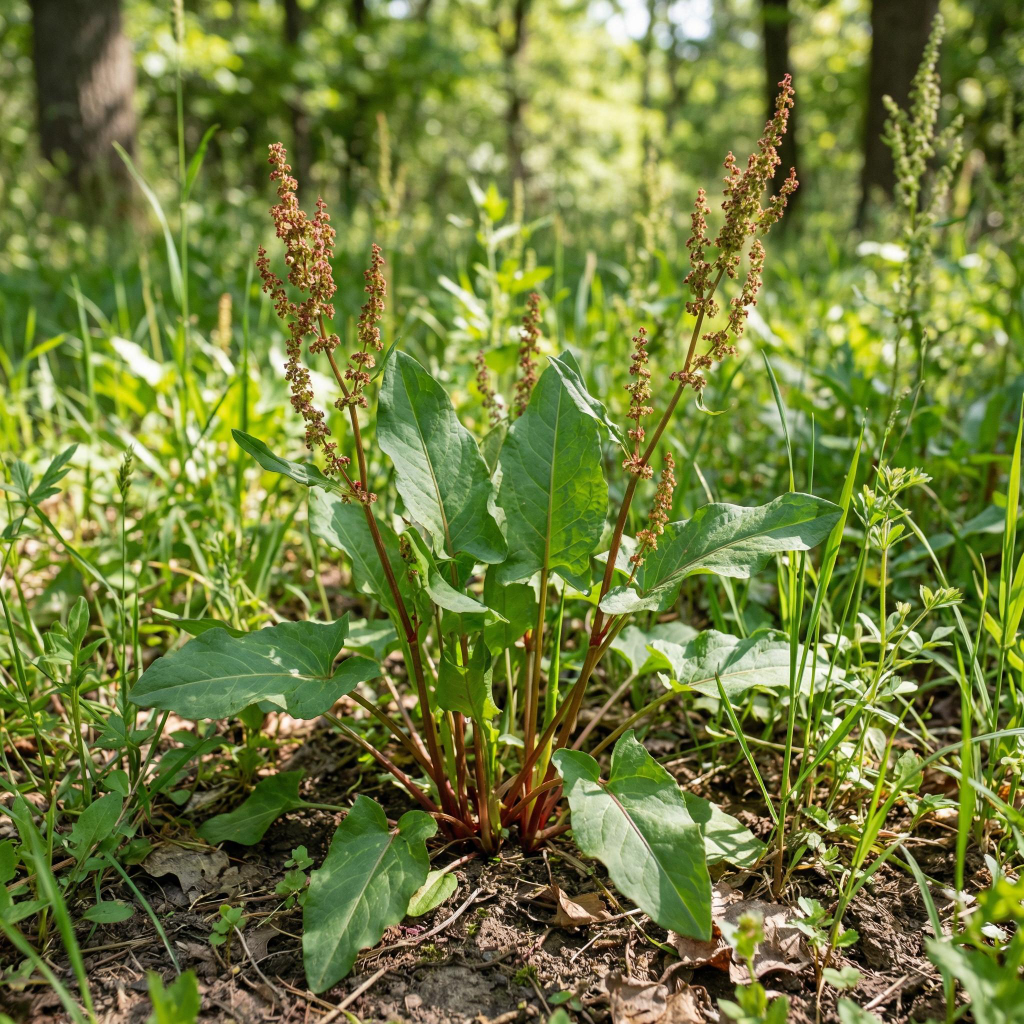
Sorrel
Also known as: Common sorrel, garden sorrel, French sorrel, sour dab (British school kids), Rau Chua (Vietnamese), gongura (Indian)
Native to Europe and Northern Asia where still grows wild. Once pretty fashionable—eaten and cultivated by ancient Egyptians, Greeks and Romans in quantity. Particularly loved by French, British and Italians in Middle Ages when improved varieties began to be bred in earnest (still fairly common in these countries). Major component of once wildly popular 'greensauce' (mixture of sorrel and other herbs, recipes from at least 12th century). Version Grüne Sosse from Frankfort, Germany still pretty popular. In Northern America however, pretty underappreciated vegetable. But tart, lemony flavor one of harbingers of spring often much loved once tasted. Looks sort of like spinach; common sorrel has spear-shaped deep green leaves, while French sorrel's leaves bit wavier.
spring, fall
Tart, lemony flavor. Described as tasting lemony, as well as like sour green app...
Rumex acetosa
vegetable
Pairs Well With
Sort of looks like spinach. Common sorrel has spear-shaped, deep green leaves. French sorrel's leaves bit wavier. Both have reddish-brown flower clusters when allowed to bolt. French sorrel said to be more mild (less sour) than common sorrel. Described as tasting lemony, like sour green apples, wild strawberries and kiwi mixed with basil and spinach. Look for leaves that are deep green and not at all yellow or wilted, with no black or mushy spots. Smaller leaves tend to be milder in flavor than larger ones—choose based on way you're going to use them (if in salads, smaller better; for soups and other cooked dishes, larger okay). Look for sorrel at farmers' markets—unlikely to find in produce aisle at conventional grocery store. Some types have reddish-brown veins and/or stems. Available mid-March through when weather warms, also fall crop.
Super perishable, usually won't last past day or two in fridge. Wrap in damp paper towels and stick in open zip-top bag in crisper drawer to extend fridge life just slightly. Very short shelf life requires quick use or preservation.
Raw in salads: Small doses only, too much can make sick. Spring lettuce salad, cabbage slaw, with fruit (strawberries, white peaches, beets). As herb: Chopped and added to legumes or eggs. Lemony dip: Addition to yogurt or sour cream. With fish/shellfish: Salmon with sorrel sauce. Greensauce: Historic preparation with veal, panko-crusted veal chops. Soup: Most common way to cook across many cultures. Green borscht (sorrel soup) Eastern European spring delicacy with sour cream, hard-boiled egg, croutons. French versions: Liberal cream and butter. Served hot or chilled. Vietnamese cuisine: Rau Chua used in herb plates (accompaniments to soups, spring rolls). Indian cuisine: Dal with sorrel (gongura pappu). Sweet dishes: Lemon cupcakes with sorrel meringue frosting. Strawberry sorrel sorbet. Cooking reduces oxalic acid content.
Pickled sorrel: Popular in Eastern Europe, used as condiment, easy process at home. Frozen: Whole leaves or pureed and frozen in ice cube trays. Dried: Leaves can be dried, used like dried herb. Super perishable fresh (1-2 days) makes preservation important.
Very high in Vitamin C—just 1/2 cup provides about half daily Vitamin C needs. High in Vitamin A and potassium. Good source of iron. CRITICAL WARNING: Contains very high amounts oxalic acid (makes veggie tart)—can be bad news for those prone to kidney stones (most kidney stones made of calcium oxalate). Bad for everyone in high quantities—really, really bad for kidneys, can inhibit absorption of calcium and iron. Counter this: Add splash lemon juice to dish (Vitamin C helps enhance iron absorption), or limit consumption of raw sorrel. Cooking helps reduce oxalic acid content in veggies containing substance. Enjoy in moderation.
Word 'sorrel' probably comes from Old French word surele meaning 'sour.' Garden sorrel should NOT be confused with 'sorrel drink'—refreshing beverage common in Jamaica and other Caribbean cultures made from type of hibiscus. 'The Oxford Companion to Food' notes British school kids once referred to wild sorrel, popularly foraged as snack, as 'sour dab.' Once pretty fashionable—eaten by ancient Egyptians, Greeks, Romans. Major component of once wildly popular 'greensauce' from at least 12th century. Version Grüne Sosse from Frankfort, Germany still popular. Particularly loved by French, British, Italians in Middle Ages. In Northern America pretty underappreciated. Both have reddish-brown flower clusters when allowed to bolt. Some types have reddish-brown veins and/or stems. Turns drab brownish green when cooked. Used in Vietnamese cuisine (probably introduced by French). Called Rau Chua.
Sorrel's relative unpopularity means doesn't remotely show up on Environmental Working Group's Guide to Pesticides in Produce, nor does it have much environmental impact at all. Good news for sorrel lovers. Cool-weather vegetable/herb, available in most places starting mid-March. Once weather warms up, sorrel tends to bolt. Fall crop also not uncommon. Still grows wild in Europe and Northern Asia. Minimal environmental impact due to niche status.
Available Near You
Enter your ZIP code to find farms with sorrel near you.
Recipes with Sorrel
Coming Soon