
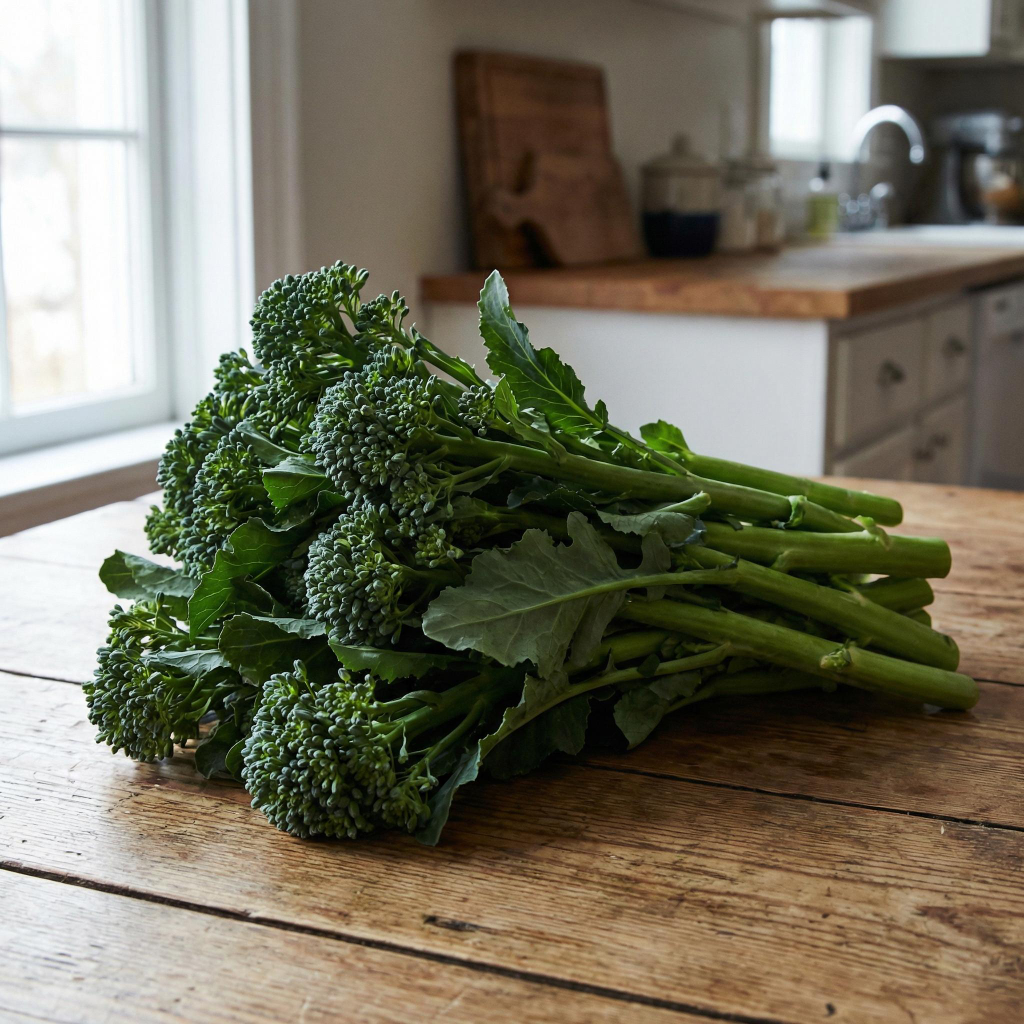
Rapini (Broccoli Rabe)
Also known as: Broccoli rabe (trademarked by Andy Boy), cima di rapa, rapini, raab, Italian turnip
With deep green color and pleasantly bitter flavor, rapini (Brassica rapa var. ruvo) star vegetable during colder months when other greens less available. Despite other name 'broccoli rabe,' rapini isn't just another kind of broccoli (which belongs to closely related species Brassica oleracea, along with similar-looking though less leafy broccolini). However, rapini even more versatile in kitchen than broccoli, with greater proportion of edible leaves and stems than standard broccoli head. Dark green, almost serrated leaves with thick stems and broccoli-like heads, some may be flowering (flowers also edible). Usually sold in thick bunches.
fall, winter, spring
Pleasantly bitter flavor. Pungent bite. Gets more pungent and bitter the longer ...
Brassica rapa var. ruvo
vegetable
Pairs Well With
Has dark green, almost serrated leaves with thick stems and broccoli-like heads, some may be flowering (flowers also edible). Usually sold in thick bunches. Look for rapini with no yellow, wilted, black or mushy spots on either leaves or broccoli-like clusters. If possible, choose those with smaller stems—thicker stems can be used but tend to be tough and stringy. Best to use within 2-3 days of purchase. Look for fresh, vibrant green color. Available at farmers' markets during right season. Generally two seasons: late fall/winter, late spring/early summer.
Highly perishable—gets more pungent and bitter the longer you keep it in fridge. Broccoli-like heads may turn yellow and mushy the longer kept (due to chlorophyll loss—not yummy). Therefore, best to use within 2-3 days of purchase. Use quickly for best flavor and texture.
Sautéed: Classic preparation with olive oil, garlic, chili peppers. Boiled: Can blanch or boil to temper bitterness. Steamed: Another cooking method. Grilled: Can be grilled for char. Roasted: Even roasted successfully. With pork sausage: Especially common pairing. With porchetta: Roman roast pork delicacy. With pancetta: Italian unsmoked bacon. Pasta dishes: Added to pasta, especially orecchiette with sausage and broccoli rabe. Pizza topping: Common in Italian homeland, gaining popularity in US. Hotdog topping: American favorite with broccoli rabe and provolone. With white beans: Classic pairing. With anchovies: Traditional combination. Spaghetti with toasted garlic and breadcrumbs: Classic recipe.
Lacto-fermented rapini: In style of kimchi, keeps up to 2 months in fridge. Frozen: Can be frozen successfully. Blanch first before freezing for best results. Highly perishable fresh (2-3 days) makes preservation important for longer enjoyment.
High in Vitamin K, necessary for blood clotting and bone health. Also high in Vitamin A, Vitamin C, and fiber. Good source of calcium, folate, iron, and manganese. Even has bit of protein. Brassicas in general purported to have anti-cancer properties due to glucosinolates found in most varieties. Nutritious bitter green providing multiple vitamins and minerals.
Andy Boy, largest US manufacturer of rapini, actually holds trademark for name 'broccoli rabe'—means other growers must refer to vegetable as 'rapini' or one of its other myriad names (cima di rapa, etc.). Writer and satirist Anthony Di Renzo in book 'Bitter Greens: Essays on Food, Politics, and Ethnicity' explains first wave of Italian immigrants, estranged from home country (many to never return), often treated miserably by adopted country, longed for taste of home. Rapini, sautéed with garlic, olive oil and chile flakes, gave it to them. Widely cultivated in Southern Italy, especially in Puglia (Apulia). Most closely associated with Southern Italian cuisine. In US, California produces about 90% of rapini. Generally has two seasons: late fall/winter (varieties planted late summer/early fall), late spring/early summer (varieties planted early spring). Flowers are edible. Not actually broccoli despite name 'broccoli rabe.'
PESTICIDES: Largest grower rapini in US, Andy Boy, not organically designated, but company says practices integrated pest management (IPM)—cultivation technique designed minimize use of pesticides. Despite this, according to USDA, number of pesticides still used on rapini plants in California. LABOR ISSUES: Andy Boy company, under umbrella of D'Arrigo Brothers, plagued with farm worker labor issues for decades. Until recently, D'Arrigo farm workers went 30 years without contract. Accounts of company's labor problems and troubles with United Farm Workers (union famously co-founded by Cesar Chavez) found in Anthony DiRenzo's book 'Bitter Greens' and LA Times. SEASONALITY SUSTAINABILITY: Cool weather makes it more delicious. Rapini grown in hot weather more likely to bolt and be extra bitter. Generally two seasons (late fall/winter, late spring/early summer). Smaller farms and farmers grow in other places around country, find at many farmers' markets at right time of year.
Available Near You
Enter your ZIP code to find farms with rapini (broccoli rabe) near you.
Recipes with Rapini (Broccoli Rabe)
Coming Soon