
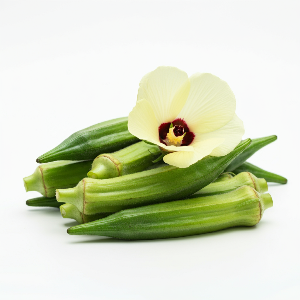
Okra
Also known as: Gumbo (primarily in South), okro, lady's fingers, bhindi
"Wherever okra points its green tip, Africa has been"—trail of trade evidenced by presence of pod is formidable. Originated in what is now Ethiopia, cultivation spread quickly around continent and beyond. Reached Americas in 17th century with Atlantic slave trade. Probably first arrived Louisiana brought by enslaved people via West Africa or Caribbean. By 19th century, widespread in US thanks to culinary innovations of enslaved cooks who combined African, Native American and colonial cuisines into Southern food. Present in Creole cuisine to Lowcountry cooking. Seasonal eating at its best.
summer
Gooey, sticky, slimy—pods contain numerous round edible seeds surrounded by visc...
Abelmoschus esculentus
vegetable
Pairs Well With
Pods contain numerous round edible seeds surrounded by viscous mucilage. Most pods green with slight ridges lengthwise, but ridge-less varieties exist, as do red pod varieties. Look for firm, springy pods with no mushy, brown, or yellowing spots. Different varieties offer different sliminess levels, range in size from inch to 8+ inches. Perfect size around 4-5 inches. Smallest and largest pods have inferior flavor—larger ones become stringy, tough, nearly inedible. Best in summer (July and August).
If planning cooking right away, store pods on counter. Otherwise, store unwashed in paper bag in fridge—best eaten within 2-3 days. Best used quickly for optimal freshness.
Pan-fried: Crispy okra salad, reduces slime with high heat. Roasted: Roasted okra chips. Grilled: With red curry lime dressing. Deep-fried: Traditional Southern nuggets with cornmeal coating, battered whole pods, stuffed with pepper jack cheese. Gumbo: Traditional thickener in Creole gumbo with shellfish and sausage. Stewed: Brazilian caruru, South Asian stewed okra and tomatoes, Middle Eastern Mediterranean okra and tomatoes. West African okro soup. Sautéed: Okra greens and corn sauté. Pre-soak in vinegar or lemon water to reduce slime. High heat cooking best.
Pickled okra: Great choice for Bloody Mary. Dehydrated: For crunchy snack. Frozen: Blanch pods first for year-round enjoyment. Takes well to preservation especially pickling. Freezing with proper blanching maintains quality.
Fairly high in Vitamins K and C, good source of folate and manganese. Half cup cooked contains just over 2g fiber. May help regulate blood sugar levels. Used to relieve constipation and help with digestive ills in many traditional medicine systems. All parts edible: flowers, seeds, leaves.
Word 'okra' has West African origins—likely derived from 'okuru' (Igbo language Nigeria) or 'nkruma' (Akan languages Ghana). Word 'gumbo' (for stews and okra dishes, primarily in South for vegetable itself) comes from 'ki ngombo'—word for okra in many Bantu languages (including Mbundu people Angola). Okra seeds (like persimmon seeds, chicory root) sometimes roasted to create non-caffeinated coffee substitute—practice took off during Civil War when coffee became hard to come by due to Union blockade. Jessica B. Harris (expert on food and African Diaspora): 'Wherever okra points its green tip, Africa has been.' Botanists believe originated Ethiopia. Reached Americas 17th century with slave trade. Enslaved cooks combined African, Native American, colonial cuisines into Southern food. Ridge-less varieties exist, red pod varieties too. Perfect size 4-5 inches. Flowers, seeds, leaves all edible ('nose-to-tail' vegetable).
Minor commercial crop in US with production concentrated primarily in South (Texas, Florida, Georgia) plus California. Sensitive to nematodes (microscopic worms damaging roots)—some conventional producers may fumigate soil (hurts beneficial microorganisms). Other pesticides and nitrogen fertilizers common in commercial cultivation. Try buying at farmers' market where can talk to growers about chemical use. Certified organic ensures grown without synthetic pesticides and fertilizers. Peak summer (July and August especially), tapering off early fall. India by far global leader in cultivation per UN FAO, followed by Nigeria, Mali, Pakistan. Mexico only country outside Africa/Asia in top 20 producers—source of most fresh okra imported by US.
Available Near You
Enter your ZIP code to find farms with okra near you.
Recipes with Okra
Coming Soon