
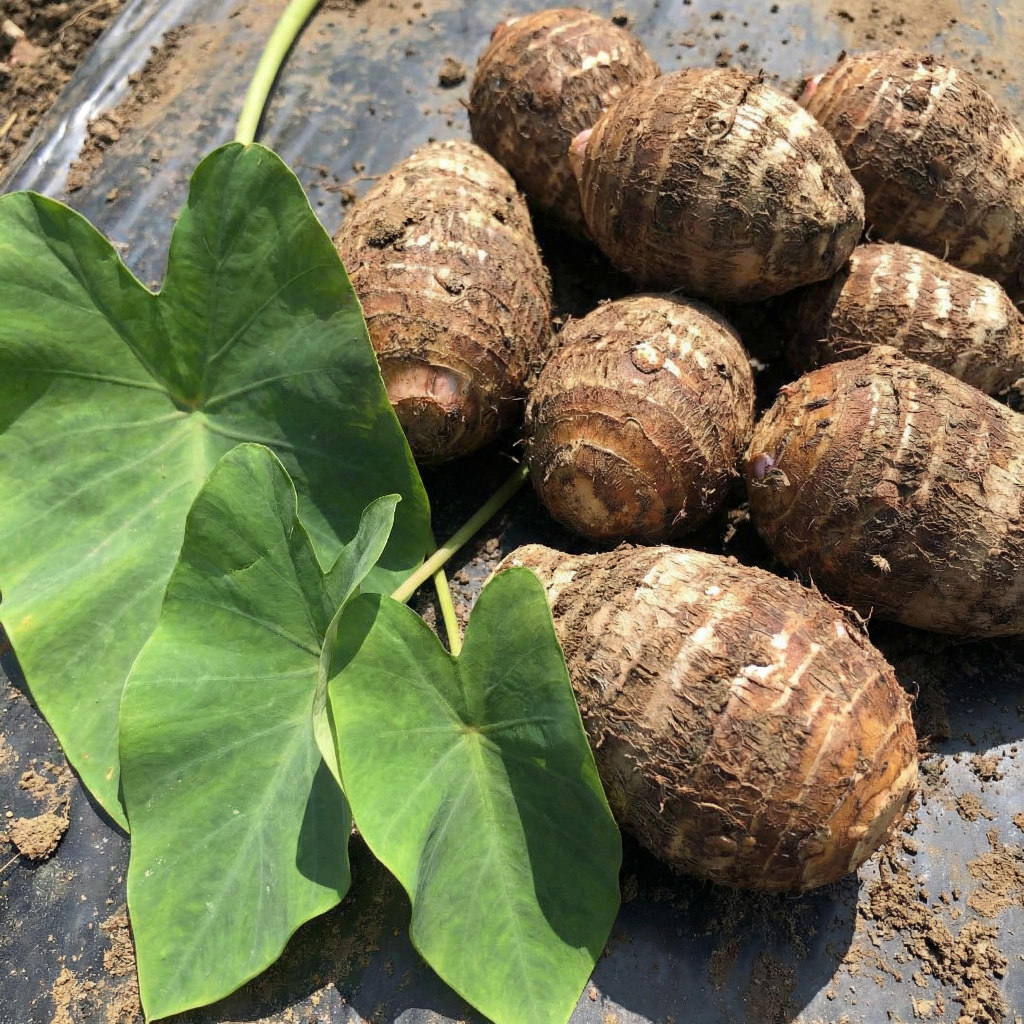
Taro
Also known as: Kalo (Hawaiian), cocoyam, dasheen, eddo, canoe plant
Common ingredient worldwide with special place in Pacific Islands. Central to Native Hawaiian creation story—kalo (Hawaiian name) allowed Hawaiian Islands to be entirely self-sufficient for centuries. Widely classified as root vegetable, but root-like part actually a 'corm'—swollen stem part developing underground helping plant survive harsh weather. Large heart-shaped leaves also edible when cooked. Known as 'canoe plant' in Hawaiʻi—brought by Polynesian sailors on thousand-mile journeys. Ancient Hawaiians developed 100+ named varieties. Goes by many names worldwide: cocoyam, dasheen, eddo.
spring, summer, fall
When boiled or steamed, white corms take on purple-ish hue. Texture becomes crea...
Colocasia esculenta
vegetable
Pairs Well With
Taro corms large with brown, scaly, somewhat hairy skin. Typically creamy-white interior flecked with purple (though purple and pink varieties also exist). Look for taro roots heavy for their size, with no mushy, black, or dried-out spots. Leaves can be green, purple, or variegated, sometimes sold bunched. Should be perky with no wilted or yellow spots. Cannot be stored long—best within couple days.
Unlike many root vegetables, taro corms cannot be stored for long periods. Keep in cool, dark place for no more than couple days. Taro leaves also highly perishable. Wrap in damp paper towels, store in fridge in sealable bag—best within 2-3 days. Not a long-storage vegetable.
Boiled: Long cooking hour-plus to destroy oxalic acid, turns purple-ish. Steamed: Similar to boiling, renders toxin inactive. Pounded: Hawaiian poi (cooked then pounded into paste). Baked: Taro chips. Grated and steamed: Sweet coconut milk dishes (kūlolo, fa'ausi, bua loi phuak). Ice cream: Gaining popularity. Fried: Various preparations. Wrapped and steamed: Hawaiian lau lau (leaves wrap pork/butterfish, steam several hours). Cooked as vegetable: Caribbean callaloo (leaves). Dried: Filipino laing (dried leaves in coconut milk). Fufu: West African staple. Taro rolls: Hawaiian preparation. Used in stir-fries, curries, rice dishes across Asian, African, Caribbean, Pacific Island cuisines.
Cooked taro corms freeze well. Cooked taro leaves freeze well. Taro leaves can be dried—preparation used often in Filipino cuisine (laing: dried taro leaves cooked in coconut milk). Poi can be left to ferment/sour for few days—natural bacteria from skin inoculate mixture. Not suitable for long-term raw storage. Freezing and drying best preservation methods after cooking.
Taro corm high in fiber, manganese, potassium, Vitamins E and B6. Good amounts of Vitamin C, magnesium, phosphorus. Leaves even better—one cup cooked taro leaves provides 50%+ daily Vitamin C, 33% Vitamin A, nearly 4g protein, good amounts of iron, potassium, riboflavin (Vitamin B2). Sour poi can be used as probiotic and nutritional supplement for those with digestive problems—scientists speculate lactobacilli from fermentation helpful. Taro corms and leaves used in traditional herbal medicine for digestive ailments like diarrhea and wound care. CRITICAL: Must cook thoroughly—raw taro high in oxalic acid (serious irritant/toxin).
Polynesians (famous sailors traveling thousands of miles) brought taro on journeys—known as 'canoe plant' in Hawaiʻi with coconuts, bananas, breadfruit. 2009 University of Hawaiʻi study collected nearly 300 different taro genotypes from islands—ancient Hawaiians developed 100+ named varieties since introduction. One of seasonal foods customarily served at Tsukimi ('moon-viewing') Japanese festivals honoring harvest moon. Goes by many names worldwide: cocoyam, dasheen, eddo. Central to Native Hawaiian creation story, same in several Polynesian cultures. Taro cultivation allowed Hawaiian Islands to be entirely self-sufficient for centuries. University of Hawaiʻi worked on genetically engineering taro varieties for pest/disease resistance, but outrage from many Hawaiians led to research pause in 2005. Corm not actually a root but swollen part of stem developing underground. Heart-shaped leaves also edible. Poi can ferment with natural lactobacilli bacteria for probiotic benefits. Taro ice cream gaining popularity.
Can be cultivated in dryland conditions or wet-grown in flooded fields. Some parts of world have water-related production issues. Hawaiʻi: wet-grown taro farmers run into problems with water access. Some taro farmers use fungicides and herbicides to control diseases and weeds—seek organic taro if concerned. University of Hawaiʻi worked on genetically engineering varieties for pest/disease resistance but outrage from Hawaiians led to research pause 2005. Tropical plant doesn't like frost—planted spring, harvested fall in many places, avoiding coldest parts of year. In tropical regions, leaves and roots available virtually year-round. Important staple in parts of Asia, Africa, Caribbean, Pacific Islands. Recently garnered interest as crop in North Carolina as climate warms.
Available Near You
Enter your ZIP code to find farms with taro near you.
Recipes with Taro
Coming Soon