
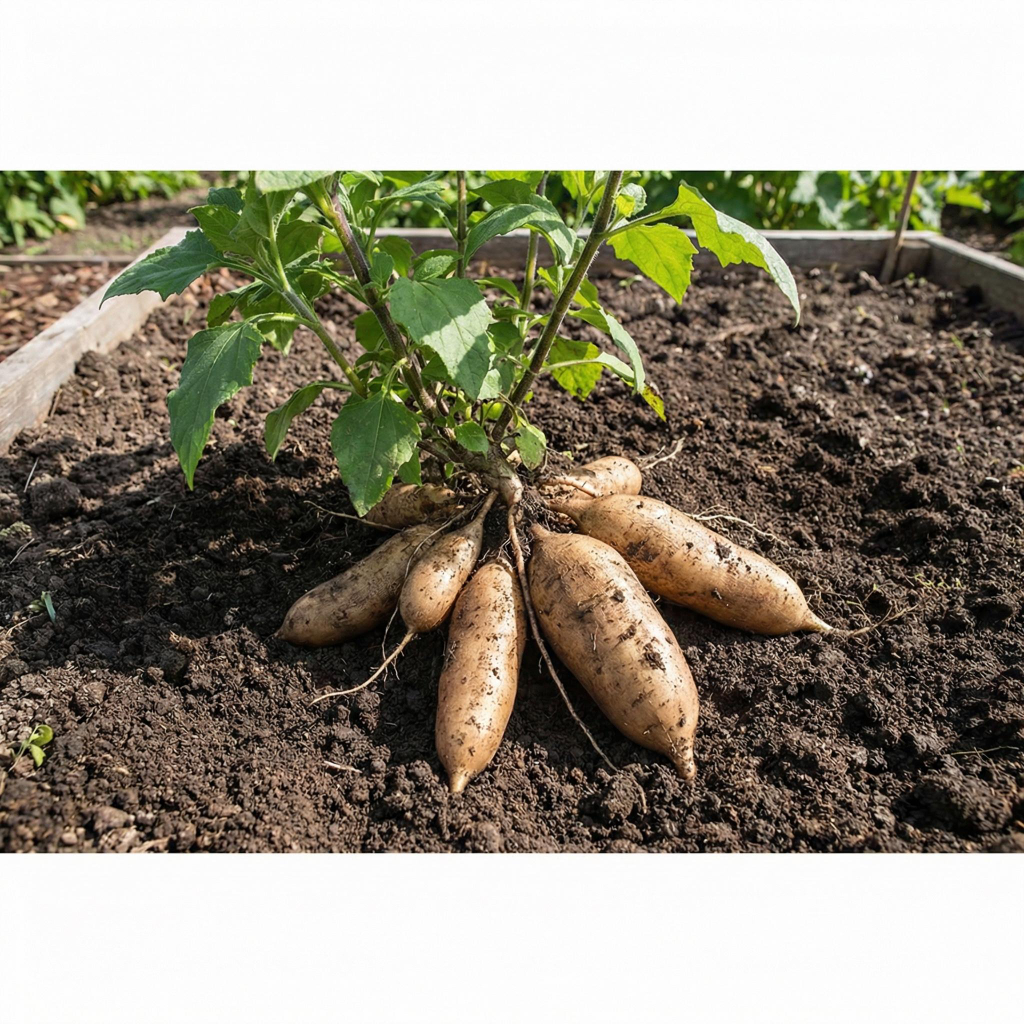
Yacon
Also known as: Sweet-root, Peruvian ground apple, Bolivian sunroot, pear of the Earth, water root (Incan name)
Also called sweet-root, Peruvian ground apple, Bolivian sunroot, and pear of the Earth. A plant that gives and gives—produces sunflower-like flowers above ground while below develops reddish rhizomes (like young ginger) and brown edible tubers (like sweet potatoes or sunchokes). Native to Andean region of South America. Cultivated for hundreds of years—Incas called it water root for its refreshing flavor. Still staple crop in South and Central America today.
fall, winter
Crisp, fresh bite similar to water chestnuts or jicama. Tastes like cross betwee...
Smallanthus sonchifolius
vegetable
Pairs Well With
Many varieties grow in South America including red, orange, yellow, pink, purple tubers. Outside native area, likely only find white varieties. While yacon syrup or powder more commonly found in US, if see fresh yacon at farmers' market or Hispanic grocer, look for tubers with no black, mushy, or spongy spots. Fresh tubers should be firm. Available in California between October and December. Can find as syrup, powder, or fresh tubers.
Like other root vegetables, does well stored in cool, dry areas. Store in dry shed, garage, or basement. Can stay fresh several months and will sweeten over time. Do NOT wash before storing—will go moldy once damp. Similar to how you'd store potatoes or other root crops.
Raw: Peeled and sliced as snack, in salads, grated into coleslaw, in smoothies. Salad bowls: Added raw for crisp texture. Traditional preparations: South American fruit salad salpicon. Fried: Sliced and fried like potatoes. Curries and soups: Cooked like other tubers. Desserts: Puddings, cakes, pies (fruity sweetness works well). Leaves: Used like spinach, as wraps like cabbage leaves, made into tea. Syrup: Popular preservation method, calorie-free sweetener. Dehydrated: Sliced then pulverized into powder. Preserved: Cooked down into applesauce-like preserve.
Syrup: Popular preservation method, often used as calorie-free sweetener. Dehydrating: Slice yacon, dehydrate, then pulverize dried vegetable into powder. Applesauce-like preserve: Cook down into spreadable preserve. Natural sweetening: Can stay fresh several months stored in cool, dry place—sweetens over time. Processing into powder for long-term storage and use as natural sweetener.
Recently called 'superfood' though meaning unclear. High fiber, low-calorie food despite sweet taste. Contains beneficial prebiotic and probiotic bacteria thought to aid digestion and gut health. Tubers and leaves both good sources of antioxidants. Rich in inulin (indigestible sugar)—makes vegetable very sweet but low calorie. Sweet flavor from hard-to-digest inulin rather than sucrose or other sugars, more ideal for diabetics. Popular among nutritionists for this quality. High-yielding, nutritious crop that improves soil fertility where grown.
Has recently become popular in Western diets partly because rich in inulin (indigestible sugar)—makes very sweet but low calorie. Close relative of sunchoke (also has sweet, crisp tubers). Plant produces sunflower-like flowers above ground. Root has two distinct elements: reddish rhizomes on top (look like young ginger) and brown edible tubers underneath (look like sweet potatoes or sunchokes). Incas called it water root thanks to refreshing flavor. Many varieties grow in South America: red, orange, yellow, pink, purple tubers. Outside native area, likely only find white varieties. Up until 1960s, wasn't cultivated outside native South America. Since then spread to Japan, New Zealand, Nepal among others. Frost can help bring out sweetness. Also called sweet-root, Peruvian ground apple, Bolivian sunroot, pear of the Earth.
Relatively easy to grow, high-yielding plant that thrives in areas with constant moisture and mild temperatures. Relatively unknown outside native South America, global commercial production limited. Susceptible to pest infestation but chemical-free measures like netting or plastic bagging fruit often effective prophylactics. Yacon growth improves soil fertility. Doesn't do well in temperatures lower than 40 degrees. Available in California October through December. Argentina is major producer today. In US, grown as garden plant, commercially produced in North and Central California.
Available Near You
Enter your ZIP code to find farms with yacon near you.
Recipes with Yacon
Coming Soon