
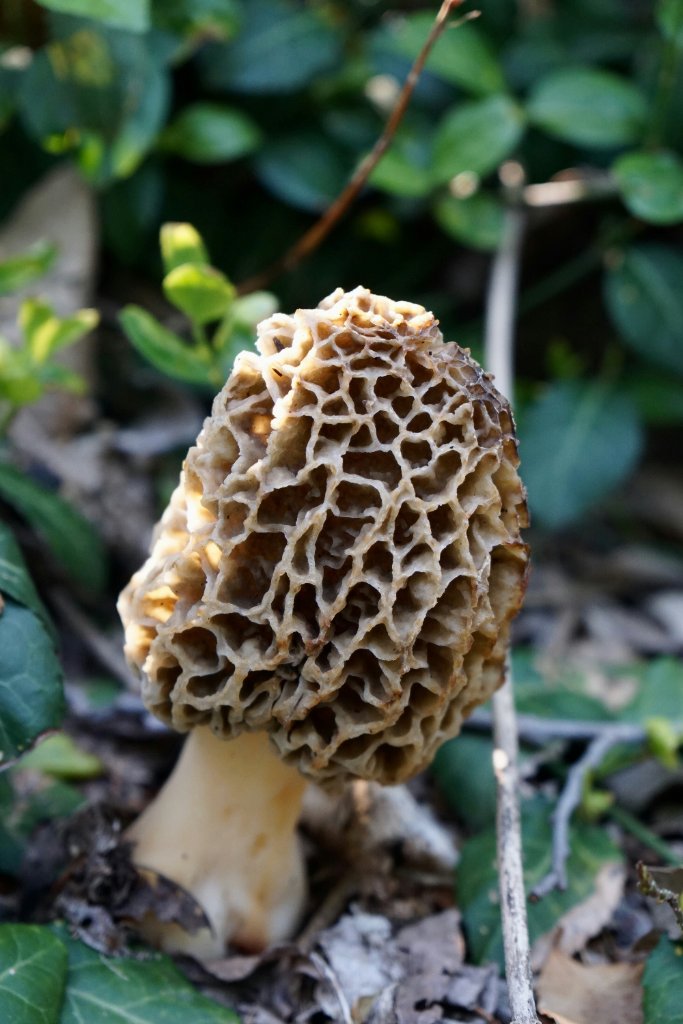
Morels
Also known as: True morels, common morel (M. esculenta), black morel (M. elata), white morel (M. deliciosa)
The gourmet equivalent of striking gold—spongy cone-shaped mushrooms that pop up amongst leaf litter in spring. These prehistoric fungi have evolved little in 100 million years since dinosaur times. Difficult to cultivate and highly delicious, morels command upwards of $30 a pound. Foraged wild in northern hemisphere deciduous forests, they're the fruiting reproductive part of underground mycelium with distinctive honeycomb-like texture.
spring
Earthy, nutty, woodsy flavor with meaty texture. Darker morels claimed to have m...
Morchella (at least 50 varieties worldwide)
vegetable
Pairs Well With
Fruiting reproductive part of mycelium (thread-like fungus underground). Found in clumps near ash, elm, poplar, and apple trees. Conical shaped mushroom cap with spongy, honeycomb-like texture distinguishes from other wild mushrooms. Grow upwards of six inches high. Caps come in three colors: white, yellow, gray, and black atop white barrel-shaped stems. Darker color claimed more intense flavor. Black and gray appear first in season, followed by yellows (typically larger). Avoid discolored, splotchy, or slimy specimens. If cap looks red, likely false morel (poisonous). CRITICAL: Educate on difference between true and false morels—latter poisonous. Only forage with mushroom expert as mistakes deadly. True morels hollow inside; false morels not.
Eat as soon as possible for best quality. Can be stored in fridge for upwards of week. Store in paper bag rather than plastic container. Don't wash until ready to use—moisture speeds up spoilage. If blessed with more than can eat in one go, preserve by freezing or dehydrating.
Sautéed: Ideal preparation in butter with salt. Fried: Classic breaded or fried sliced morels. Pasta: Tossed with ramps and asparagus for springtime feast. With cream: Rich cream-based preparations. With eggs: Scrambled or in omelets. With meat: Paired with various cuts. NEVER RAW: Must be cooked to remove poisonous hydrazine toxin.
Dehydrating: Most common and preferable method—flavor remains intact. Clever technique: string cleaned morels with poultry needle and kitchen string like popcorn garland; hang in dry, well-ventilated room; dehydrated after couple days. Freezing: Slice clean morels in half, quickly sauté (par-cook), lay on parchment-lined cookie sheet and freeze, transfer to airtight container once frozen. Dehydrating preferred over freezing for flavor preservation.
Contain fair bit of iron plus smaller percentages of Vitamins D and B. CAUTION: Contain small amounts of hydrazine, inorganic compound that is highly poisonous. Cooking removes toxin—NEVER eat raw or risk liver damage or worse. Alcohol exacerbates sensitivity to toxin, can trigger upset stomach, heightened intoxication, or loss of muscle control. Take care if washing down with wine. Related to truffles—both from phylum Ascomycota, differs from common button mushroom.
DNA study reveals morels evolved little in last 100 million years since dinosaurs. Referred to as 'true' morels versus 'false' morels (toxic, look nothing like true morels but fool less informed foragers). True morels hollow inside; false ones not. Darker the morel, more intense flavor claimed. Humans one of few species eating them—others are slugs. Related to truffles (both phylum Ascomycota). At least 50 varieties worldwide, North America home to 19. Most common: common/true morel (Morchella esculenta), black morel (M. elata), white morel (M. deliciosa). Someone long ago fairly intrepid to discover morels delicious springtime feast, learned through trial and error must be cooked (poisonous raw). Command upwards $30 per pound. Foraged in Europe, America, Canada. Abundant in northern Midwest states, found far north as Alaska under right conditions.
Foraged wild mushroom—tromping through woods for wild bounty can have environmental impact if not done with care. Use knife to harvest at base of stem, leave root intact so may sprout future seasons. Don't be greedy—leave some behind for future. Favor temperate climates in deciduous forests. Wet or snowy winter makes bountiful morel season (thrive in damp conditions). Not too dry or too swampy conditions. Ask grocery store or farmers' market representative how foraged if not foraging yourself. Responsible foraging practices essential for sustainability.
Available Near You
Enter your ZIP code to find farms with morels near you.
Recipes with Morels
Coming Soon