
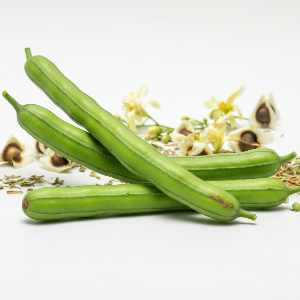
Moringa
Also known as: Drumstick tree, miracle tree
The 'miracle tree' whose leaves, seeds, and pods are all edible and extraordinarily nutrient-dense. Native to Northern India, moringa thrives in dry, hot conditions and has become a key player in agroecological farming across Asia, Africa, and tropical regions worldwide. Its seeds produce a cooking oil that never goes rancid, while various plant parts are studied for medicinal properties including anti-cancer, antidiabetic, and antimicrobial effects.
spring, summer, fall
Leaves have mild, slightly earthy flavor similar to spinach but more nutritional...
Moringa oleifera
vegetable
Pairs Well With
Fresh leaves: Select deep green leaves where small leaflets still attached to stems. Pods (drumsticks): Less available outside warm regions where tree grows year-round. Look for pods about six inches length, green, relatively tender. Bigger pods edible if not dry. Older pods with mature seeds not edible as pods, but seeds usable for cooking. Powdered moringa widely available as health supplement. Ask farmers at local markets about growing practices. Look for organic certification if concerned about chemical use.
Leaves fall from stems over time. Separate leaves and store in sealable container if not cooking soon. If cooking soon, wrap in newspaper or paper towels; allow separation in refrigerator. Use leaves within few days. Pods stored in unsealed bag or container in refrigerator for several days; lose texture and flavor over time. Use promptly for best quality.
Stir-fried: Like spinach preparations. Stewed: Cooked down like leafy greens. Dals: Combined with lentils in Indian preparations. Curries: Moringa drumstick curry, leaf curries. West African sauce: Ground with spices for meats. Senegalese mboum: Leaves with powdered peanuts over couscous. Quiche: Western-style preparations replacing spinach. Smoothies: Powdered form blended. Baked goods: Powder added to muffins and breads. Sautéed pods: Drumsticks like green beans. Roasted seeds: Mature seeds eaten roasted. Oil extraction: Seeds pressed for cooking oil (specialized equipment required).
Freezing: Leaves and pods frozen for longer storage; wilted when thawed, only for cooked applications. Drying: Wash leaves, place in dehydrator or paper bag in warm, dry place. Grind dried leaves into DIY moringa powder for long-term storage. Dried powder concentrated source of minerals (calcium, phosphorus, potassium, iron) though some nutrients like Vitamin C don't survive processing well.
Nutritional powerhouse providing high amounts of Vitamin C, Vitamin E, and calcium. Very high in protein compared to other leafy vegetables. Pods very high in protein and fiber. Leaves, pods, and seeds contain high amounts of heart-healthy oils. Contains complex phytochemicals promoting health through anti-inflammatory, anti-diabetic, and anti-cancer properties. Dried powder concentrated source of calcium, phosphorus, potassium, and iron. More nutritionally rich than spinach.
Known in India as 'drumstick tree' after long shape of seed pods. Extracts investigated as anti-cancer agents, antidiabetics, and antimicrobials. Trees grow vigorously: under ideal conditions, some growers report plants can grow more than 20 feet in single year. Seeds produce healthy cooking oil that never goes rancid. Can be grown in containers as far north as upstate New York, supplying locally grown leaves to NYC farmers' markets. Evergreen in warm, wet areas with leaves available year-round. Pods more common after heavy blooming in early summer. Mature seeds have laxative effect in high amounts.
Key player in traditional agroecological farming in India and Africa; incorporated onto regenerative farms in tropical regions worldwide. Drought-tolerant with multiple uses. Provides cooler microclimate for other plants. Grows quickly, establishes extensive root system storing large amounts of atmospheric carbon. Leaves eaten by people and animals; also used as green mulch for crops. Thrives on poor soils. Popular on organic farms. Frequently grown without chemical fertilizers; some growers use manure. Bitter compounds making plant nutritious to humans make it unpalatable to insects; few pest problems, uncommon pesticide use. Seek organic moringa products or local farmers' market sources. Buy local to ask farmers about growing practices.
Available Near You
Enter your ZIP code to find farms with moringa near you.
Recipes with Moringa
Coming Soon