
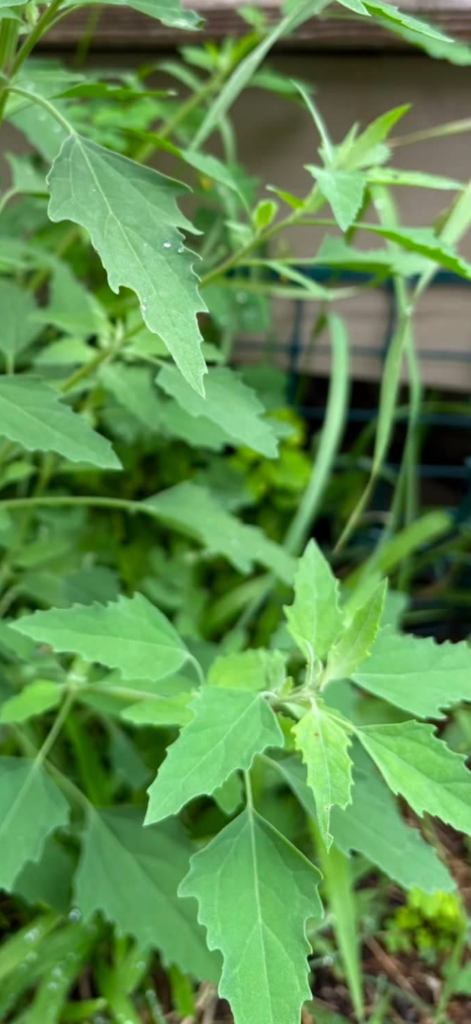
Lamb's Quarters
Also known as: White goosefoot, pigweed, dungweed, baconweed, wild spinach, fat hen, bathua (Hindi)
A hardy, versatile leafy vegetable and familiar weedy plant found across North America. Related to quinoa, beets, and spinach, lamb's quarters grows easily on newly cultivated land, roadsides, and fields. Packed with nutrients and easily foraged or cultivated, this green represents an underutilized culinary treasure popular in Indian, Korean, and Chinese cuisines.
summer, fall
Mild, delicate spinach-like flavor with subtle earthiness. Young leaves more ten...
Chenopodium album
vegetable
Pairs Well With
Green, weedy plant with deep-green leaves shaped like goose's foot. Some varieties have pink or red on young leaves and stems. Younger leaves have white, powdery substance on underside. Select younger, smaller leaves for raw consumption (older leaves tougher). At farmers' market: seek perky lamb's quarters with no drying or yellow leaves; wilts easily. Orach also available, red and green varieties common. When foraging: verify identification against ID guides and foraging videos to distinguish from non-edible look-alikes. Forage only from areas without herbicide spraying or road salt exposure. Almost impossible to find in grocery stores; seek farmers' markets or forage.
Doesn't keep long: wrap in damp paper towels, store in zip-top bag in refrigerator for no more than couple of days. Use quickly for best quality. More perishable than most greens.
Raw: Young leaf salads (rinse first to remove powdery bloom). Sautéed: Quick preparation with garlic and oil. Steamed: Gentle preparation preserving delicate texture. Soup: Cream of lamb's quarters soup. Green smoothie: Fresh leaves blended. Raitas: Indian yogurt dishes. Daals: Indian lentil dishes. Korean side dish: With chiles and sesame. Chinese salad: With chiles, soy, black vinegar. Pesto: Made with lamb's quarters.
Freezing: Blanched and frozen for longer storage. Kimchi: Lamb's quarters kimchi keeps in refrigerator far longer than fresh vegetable. Pesto: Lamb's quarters pesto extends preservation. Both fermented and preserved items keep significantly longer than fresh leaves.
Incredibly nutritious like other 'weeds.' High in fiber and protein. Loaded with Vitamins A and C. High in manganese, calcium, copper, with some iron. High in both omega-3 and omega-6 fatty acids. Related quinoa seeds in leaves contain oxalic acid (stomach irritant, impedes calcium absorption) and saponin (stomach irritant). Cooking eliminates most oxalic acid. Saponin reduced by rinsing and cooking leaves and seeds. Use moderation raw due to oxalic acid and saponin content.
Multiple common names: white goosefoot, pigweed, dungweed, baconweed, wild spinach. Name 'fat hen' derives from supposed ability to fatten chickens when used as poultry feed. Name 'lamb's quarters' first appeared in American print 1804, derived from Lammas quarter, ancient English first harvest festival held in August. Plant's high-protein seeds incredibly productive: single plant produces 75,000-100,000 seeds. Seeds can be used to make flour and bread. Extremely widespread across North America. Closely related to quinoa. Hindi name bathua; popular mountain vegetable in Korea (wild-harvested); popular 'wild green' in China.
Thrives in dry conditions and poor soils, very low impact when farmed requiring few chemicals and little water. Foraged wild lamb's quarters extremely low impact if following local regulations and not disturbing wildlife. Requires foraging only from areas free of herbicides, road salt, and chemical exposure. Self-seeding reduces need for replanting. Ideal sustainable vegetable for resource-limited settings.
Available Near You
Enter your ZIP code to find farms with lamb's quarters near you.
Recipes with Lamb's Quarters
Coming Soon