
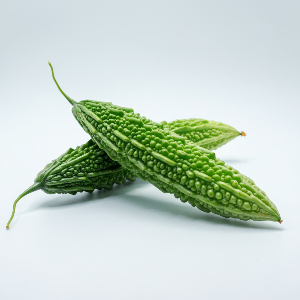
Bitter Melon
Also known as: Bitter gourd, bitter cucumber, goya (Japanese), karela (Indian)
An extremely bitter tropical fruit found throughout Asia, South Asia, Africa, and the Caribbean. Known for its distinctive warty, ridged exterior resembling a bumpy cucumber.
summer
Extremely bitter due to naturally occurring cucurbitacin compounds. Bitterness c...
Momordica charantia
vegetable
Pairs Well With
Two main varieties: Chinese (lighter green, bumpy-smooth skin) and Indian (darker green, rougher/spiky texture with tapered ends). Look for 4-6 inch fruit, firm without blemishes or blackened spots. Off-white flesh with large dark seeds. Green varieties are more bitter; orange-to-yellow (if available) are milder. Both peel and flesh are edible.
Store in refrigerator crisper drawer in a paper or plastic bag for three to five days.
Peel can be waxy and may hold pesticide residue, so some recipes call for removing it. Blanching or salting first reduces bitterness but may affect texture. Stir-fry, boil, sauté, steam, or bake. Frequently stuffed with meat and baked or braised. Leaves are also edible. Popular in Southeast Asian, Chinese, Japanese (especially Okinawan), and Indian cuisines.
Can be dried, pickled, or frozen (though freezing reduces crunchy texture).
Excellent source of vitamin C, with one cooked cup providing half the daily recommended intake. Long regarded as a medicinal plant with promising health benefits including blood sugar control and cholesterol reduction based on clinical trials.
Bitter melon has become an invasive species in parts of Florida. The extreme bitterness comes from cucurbitacin compounds, which naturally repel herbivores and also serve as natural pest-repellants in cultivation. As the fruit matures, it turns from green to deep yellow and will split from the bottom at full maturity, revealing bright red, pulpy seeds. The plants are vigorous vines that can grow up to 16 feet long and do well on sturdy trellises.
While grown extensively in India, Southern China, and Southeast Asia, environmental impact in the United States is small. Like other cucurbits, bitter melons require substantial water to fruit well. The natural bitter compounds in the plant repel pests without requiring pesticides. Available year-round in Asian and Indian markets but seasonally in warm months.
Available Near You
Enter your ZIP code to find farms with bitter melon near you.
Recipes with Bitter Melon
Coming Soon