
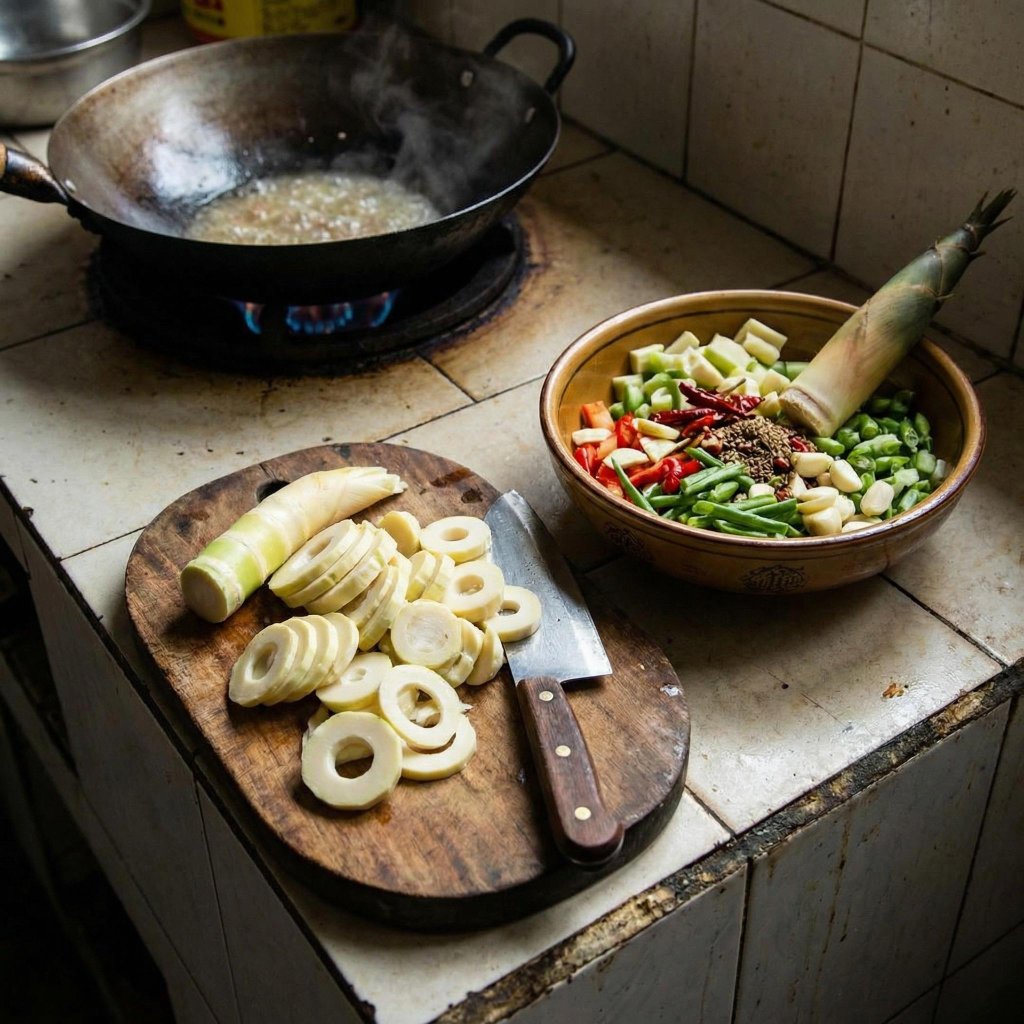
Bamboo
Also known as: Bamboo shoots, bamboo sprouts
Fresh, crunchy bamboo shoots with a sweet, earthy taste. A unique grass with deep historical and cultural significance, used extensively in Asian cuisines.
spring
Sweet and earthy with a distinctive crunchy texture that persists even when cook...
Bambusa vulgaris
vegetable
Pairs Well With
Look for fresh shoots without mushy or black spots that feel heavy for their size. Fresh bamboo shoots are tapered and horn-like, varying from a few inches to palm-size. Canned shoots are a good year-round alternative and are readily available at most markets.
Fresh bamboo shoots will keep in your refrigerator drawer for about two weeks. Keep them away from light, as exposure will cause them to turn from sweet to bitter. For longer storage, cook and freeze the shoots.
Fresh shoots require boiling for 20-30 minutes to remove naturally occurring cyanide compounds (rendered inactive through proper cooking). Peel away outer leaves before cooking. Canned shoots should be soaked for about 10 minutes to reduce tinny flavor. Use in stir-fries, sautés, salads for crunch, or add to soups. Also used to wrap and steam food. Popular in Chinese, Southeast Asian, South Asian, Japanese, and Korean cuisines.
Pickle bamboo shoots in various Asian cuisines including Burmese, Filipino, and Chinese cooking. Fermented bamboo shoots are common in Indian cuisine. Fresh shoots can be cooked and then frozen for longer-term storage.
Low in calories and fiber. High in potassium with some protein and Vitamin B6. Contains trace minerals including selenium, copper, and zinc. In traditional medicine, parts of bamboo are used to treat phlegm, fevers, inflammation, and coughs.
Bamboo is the fastest growing plant in the world, with some species growing two inches per hour. Bamboo plants produce edible seeds sometimes called 'bamboo rice' that can be cooked like other grains, though they are rare since bamboos flower infrequently. The endangered giant panda and golden bamboo lemur rely almost exclusively on bamboo for food. There are over 1,400 species of bamboo. Bamboo is related to major staple crops like corn, wheat, millet, and barley.
Bamboo is environmentally friendly for food and product use. It grows quickly without requiring irrigation, fertilizer, or pesticides in most cases. Bamboo forests sequester more carbon than tree-centric forests. However, some bamboo farmers apply pesticides to boost production, especially in the flooring industry. When buying fresh bamboo, ask local farmers about their growing practices. Bamboo textiles production uses toxic substances like sodium hydroxide in processing.
Available Near You
Enter your ZIP code to find farms with bamboo near you.
Recipes with Bamboo
Coming Soon