
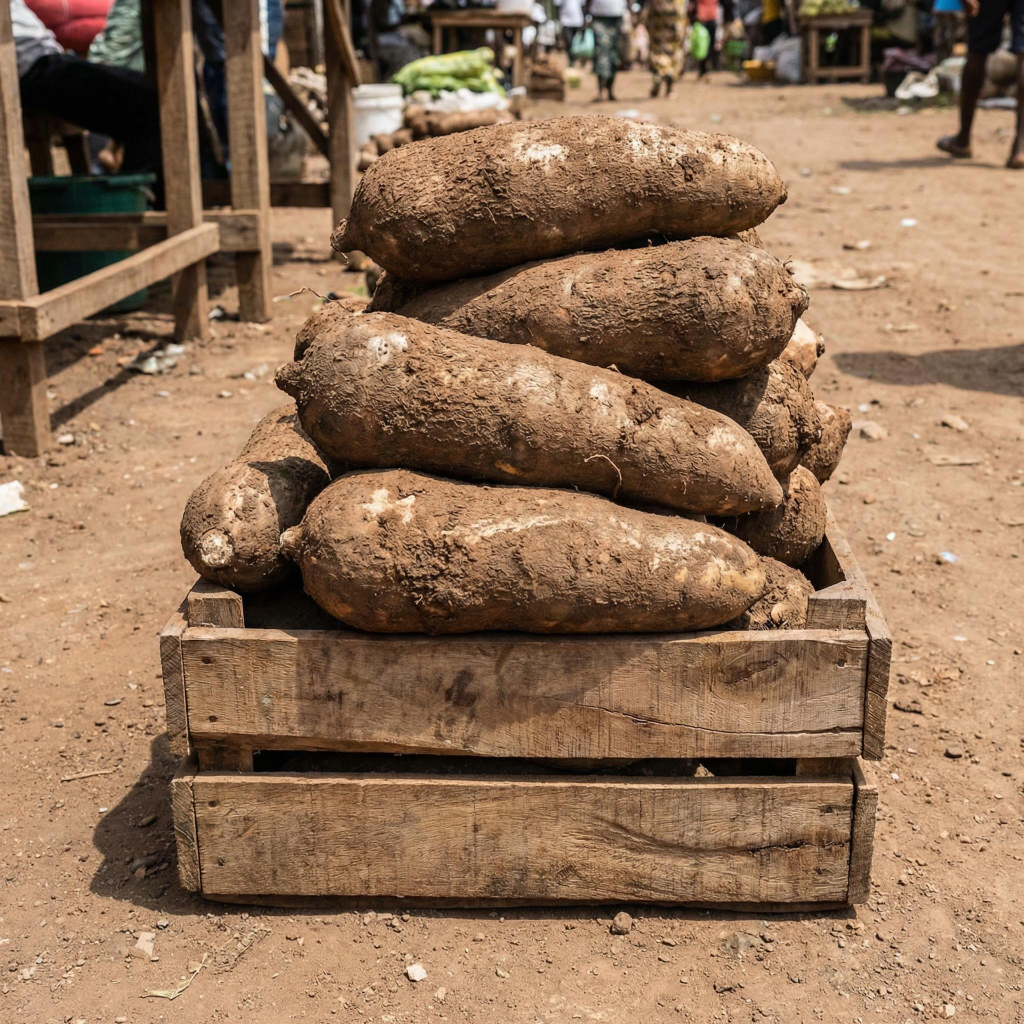
Yams
Distinct tubers with hairy, rough bark-like skin. True yams are starchier and less sweet than sweet potatoes, with versatile culinary applications worldwide.
fall, winter
Mildly sweet, starchy with a texture similar to potatoes...
Dioscorea alata
vegetable
Pairs Well With
Yams are distinct from other tubers like potatoes for their hairy, rough surface. Most varieties have a more tube-like shape and they can grow quite long and fibrous if not harvested on time. Look for ones that are not bruised, visually blemished or discolored.
Choose yams that are not bruised, visually blemished or discolored, and store for up to two weeks in a cool, airy dark place. If stored too long, they may begin to sprout (like other tubers). They are not recommended for refrigeration or for keeping covered in plastic to discourage rot or the growth of mold.
Yams can be prepared much like potatoes or sweet potatoes — even deep-fried in wedges like French fries. In addition to boiling, roasting or baking them, they can be mashed or pounded into thick soups or porridges, such as the traditional fufu or African porridge. They can be fried and served with a spicy dipping sauce. When not used for medicine or for grating onto dishes, mountain yams can be sliced thinly and dressed for a salad. And of course, they can be baked in casseroles with a sweet glaze, such as with candied yams.
Yams are traditionally stored in cool, dark earthen pits. Store for up to two weeks in a cool, airy dark place. They may begin to sprout if stored too long. Not recommended for refrigeration or keeping covered in plastic, as this encourages rot or mold growth.
Yams are primarily eaten as a source of carbohydrates, but they provide many health benefits. They are high in fiber, Vitamin C, Vitamin B complex and potassium. Unlike sweet potatoes, they are not a major source of Vitamin A. Yams are also associated with intestinal health thanks to their high fiber content. Traditional Chinese medicine has long used yams to treat stomach conditions such as indigestion and poor appetite, and for kidney and spleen health.
Yams can vary in size from that of an average potato to over 100 pounds. In some West African languages, the word 'yam' means 'to eat.' African countries were responsible for 96 percent of worldwide yam production as of 2007. The interior flesh of yam varieties can range in color from white to yellow to bright purple. In Ghana, yams are traditionally served to celebrate the arrival of a new baby. Yams have been grown in West Africa for 11,000 years. Anthropologists have dated grinding stones from Africa that may have been used to pound starchy yams back to over 100,000 years ago in the Middle Stone Age.
Requiring about one year and plenty of water to grow, yams are highly susceptible to pest, fungus and diseases. Infected plants have been known to wipe out entire crops in recent years. As a result, many studies have been undergone to understand and manage yam healthiness. Another contributing factor to crop failure lies in the storage of yams after harvest: Diseases like dry rot can easily destroy yams post-harvest if they are not properly stored and handled. To counteract these threats, yam crops have been treated to a number of chemical pesticides during propagation, growth and post-harvest. It can be difficult to locate or determine non-chemically treated yams in the market in the United States. Yams are a staple crop of West Africa and have been cultivated there for millennia. Mountain yams have been eaten in Asia for thousands of years as well.
Available Near You
Enter your ZIP code to find farms with yams near you.
Recipes with Yams
Coming Soon