
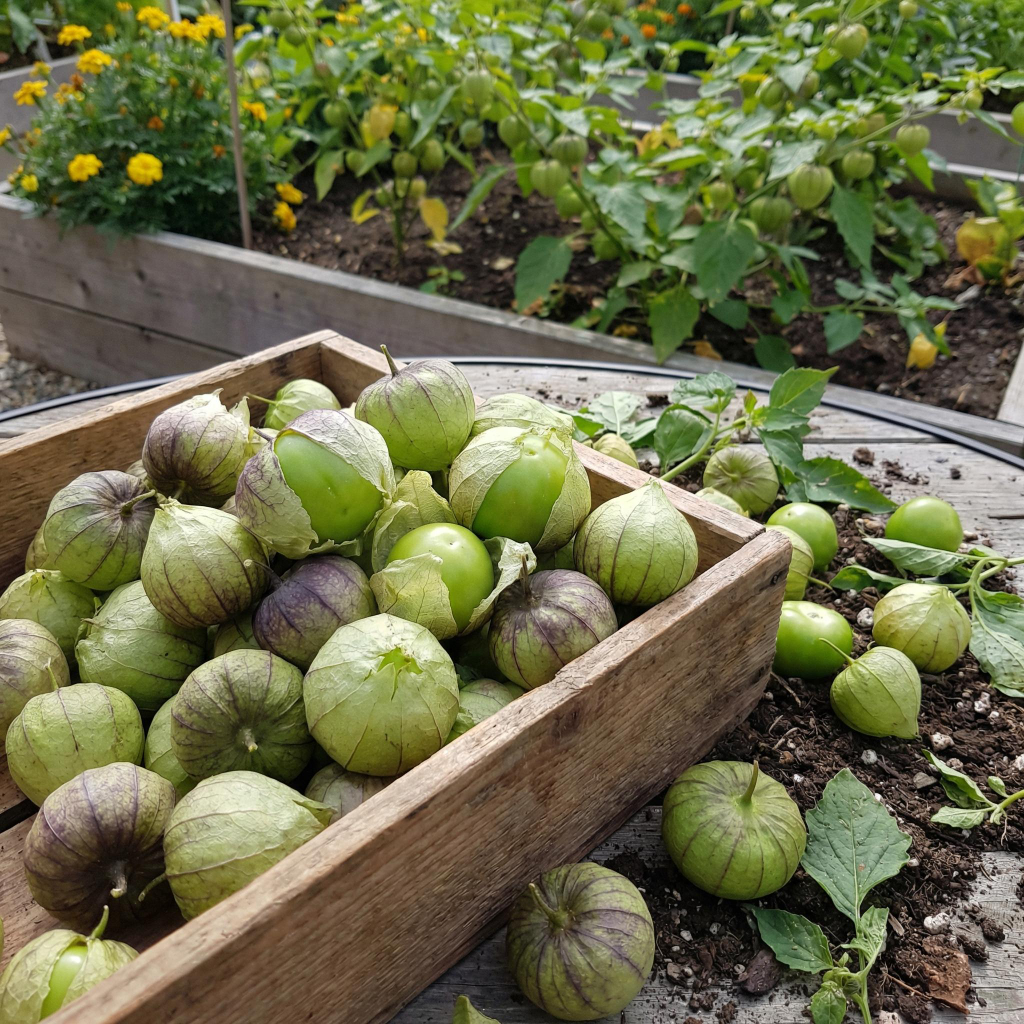
Tomatillos
Small green fruits in papery husks with a tart flavor, essential to Mexican sauces.
summer, fall
Tart, bright with a hint of citrus...
vegetable
Herbal, tangy, citrus-y, little bit sweet. Vast majority 1-2 inches diameter with plump, bright green fruit in papery husk (purple and yellow varieties increasingly available). Once husk peeled, fruit covered in lightly sticky substance easily washed off. Thin skins don't need peeling, dense flesh with lots seeds. Look for those grown to fill husks. Green tomatillos - check fruit hasn't turned yellow (over-ripeness sign). Husk fairly pliant, not completely dried out. Feel fruit inside husk - should be plump. If husks split exposing fruit okay if skins glossy without black/brown spots.
Keep for long time in fridge. Store in paper bag in produce drawer, leave in papery husks, keeps 2-3 weeks.
Can be eaten raw but more commonly roasted or simmered in water to bring out natural sweetness. Mexican cooks roast on comal (flat griddle on stovetop). Rick Bayless tip: Line shallow baking sheet with foil, roast under preheated broiler until skins blacken and soft 4-5 minutes, flip and roast another 3-4 minutes. Associated with Mexican/Central American (Guatemalan) cuisine, also shows up in Indian chutneys, curries, dals. Classically paired with green chiles in Mexican cuisine for sweet-tart counterbalance to heat. Famous salsa verde usually tomatillos, green chiles, onion (sometimes garlic, cilantro) - served with meat, shellfish (pork, chicken, shrimp), sauce for enchiladas/tacos. Sweet-tart flavor interesting addition to classic dishes - tomatillo/tomato/avocado gazpacho. Fried tomatillos. Creatively, sweet dishes - frequently cinnamon, jams, tarts, pies.
Making chutney preserves - keeps weeks refrigerated. Freeze whole - single layer on cookie sheet until frozen, transfer to freezer bags. Can whole. Make tomatillo salsa and can. Rich in natural pectin perfect for jam - try tomatillo and lime jam.
Not super nutrient-dense. Quite a bit Vitamin C, good sources Vitamin K and niacin, good sources zeaxanthin and lutein (both eye health). Fairly high fiber, low calories.
Native to Mexico, evidence tomatillo eating 900 BCE in Tehuacán Valley. Aztecs likely first domesticate before tomatoes. Other names: Mexican green tomatoes (tomate verde Spanish), husk tomatoes, jamberries. Tomatillo means 'little tomato.' Miltomatl original Nahuatl (Aztec) word - still used in Oaxaca. Word tomatillo only in English print since ~1910. Never achieved global reach of tomatoes/chiles/corn though still ubiquitous Mexican dishes. Diana Kennedy (Mexican cuisine authority) calls 'indispensable ingredient in Mexican food.' In U.S. primarily canned until decade ago, now fresh easily found.
Don't appear on EWG Guide to Pesticides in Produce. Environmental impact lessened - plants less susceptible to pests than nightshade cousins. Pesticides used - if concerned choose organic or ask local farmer about practices. Now available nearly year-round, frequently imported from Mexico (long storage ability). Warm-weather plant so peak local availability summer, usually July-September.
Available Near You
Enter your ZIP code to find farms with tomatillos near you.
Recipes with Tomatillos
Coming Soon