
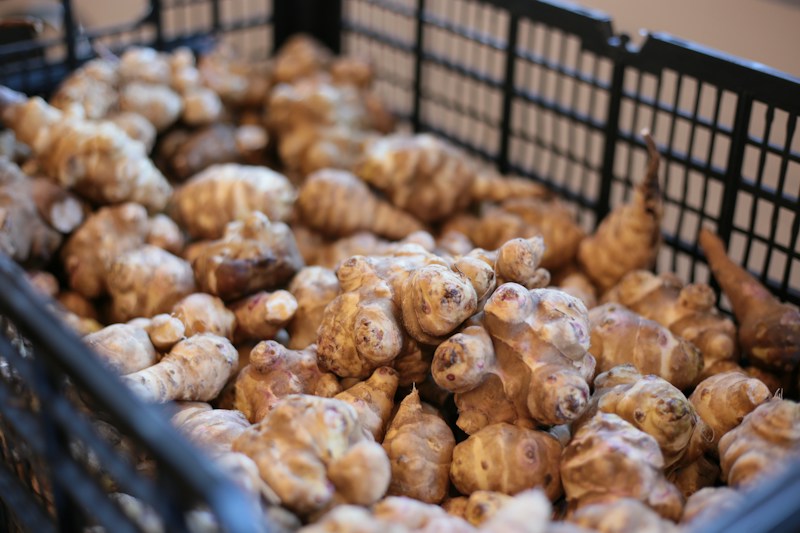
Jerusalem artichokes
Also known as: Sunchokes
Also known as sunchokes, knobby tubers with a nutty, slightly sweet flavor.
fall, winter
Nutty, slightly sweet with an artichoke-like flavor...
vegetable
Tuberous roots, firm to the touch with no black spots or blemishes. Older roots get spongier. Varieties range from knobby to smooth, some elongated like fingerling potatoes. Skin usually light brown to creamy, may be pink or reddish. Interior may be white, cream-colored, tan, or purple.
Keep in produce drawer for 2-3 weeks, sometimes even longer.
Delicious raw - shave thinly for salads with olive oil and Parmigiano-Reggiano. Make into slaw. Leave skin on for raw, but consider removing with peeler for cooked dishes (skin toughens when cooked). Roast like potatoes, sauté, make into gratins, creamy soups. French make famous creamy sunchoke soup. Simply purée and mix with cream and butter like mashed potatoes. Oxidize when exposed to air - toss with lemon juice before cooking. To prevent graying when puréed (high iron content), add pinch of cream of tartar or acid (lemon juice) to cooking water.
Can be pickled with turmeric and mustard seeds.
Great source of iron, potassium, and thiamin. Low in calories and high in fiber. Inulin (primary carbohydrate) minimally affects blood sugar and is diabetic-friendly carb.
Neither from Jerusalem nor related to artichokes. Tuberous roots of native North American plant in sunflower family, originally cultivated by Native Americans. Naming confusion started when Samuel de Champlain described them tasting like artichokes in 1603. 'Jerusalem' thought to be corruption of 'girasole' (Italian for sunflower) or Terneuzen, Dutch town where first brought to England. In Europe known as 'topinambour.' Renamed to 'sunchoke' by marketers in 1960s. Became unpopular due to reputation for flatulence - has basis in reality, high inulin content causes gas and bloating in excess. Taste better when harvested after first frost. Considered weeds in some areas, can be invasive.
Artichokes have inspired dedicated harvest festivals across the globe. Here are notable 2026 events:
Castroville Artichoke Festival
Castroville, CA, USA
🗓 September 5, 2026
Returning to its original home after years in Monterey. Famous for crowning Marilyn Monroe as the first 'Artichoke Queen' in 1948. Features a 21+ dinner-dance the preceding night.
Romanesco Artichoke Festival (Sagra)
Ladispoli, Italy
🗓 April 10–12, 2026
Now in its 73rd edition — featuring massive artichoke sculptures, cooking contests, and free samples of fried artichoke wedges. Local restaurants offer dedicated artichoke menus.
Benicarló Artichoke Festival
Benicarló, Spain
🗓 January 8 – March 3, 2026
The 'Torrà Popular' (Feb 21) roasts up to 3,000 kg of artichokes over wood fires. 'Pincho Days' see local bars compete for the best artichoke tapa.
Festa de la Carxofa
Alaquàs, Spain (near Valencia)
🗓 February 6–8, 2026
9th edition celebrating the cultural and gastronomic importance of the artichoke in the Horta Sud region.
Not commonly cultivated in North America for food despite native origins - more popular in France and Europe. Don't rank on EWG's Shopper's Guide to Pesticides. Roots used for industrial inulin production in processed foods. If purchasing from local farmer (where mostly available), environmental impact is fairly low. Available fall/winter through early spring in U.S.
Available Near You
Enter your ZIP code to find farms with jerusalem artichokes near you.
Recipes with Jerusalem artichokes
Coming Soon