
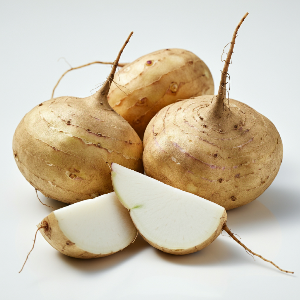
Jicama
A crisp, slightly sweet root vegetable with a texture similar to water chestnut.
fall, winter
Mildly sweet, crisp with a refreshing crunch...
vegetable
Look like giant round potatoes with light brown, almost flaky skin. Peel skin to reveal creamy white interior with crispy texture like apple or pear but less sweet. Choose smaller jicamas - those pushing 3-4 pounds are likely tough, fibrous, less sweet. Avoid roots that feel mushy, are cracked, or have black or discolored spots.
Unwrapped in refrigerator crisper drawer, stays fresh for 2-3 weeks. Cut jicama wrapped well in plastic wrap stores up to a week.
Tastes like super crunchy apple crossed with potato. Almost always used raw in salads, salsas, crudités (as Aztecs did). Can also be fried like spiralized fries, tucked into stir-fries to replace water chestnuts, boiled and mashed like potatoes, or baked. Pairs fantastically with citrus, avocado, chiles and chile powder, cilantro and mint. Common Mexican snack: jicama sticks tossed in chile powder and sprinkled with lime juice.
Can be pickled - bread and butter pickled jicama or canned jicama relish. Can also be lacto-fermented - jicama apple cumin kraut or lacto-fermented jicama pickles.
Very low in calories and high in fiber, great snacking choice. Rich in Vitamin C. Contains small amounts of folate, iron, potassium, manganese. Even contains omega-3 and omega-6 fatty acids.
Native to Mexico, historically valued by Mayans and Aztecs. Mayans mention crisp, juicy vegetable in Books of Chilam Balam (17th-18th century Mayan manuscripts). Spanish traders introduced to Philippines in 16th century, spread to Indonesia, China, West Africa. Many names: yam bean, Mexican turnip, Chinese potato. Spanish word 'jicama' comes from Nahuatl (Aztec) 'xicama.' In bean (Fabaceae) family with cousins being green beans, peas, chickpeas. Two types: jicama de agua (round, squat, clear juice) and jicama de leche (tapered, milky-white juice). Jicama de agua most common in North America.
Not widely cultivated - generally imported unless in Central America. Tiny local industry in Texas and Florida, occasionally pop up in California farmers markets. Bulk of U.S. jicamas from Mexico or further south. Slow-growing, takes 3-6 months to harvest. Need long warm season, can't be successfully cultivated in most U.S. except Florida, Texas, Hawaii. Available winter crop, generally November/December through spring.
Available Near You
Enter your ZIP code to find farms with jicama near you.
Recipes with Jicama
Coming Soon