
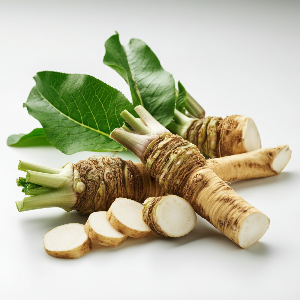
Horseradish
A pungent root used as a condiment, known for its sharp, sinus-clearing heat.
fall, winter
Intensely sharp, spicy with a pungent heat...
vegetable
Large, tapering roots with dark brown peel and white interior. Look for firm roots with no mushy or black spots. Steer clear of floppy or dried out roots. Root's bite comes from volatile compounds released when grated - without grating and air exposure, horseradish doesn't smell like much. Vinegar stops this chemical process, which is why most commercial preparations contain it.
Uncut roots keep for several weeks in crisper drawer. Cut horseradish should be used right away. Grated fresh horseradish preserved in vinegar keeps for several months in fridge.
Generally not cooked - grated and mixed with vinegar or condiments to make sauces. Grating releases very pungent volatile oils. For mild horseradish, add vinegar right away; for hot, leave grated root exposed to air briefly. Pairs with beef, seafood, roasted vegetables. Mix into mustard for kick or with ketchup for cocktail sauce. Mix with dairy (cream, sour cream, crème fraîche) to tame peppery bite. Stir into vinaigrette, make dip, fold into mashed potatoes, serve with roast beef, salmon, scallops. Can be made into gratin, used in borscht, Bloody Marys.
Can be pickled. Store grated root in vinegar for long-term preservation.
High in Vitamin C (once used as scurvy cure). Contains decent amounts of folate, potassium, calcium, manganese, and high in fiber. Used in herbal medicine for sinus relief, colds, flu (pungency relieves nasal discharge and lung congestion). Folk remedy for urinary infections and intestinal worms. Large consumption may cause profuse sweating, stomach irritation, loss of strength and disorientation.
16th-century word 'horseradish' - 'horse' meant 'coarse' or 'rough,' 'radish' from Latin 'radix' meaning 'root.' Not a type of radish despite same family. Grated root tarnishes silver serving dishes. Commonly used as one of 'bitter herbs' for Jewish Passover Seder. Perennial plant native to Eastern and Central Europe, possibly Western Asia, grown for roots 2000+ years. First written mention possibly in 13th-century medicinal text, earliest condiment documentation from 15th century.
Growers employ wide range of herbicides including glyphosate (Roundup) for weeds and volunteer horseradish (spreads easily). Other pesticides control insects and disease. Look for organic horseradish at farmers markets if concerned about pesticide use. Cool weather gives horseradish pungency - generally harvested mid-fall through early spring.
Available Near You
Enter your ZIP code to find farms with horseradish near you.
Recipes with Horseradish
Coming Soon