
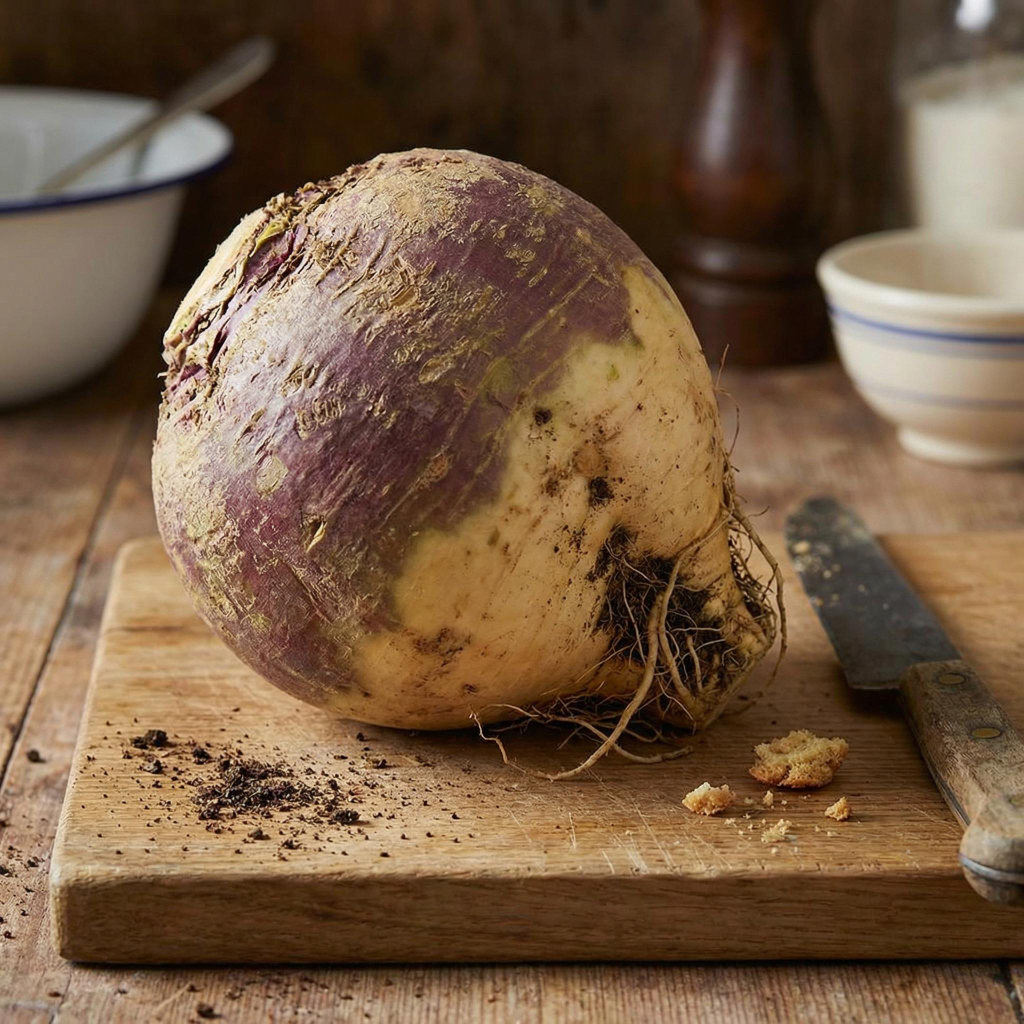
Rutabaga
A large root vegetable with yellow flesh and a sweet, earthy flavor.
fall, winter
Sweet, earthy with a hint of bitterness...
vegetable
Looks like turnip but larger with pale yellow flesh vs turnip's white. Root may be purple, white or yellow but most often cream with purple shoulders and ridges/wrinkles at top. Leaves bluish, thick like cabbage, smooth. Select fresh, vibrant leaves if choosing for greens. Root should feel heavy for size, about softball size or smaller, free of nicks, cracks, holes. Often waxed to extend shelf life - wax comes away with peel when prepped.
Keep week at room temperature, 2-3 weeks refrigerator, months in root cellar. To store in cellar, layer in boxes of moist sand, sawdust, or peat. Roots can also be wintered over in field and dug as desired.
Enjoy raw or cooked. Less peppery than related turnip. Raw: sweet and juicy, similar to jicama. Sweetens and turns rich golden yellow when cooked. Super versatile - good using any cooking method but prepared most often as tasty mash alone or with other vegetables. Trim greens, prepare like turnip greens. Trim top and bottom of root, peel with paring knife. Roasted, mashed, fries, in salads, gratins, stews, soups. Pairs beautifully with smoky, sweet, spicy flavors.
Leaves can be blanched and frozen - drop in boiling water 30 seconds, scoop with slotted spoon, plunge into ice water to seal color/texture, squeeze out excess moisture, freeze in airtight container.
High in Vitamin A and beta-carotene. Excellent source of potassium and manganese. Good source of fiber, thiamin, Vitamin B-6, calcium, magnesium, phosphorus.
Named 'rotabagg' in Swedish meaning 'root bag.' Swiss botanist Gaspard Bauhin found root growing wild in 17th century, labeled it Brassica napobrassica. Throughout Europe called 'Swedish turnip' or 'swede.' Swedish relish it as kitchen staple. In WWII times, many relied on rutabaga as often only fresh vegetable available. After rationing, many swore never to eat another. Those eating so many (breakfast, lunch, dinner) skin turned golden as flesh. Rutabagas and turnips predate pumpkins as earliest jack o' lanterns - hollowed out, filled with glowing coals, carried by children to frighten evil spirits. Ithaca Farmers' Market hosts annual Rutabaga Curl competition.
Easy to grow - need well-drained soil, moderate moisture, even grow in partial shade. Great companion plant to corn, pole beans, peas. Crop rotation key to success, keeps plants free from diseases. Genetically modified rutabaga not currently in production but fear fields could be cross-pollinated if planted near genetic cousin, frequently modified canola. Greens harvested through growing season but important not to harvest plant bare to keep root thriving - can take light frost. Roots harvested late autumn/early winter.
Available Near You
Enter your ZIP code to find farms with rutabaga near you.
Recipes with Rutabaga
Coming Soon