
Turnips
White root vegetables with a slightly peppery flavor, milder than radishes.
fall, winter
Mild, slightly peppery with a hint of sweetness...
vegetable
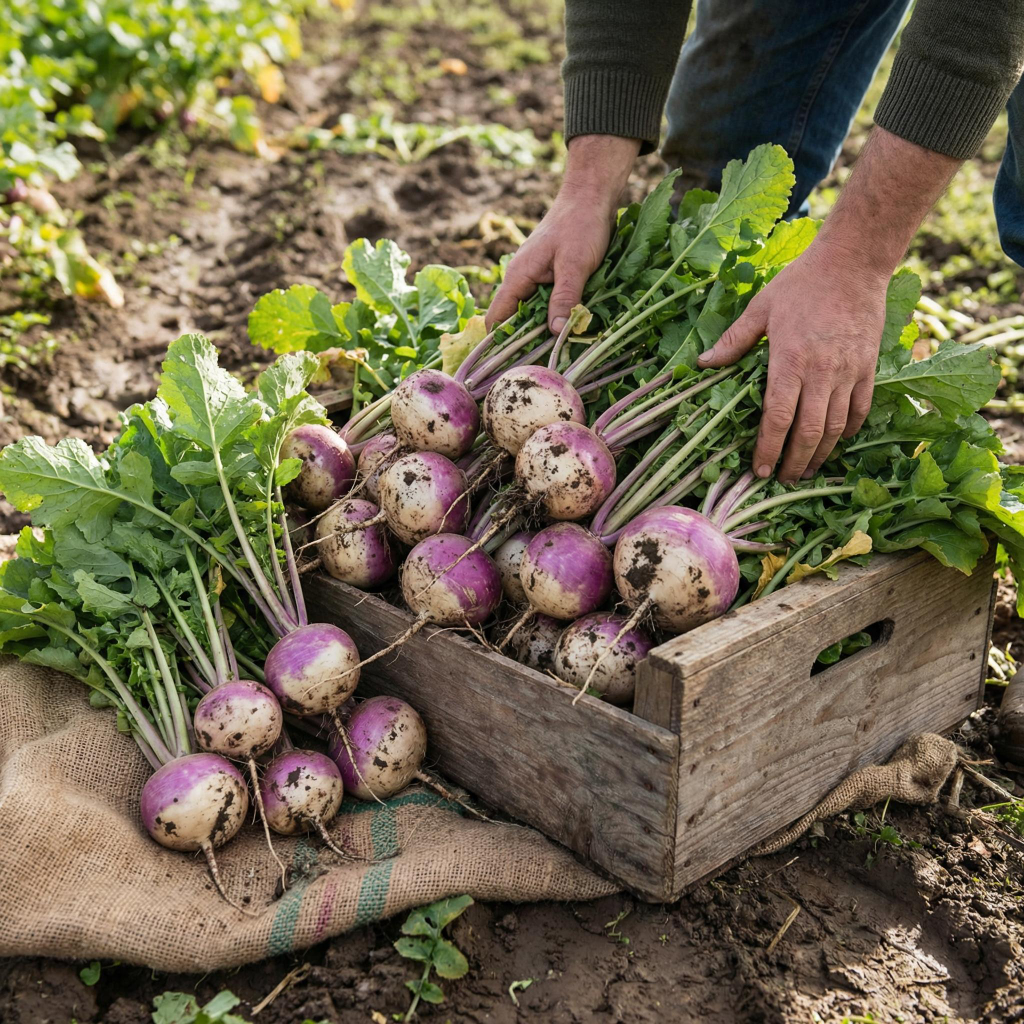
While turnips are known for their classic two-tone color scheme — purple on the top, white on the bottom — they can come in other colors, from white-and-green to amber. Spring turnips, prized for their sweetness, are smaller and entirely white. Turnips should be crisp and blemish-free; a soft or rubbery consistency is a sign of poor storage. Try to look for smaller turnips, as larger ones tend to be woody and bitter. If the tops are still attached, the greens should be bright and fresh.
Turnips store very well. Once the green top is removed, the root will keep for a few months in a dry, sealed container.
Beyond the standard mashing and roasting, turnips can be pureed with celery root, braised with apples or made into soups. If you're put off by the sometimes-bitter flavor of turnips, make sure you peel them before cooking. When you slice a turnip in half, you'll notice a yellow line about a quarter of an inch into the root — peel beyond that line. Some also claim that boiling turnips with a potato will decrease the bitterness.
Turnips' peppery flavor makes them perfect for pickling. You can also freeze your winter haul: Start by peeling, slicing and blanching, then plunge them in an ice bath. You can then vacuum-seal or transfer them to sealable containers and store in the freezer for months.
Though they are mostly fiber and water, turnips are rich in Vitamin C: One cup, raw, contains 45 percent of the recommended daily intake. Turnips also have moderate amounts of potassium and Vitamin B6. But it's the greens that pack a nutritional punch, with one cup providing all your daily Vitamin K and a hefty dose of Vitamins A and C, plus moderate amounts of calcium and manganese.
The turnip is a 'cruciferous' vegetable, a distinction it shares with cabbage, kale, broccoli, Brussels sprouts, cauliflower and other kinds of hearty produce. The word derives from Latin, referring to the 'cross' formed by its four petals.
Ancient turnips would have looked more like a carrot instead of the round variety that we know today, which is the result of centuries of breeding.
Turnips are not grown commercially in large quantities in the U.S., so their environmental impact is minimal. Planted in the spring, the youngest turnips start showing up in summer. November and December is prime season for the fully matured vegetable, and because they store well, they are bountiful into late winter.
Available Near You
Enter your ZIP code to find farms with turnips near you.
Recipes with Turnips
Coming Soon