
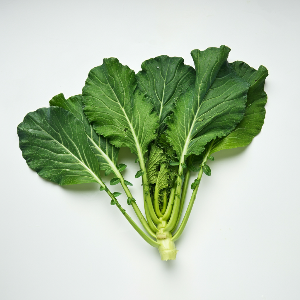
Mustard Greens
Peppery, robust greens that add a spicy kick to dishes.
fall, winter, spring
Peppery, spicy with a robust, slightly bitter taste...
vegetable
Come in array of shapes and sizes - ruffled-edge bright green 'Southern Giant' most common in U.S. Vary from small-leaved to large, yellow-green to purple to deep dark green. Some varieties like Japanese mizuna have thin deeply serrated leaves with tender stems; others like Red Giant have large softly rounded leaves with very thick stems. Look for perky (not soft/floppy) greens. Steer clear of yellowing, browned leaves, or mushy spots.
Keep best wrapped in barely damp paper towel in open zip-top bag in crisper drawer. Best eaten within 3-4 days.
Can be steamed, stirred into soup, stir-fried, braised, or sautéed like other hardy greens - try in place of spinach or chard. Pair deliciously with beans and lentils, pork (especially ham hocks), tofu, garlic, onions, citrus. Peppery flavor much reduced through cooking, initial blanch helps tame further. Can eat raw in salads - simple Caesar-style or with apples. Seek less spicy varieties if intense; adding fat, salt, and acid (vinegar/lemon) cuts bitterness.
Take super well to lacto-fermentation - Vietnamese-style dưa cải chua (fermented mustard greens) used as condiment in Asian cuisines (Indian, Japanese, Vietnamese, Thai, Chinese/Sichuan). Also pickle well. Can freeze successfully for later use.
One cup raw has over 100% daily Vitamin K (necessary for blood and bone health). Great source of Vitamin C with decent Vitamin A, folate, calcium, fiber. Surprising amount of protein. Glucosinolates (bitter bite) studied for anti-cancer properties. High consumption of mustard greens linked to reduced prostate cancer risk. May repel mosquitoes.
Haven't enjoyed culinary renaissance like kale, sometimes overshadowed by collards, but soul-food staple. Term encompasses various species in genera Brassica and Sinapis, cultivated for centuries across Asia and Europe for leaves and edible seeds. Varieties probably native to Central Asia/Himalayan region or Europe. Herodotus wrote of mustard cultivation in 5th century BCE. China major secondary genetic variation source, centered in Sichuan. In Medieval Europe, courts and monasteries employed 'mustardarius' to oversee mustard growing and making. Successfully used in phytoremediation - plants remove toxic substances like heavy metals from soil. In spring 2023, genetically engineered mustard greens (CRISPR-edited for reduced bitterness) became first CRISPR-edited produce to hit U.S. grocery stores.
Increasingly used as cover crop - cold hardy, grow rapidly, have glucosinolates helping combat soil-borne diseases and weeds. Kale, collard and mustard greens ranked No. 3 on EWG's 2023 'Dirty Dozen' (only strawberries and spinach rank higher for pesticide residues). Susceptible to certain pests and pesticide use common. Best to buy organic or discuss growing practices at farmers markets. Cool-season vegetable, peak spring and fall. Hot weather causes bolting (flowering), turning greens unpleasantly bitter. Fall crop often planted as frost-resistant, easily overwinters in temperate areas.
Available Near You
Enter your ZIP code to find farms with mustard greens near you.
Recipes with Mustard Greens
Coming Soon