Fruit · Year-Round in Warm Climates
Guava
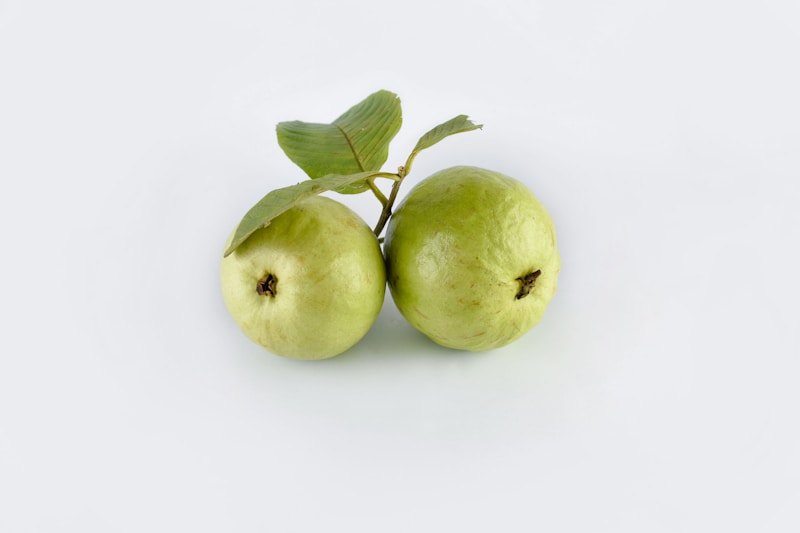
Guava (Psidium spp.) is believed to be native to southern Mexico, Central America, and the Amazon Basin, and has since spread to tropical and subtropical regions across the globe. The flesh ranges from greenish-white to a saturated pink, with a tropical fragrance and a sour-sweet flavor.
The skin is edible (though occasionally bitter) and so are the seeds, which soften as the fruit ripens. Guava plays a major role in Latin American cuisine — eaten raw, juiced, cooked into sauces, or transformed into goiabada, a firm pectin-rich paste served at breakfast or dessert.
Guava is part of the myrtle (Myrtaceae) family — the same family as cloves, allspice, and eucalyptus.
The famous guayabera shirt, popular throughout Latin America, is said to have been named because its four large pockets were ideal for carrying guavas (guayabas in Spanish).
Strawberry guava (Psidium cattleianum) has become an invasive species in Hawaiʻi, Florida, and Puerto Rico — where most commercially cultivated U.S. guavas are grown.
Select guavas that are smooth-skinned, with a bit of give, and heavy for their size — similar to selecting a ripe avocado or mango.
Unripe guavas are tannic and astringent, but will ripen quickly if left on the counter for a day or two.
Choose organic options when available to avoid potentially toxic agricultural chemical residues.
Unripe / Green: Can be stored in the refrigerator for two to five weeks.
Fully Ripe: Best eaten within a few days. The fully ripe fruit is fragrant and soft — don't wait too long.
Pastelitos de Guayaba y Queso: A beloved Latin American pastry pairing guava paste with cream cheese in flaky dough — a classic Cuban and Puerto Rican treat.
Cascos de Guayaba: Hollowed-out guavas stewed in syrup and served with cream cheese — a traditional Latin American dessert meaning "guava helmets."
Hawaiian Guava Chicken: Guava juice or puree used as a sweet glaze or marinade for chicken — a classic Hawaiian preparation.
Juices & Cocktails: Guava puree blends beautifully into tropical cocktails, aguas frescas, and smoothies. Guava margaritas are a standout.
Fresh Eating: Halved and eaten raw with a sprinkle of chili-lime salt — the classic street food preparation in Mexico and Central America.
Goiabada / Guava Paste: A firm, sliceable paste made by cooking down guava pulp and sugar until thick — an iconic Latin American pantry staple. The slightly softer Colombian version is called bocadillo.
Jam: Guava's high pectin content makes it ideal for jam-making without added pectin. Mexican guava jam (mermelada de guayaba) is a household staple.
Freezing: Guavas freeze best packed in a medium-concentration syrup (per National Center for Home Food Preservation guidelines).
Exceptional Vitamin C: Guavas contain four times as much Vitamin C as oranges — one of the highest natural concentrations of any fruit.
Potassium: Guavas have as much (if not more) potassium as an equivalent amount of banana, supporting heart health and blood pressure regulation.
Fiber: An excellent source of dietary fiber, supporting digestive health.
Antioxidants: Guavas contain lycopene (especially pink-fleshed varieties) and other antioxidants associated with reduced risk of chronic disease.
Origin: Southern Mexico, Central America, and the Amazon Basin. Now grown across tropical and subtropical regions worldwide.
U.S. Production: Primarily Hawaiʻi, South Florida, and Puerto Rico. Also grown in parts of California.
Season: Guava trees can fruit year-round in warm climates, though yields fluctuate with weather conditions.
Drought-Tolerant: Although guava trees fruit best with regular water, they are extremely drought-tolerant — a resilient crop well-suited to changing climate conditions.
Pest Management: Chemical-free measures such as netting or bagging the fruit are often effective against pest infestations, reducing pesticide need.
Invasive Species Risk: Strawberry guava has become invasive in Hawaiʻi and Florida, crowding out native vegetation. This is an ecological concern for wild-growing varieties outside their native range.
Buy Organic: Choose organic guava products when possible to avoid exposure to potentially toxic agricultural applications.
In-Season Recipes with Guava
Seasonal recipes featuring Guava right now
Coming Soon
All Other Recipes with Guava
Coming Soon