
Fruit · Summer & Fall
Grapes
Fresh, dried as raisins, or fermented into wine — one of the oldest cultivated fruits in human history.
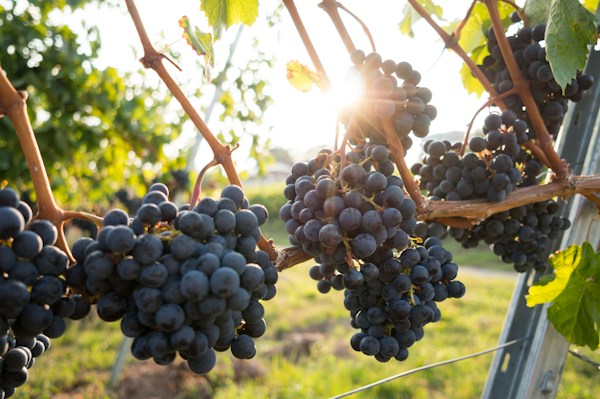
Choose clusters with plump, firm grapes firmly attached to green, flexible stems. Avoid loose, shriveled, or leaking grapes or any with brown, brittle stems. Fresh grapes should have no brown spots, mold, or significant numbers of shriveled berries on the cluster.
Grape season peaks August through October in North America, but varieties like Red Globe and Thompson Seedless are available year-round from Chile and California. The best flavor comes from domestic grapes in season.
Grapes range from slip-skin varieties to crisp seeded grapes. Here are the most essential types for cooking and eating:
Concord
Deep purple-black, intensely 'grapey' flavor — the grape of jelly, juice, and traditional American desserts. Slip-skin variety.
Thompson Seedless
The most widely grown table grape — green, sweet, mild, and seedless. Also dried as golden raisins.
Red Globe
Large, seeded, crisp, mildly sweet. An elegant presentation grape — stunning halved on a cheese board.
Flame Seedless
Popular red table grape with crisp texture and sweet flavor. A hybrid of Thompson Seedless and other varieties.
Muscadine
Native to Southern U.S. with bronze or black varieties. Larger slip-skin grapes with distinctive flavor used for wine and fresh eating.
Corinth
Very small, seedless red grapes tightly bunched, also called 'Champagne grapes.' Delicate flavor and elegant presentation.
Store grapes as dry as possible in the refrigerator in a ventilated bag — they can last 1–2 weeks. Moisture accelerates decomposition, so wash only just before eating.
Freezing: Freeze whole seedless grapes directly — they become a refreshing frozen snack and can serve as flavorful, wine-compatible ice cubes for chilling drinks without diluting them.
Roasting: Roast whole clusters at 425°F with olive oil, thyme, and salt until the grapes blister and burst — they become intensely sweet, jammy, and deeply flavored. Extraordinary served alongside cheese, pork, duck, or chicken.
Verjuice: Fresh-pressed juice from unripe grapes — a mild, fruity acid used in cooking before lemons became widely available. Adds complexity to sauces and dressings without sharpness.
Grape Leaves: In Greek, Turkish, and Lebanese cuisine, grape leaves are blanched and stuffed with rice, herbs, and meat — dolmades (Greece), warak enab (Levant). Fresh or jarred grape leaves work equally well.
Reductions & Sauces: Grape juice reduced with wine and aromatics into a gastrique — a sweet-sour sauce excellent with game, duck, and pork.
Fresh Preparations: Concord grapes in focaccia with rosemary, sorbetto, fresh grape pie, grape-lavender tart, chicken salad with grapes. Both raisins and fresh grapes pair beautifully with cheese.
Drying (Raisins): The most ancient preservation — sun-dried grapes. Thompson Seedless for golden raisins; Muscat for large, sweet raisins; Zante currants (dried Black Corinth grapes) for baking. Dehydrate at home for superior flavor.
Jam & Jelly: Grape jelly is one of the most traditional American preserves. Concord grapes make the most intensely flavored jelly.
Wine & Vinegar: The ultimate preservation — fermentation transforms grapes into wine, then further fermentation into vinegar. Red wine vinegar, white wine vinegar, and aged balsamic are all grape-derived.
Freezing: Freeze whole seedless grapes for a refreshing snack and natural ice cubes.
Grapes are a good source of vitamins C and K, and contain significant amounts of resveratrol — a polyphenol antioxidant found primarily in the skin of red and purple grapes. Resveratrol has been extensively studied for its potential cardiovascular, anti-inflammatory, and longevity-promoting effects.
Red and purple grapes contain anthocyanins — the same class of antioxidants found in blueberries and cherries. These compounds are associated with reduced risk of heart disease, improved cognitive function, and anti-cancer properties.
One cup of grapes provides about 104 calories, 1.4g of fiber, and 27% of the daily value for vitamin K, which plays a critical role in blood clotting and bone health.
Grapes are one of the oldest cultivated plants — archaeological evidence of grape cultivation dates to at least 6,000–8,000 BCE in the South Caucasus region. The earliest evidence of winemaking can be seen in 8,000-year-old clay vessels unearthed in Georgia.
There are over 10,000 named grape varieties worldwide, though fewer than 100 are grown commercially. The global wine industry uses about 80% of all grapes grown — table grapes and raisins account for only 20%.
The table grape industry has produced extraordinary novelty varieties in recent decades — Gum Drop, Cotton Candy, Moon Drops (long, tubular, intensely sweet), and Witch Fingers grapes have won fans for their unusual shapes and flavors.
In the 19th century, grape varieties from the U.S. saved the vineyards of Europe. After an aphid-like insect (phylloxera) decimated European vineyards, growers figured out that grafting European grape varieties onto phylloxera-resistant North American root stock could prevent further destruction.
Grape cultivation faces significant sustainability challenges. Large-scale grape growing, especially in the U.S. and Australia, is very water-intensive, and pesticides (especially fungicides) are widely used. Grapes rank eighth on the Environmental Working Group's Dirty Dozen list of most pesticide-contaminated fruits.
Genetic diversity has decreased in recent years as certain cultivars have begun to dominate, replacing varieties bred for specific geographic conditions like low rainfall.
Raisins have some negative environmental implications. Most golden raisins are exposed to sulfur dioxide (which is a factor in acid rain) to maintain their light color. Brown raisins get their color from natural caramelization during sun- or oven-drying.
Grape harvesting is labor-intensive with a history of labor exploitation. The famous 1965 Delano Grape Strike led to the formation of the United Farm Workers union. More recent labor shortages and poor working conditions continue to be concerns.
Raisins, ironically, have a very low carbon footprint per calorie — drying concentrates the calories while eliminating the water weight that makes fresh fruit expensive to transport.
Available Near You
Enter your ZIP code to find farms with grapes near you.
Recipes with Grapes
Coming Soon