
Citrus · December – March
Grapefruit & Pomelo
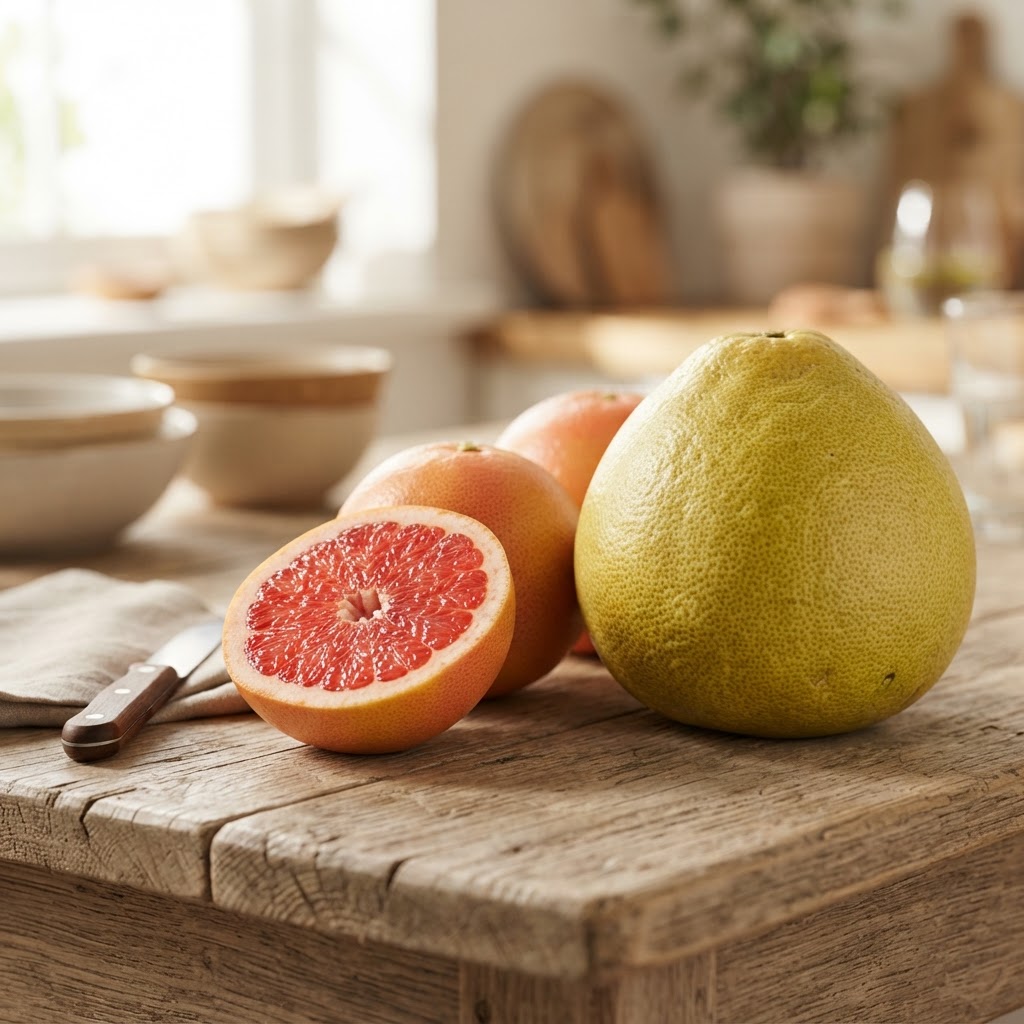
Native to Malaysia and Southeast Asia, the pomelo (Citrus maxima) is the largest of all citrus fruits — roughly the size of a bowling ball. Peel away its thick yellow-green rind and the spongy pith gives way to enormous seedless segments in shades of coral or green, juicy and delicately sweet.
By the late 17th century, the pomelo had traveled across the Pacific to Barbados, where it was bred with sweet orange — resulting in the grapefruit (Citrus paradisi) we know today: bittersweet, tangy, and one of the most distinctive flavors in the citrus family.
Grapefruits were originally dubbed "shaddocks," after the sea captain who allegedly first transported pomelos from the Pacific to the Caribbean. Pomelos are also sometimes called shaddocks.
By the early 19th century, grapefruits were being cultivated in Florida, where they earned their current name for the grape-like clusters they formed on the trees.
The famed red grapefruit of South Texas was declared the official state fruit of Texas in 1993.
White/Yellow Grapefruit: The classic variety with pale yellow flesh — tangy, slightly bitter, and refreshing. The most widely available grapefruit in supermarkets.
Pink Grapefruit: Milder and sweeter than white grapefruit with a blush-pink interior. A popular choice for fresh eating and juice.
Ruby Red / Texas Red Grapefruit: Deep red flesh with the sweetest flavor and highest lycopene content of all grapefruit varieties. The official state fruit of Texas.
Pomelo (Pummelo): The parent fruit of grapefruit — much larger, with thick spongy pith and sweet, mild flesh in coral or pale green segments. Less bitter than grapefruit. Best found in Asian grocery stores.
Oroblanco / Sweetie: A hybrid of pomelo and grapefruit with sweet, seedless flesh and low bitterness — excellent for those who find standard grapefruit too sharp.
Hold the fruit in your hand — it should feel heavy for its size, with smooth skin. Avoid fruits with browning or squishy spots.
For pomelos, look for fruits that feel firm with no give in the rind. Their thick pith can make them feel deceptively light, so compare by size rather than weight.
Pomelos are more likely to be found at Asian grocery stores or specialty markets than conventional supermarkets.
Store in the refrigerator to avoid mold. Even in the chill, citrus has a limited shelf life and should be eaten within 10 days of purchase.
Grapefruit and pomelo can be stored at room temperature for a few days if you plan to eat them soon — cold temperatures can dull flavor slightly, so bringing them to room temperature before eating enhances their aroma.
Fresh: Delicious on their own, perhaps sprinkled with sugar or drizzled with honey. Broiling grapefruit halves with brown sugar is a classic brunch preparation.
Salads: Both fruits pair beautifully with bitter greens — arugula, watercress, frisée, escarole — plus fennel, red onion, avocado, and leafy herbs like basil and cilantro.
Seafood Pairings: Grapefruit and pomelo are excellent complements to scallops or grilled shrimp — the citrus brightness cuts through richness and enhances delicate seafood flavor.
Cocktails: Grapefruit juice is a cornerstone of classic cocktails — the Paloma, the Greyhound, the Sea Breeze — and fresh-squeezed makes all the difference.
Vinaigrettes & Sauces: Grapefruit juice adds complex bittersweet acidity to dressings and pan sauces, especially for duck, pork, and seafood.
Candied Grapefruit Peel: A classic confection — the peel is blanched, simmered in sugar syrup, and dried. The bitter pith is transformed into a chewy, sweet-bitter treat, often dipped in chocolate.
Grapefruit Marmalade: The bittersweet rind makes exceptional marmalade with complex flavor and beautiful amber color.
Juice: Fresh-squeezed grapefruit juice can be refrigerated for a few days or frozen for longer storage.
Vitamin C: An average-size grapefruit supplies more than 85% of the daily recommended amount of Vitamin C. Just a quarter of a pomelo contains approximately the full recommended daily 90 milligrams.
Lycopene: Grapefruit — particularly red and pink varieties — is rich in lycopene, the same antioxidant found in tomatoes, associated with heart health and cancer prevention.
Cholesterol: A 2006 study found links between eating grapefruit and lowered blood cholesterol levels.
Drug Interaction Warning: Grapefruit contains compounds (furanocoumarins) that can interfere with cholesterol-lowering statins and certain other medications by inhibiting the enzyme that metabolizes them. If you take prescription medications, consult your doctor about grapefruit consumption.
Grapefruit Season: Although sold year-round in supermarkets, peak season runs from December to March — true winter citrus at its best.
Pomelo Season: Similar to grapefruit, with a somewhat earlier arrival around late November.
Top Producers: China is the world's top producer of grapefruit, followed by Mexico, South Africa, and the U.S. The main U.S. grapefruit-producing states are Florida, California, Texas, and Arizona.
Pomelo Geography: The pomelo thrives in Southeast Asia, China, Oceania, and the Caribbean. It is commercially grown in the U.S. but limited to subtropical regions, and is best found in Asian grocery stores or specialty markets.
Pesticides: According to the EWG's 2023 Shopper's Guide to Pesticides in Produce, conventional grapefruit has a "low to moderate" pesticide residue score. A growing number of organic grapefruit groves are available.
Buying Organic: Choose organic grapefruit when possible, especially if using the zest or peel for cooking or candying.
Pomelo: Due to limited U.S. production, pomelo is not included in EWG pesticide guides. Being a specialty crop, it has a negligible environmental impact and is largely regionally sourced where it is grown.
In-Season Recipes with Grapefruit
Seasonal recipes featuring Grapefruit right now
Coming Soon
All Other Recipes with Grapefruit
Coming Soon