Eggplant
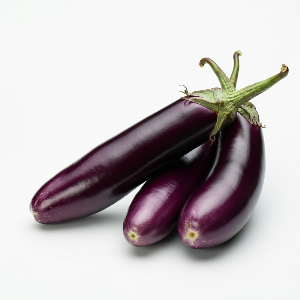
A versatile, meaty-textured nightshade fruit available in numerous global varieties. From the classic deep purple globe eggplant dominant in America to slender Japanese varieties, Thai striped eggplants, and Ethiopian orange-striped varieties, eggplant adapts to cuisines worldwide. Its fat body and meaty texture make it ideal for grilling, roasting, and frying.
From the hefty Globe eggplant of a Sicilian caponata to the slender Japanese variety grilled over charcoal, eggplant transforms under heat — its spongy, slightly bitter raw flesh becomes silky, smoky, and rich when cooked properly.
Look for glossy, unblemished skin and very firm texture when gently squeezed. Regardless of size, shape, or color, choose firmest specimens available. Smaller varieties tend to be less bitter than larger specimens. Common U.S. variety is large, teardrop-shaped, deep purple. Also available: long slender Asian varieties, Thai striped varieties (green-and-white), Japanese varieties (purple, slim), Togo varieties (small, oval, orange with green stripes). Purchase directly from farmers' markets for freshest, least bitter specimens.
Eggplant comes in a stunning range of shapes, sizes, and colors. Click any variety to explore its flavor, best uses, and preparation tips.
Globe / Italian
The classic large, pear-shaped purple eggplant — meaty, versatile, and the most widely available
Japanese
Long, slender, and tender with fewer seeds — sweet flavor and quick-cooking, ideal for grilling
Chinese
Similar to Japanese but lighter in color with a thinner skin and very mild, sweet flavor
Indian / Baby
Small, round brinjal varieties — essential in South Asian curries and stuffed preparations
White
Ivory-white skin with a mild, creamy flesh and fewer bitter compounds — elegant in presentation
Graffiti / Zebra
Striking purple and white striped skin — milder and sweeter than globe, beautiful roasted whole
Tropical plant that doesn't tolerate cold well. Store at room temperature if cooking immediately. Refrigerate for no longer than 2-4 days depending on post-harvest timing. Longer refrigeration increases bitterness. Avoid cold storage when possible.
Grilling: Sliced lengthwise, brushed with oil, grilled until tender. Roasting: Cut into rounds or chunks, roasted until golden and tender. Deep frying: Breaded and fried eggplant parmesan. Pan frying: Japanese eggplant excellent sliced and pan-fried. Pureed: Baked until soft, then pureed into baba ganoush or baingan bharta. Stewing: Ratatouille and other stewed preparations with tomatoes and peppers. Stuffing: Halved, hollowed, and filled with seasoned meat or grain mixtures.
Freezing: Blanched and frozen, though texture becomes mushy (suitable for recipes requiring pureeing). Caponata: Cooked eggplant dish made and frozen for long-term storage. Pickling: Eggplant pickles canned or stored long-term in refrigerator. Making prepared dishes like caponata extends preservation options.
Contains moderate fiber, though not strong source. Purple varieties particularly rich in antioxidants in skin, which may help protect against disease. Contains chlorogenic acid, a type of antioxidant studied for potential cholesterol-lowering properties. Relatively low in calories. More nutritionally significant for culinary versatility and integration into balanced meals than standalone nutritional density.
Originally termed 'mad apple' in Europe, following European naming convention for new-world plants (tomato = 'love apple,' potato = 'Devil's apple'). Despite 'eggplant' name synonymous with deep purple, early cultivars were white and egg-shaped. Called 'aubergine' in most English-speaking countries outside U.S. Technically classified as a fruit, not vegetable. Comes in remarkable diversity: globe-shaped Thai eggplants striped green-and-white, slender purple Japanese varieties, striped orange-with-green Togo (Ethiopian) eggplants.
International eggplant production highly concentrated: China and India produce over 83% of world's supply. Chinese production environmentally problematic due to monocropping, heavy chemical fertilizer use, and liberal pesticide application. Indian production involves Bt eggplant (GM variety) developed by Monsanto to resist insects—moratorium called in 2010 after widespread protests, though approved for trials and widely grown in Bangladesh. U.S. production negligible but relies on synthetic fertilizers and pesticides in commercial operations. Small organic farms in summer produce eggplant without chemicals. Check with local farmers about methods. Seek organic and local sourcing when possible.
In-Season Recipes with Eggplant
Seasonal recipes featuring Eggplant right now
Coming Soon
All Other Recipes with Eggplant
Coming Soon