Fruit · Late Spring – Early Fall
Dragon Fruit
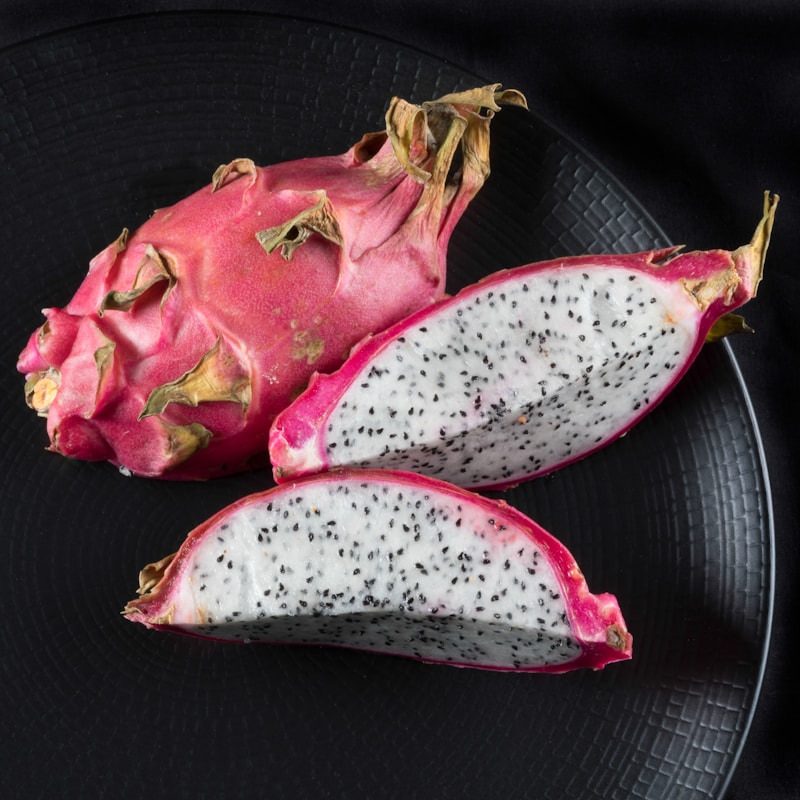
Dragon fruit, also called pitaya or pitahaya, is a tropical and subtropical fruit produced by several different cactus species. You'll recognize it by its bright red or purple exterior with scaly spikes and its yellow, purple, or white interior flecked with black seeds.
There are two main varieties — one more sour and one more sweet. The sweet pitaya varieties taste similar to a cross between a kiwi and a pear, and include the iconic red-skinned, white-fleshed fruit as well as the purplish/reddish variety that lends its vibrant hue to Instagram-famous smoothie bowls and "superfood" powders.
Harvesting dragon fruit is a tricky business — the cacti have thorns, and some yellow dragon fruit have spiky thorns as well. It is advised that you wear gloves while harvesting.
Dragon fruit is also known as a "strawberry pear."
Red-Skinned, White-Fleshed (Hylocereus undatus): The most widely recognized variety, with vibrant magenta skin and mild, slightly sweet white flesh. Common in U.S. and Asian markets.
Red-Skinned, Red/Purple-Fleshed (Hylocereus costaricensis): Sweeter and more intensely colored, this variety gives smoothie bowls and powders their vivid magenta hue.
Yellow-Skinned, White-Fleshed (Selenicereus megalanthus): Found throughout Central and South America, this sour variety has yellow spiky skin and sweeter, denser white flesh — considered the sweetest of all pitayas by many.
Unripe dragon fruit is green. For a ripe fruit ready to eat, look for red or yellow skin (depending on the variety). The skin should be bright and evenly colored with no or few dark spots.
It should be ever-so-slightly soft to the touch, but not mushy, and the spikes or "wings" should be starting to turn brown and dry.
You can buy underripe fruit and let it ripen on your counter, but it only ripens slightly after harvesting.
Store whole dragon fruit at room temperature, where it will keep for several days.
To slow its ripening, place the fruit in a plastic bag and store it in the fridge.
Once you've cut into the fruit, keep any leftovers covered in the fridge.
Fresh: Dragon fruit is mostly enjoyed fresh on its own. Simply halve and scoop out the flesh with a spoon.
Fruit Salads & Salsas: Its mild, refreshing flavor and striking color make it a great addition to raw fruit salads and tropical salsas.
Smoothies & Smoothie Bowls: Blends beautifully into smoothies; the red-fleshed variety produces vibrant magenta smoothie bowls.
Beverages: Used in refreshing drinks like Malaysian dragon fruit lemonade.
Baked Goods: Can be incorporated into cakes, muffins, and other baked goods for natural color and tropical flavor.
Desserts: Used to make jelly (similar to Jell-O) and other sweet dishes across Southeast Asia.
Dragon fruit doesn't last long after harvesting, so preservation is a great way to extend its life.
Jams, Preserves & Compotes: The best preservation methods — the fruit's natural pectin helps it set well.
Freezing & Dehydrating: Dragon fruit doesn't freeze or dehydrate particularly well compared to other fruits, so cooked preserves are preferred.
Fiber: Dragon fruit is an excellent source of dietary fiber, supporting digestive health and satiety.
Prebiotics: Contains prebiotic compounds that may help promote a healthy gut microbiome and improve digestive health.
Antioxidants: The vivid colors of red and purple varieties indicate high antioxidant content, particularly betacyanins.
Low Calorie: Dragon fruit is relatively low in calories while being hydrating and nutrient-dense.
Origins: Pitaya is indigenous to Central and South America. It is now cultivated and enjoyed throughout Southeast Asia, India, Australia, the Caribbean, and the southernmost parts of the U.S.
Largest Producer: Vietnam is the largest commercial producer of pitaya worldwide.
U.S. Availability: In Hawai'i, South Florida, and Southern California, fresh dragon fruit is available late spring through early fall.
Water Efficiency: Dragon fruit plants, being cacti, do not require a lot of water — making them relatively sustainable crops in arid and semi-arid climates.
Pest Management: Dragon fruit is susceptible to pest infestation, but chemical-free measures like netting or plastic-bagging the fruit are often effective and widely used.
Buying Tips: When shopping for dragon fruit or dragon fruit products, choose organic options to avoid exposure to potentially toxic agricultural applications.
In-Season Recipes with Dragon Fruit
Seasonal recipes featuring Dragon Fruit right now
Coming Soon
All Other Recipes with Dragon Fruit
Coming Soon