
Cumin
Also known as: jeera, zira, comino
The small, ridged, golden-brown seed of a delicate annual, cumin has a warm, earthy, and smoky flavor that anchors the cuisines of India, the Middle East, Mexico, and North Africa.
Warm, earthy, smoky, and slightly bitter with a savory, pungent depth...
Cuminum cyminum
spice
Pairs Well With
Cumin is the dried seed of a delicate annual in the parsley family, prized across India, the Middle East, Mexico, and North Africa for its warm, earthy, and smoky flavor. Whole seeds are toasted or bloomed in oil, while ground cumin anchors spice blends like garam masala, baharat, and chili powder. It is one of the oldest and most widely used spices in the world.
Cumin's warm, smoky, earthy character comes mainly from cuminaldehyde, with terpenes adding citrus and pine notes. Its bitterness balances rich meats and legumes, and it blends with coriander and turmeric to form the classic base of Indian and Middle Asian spice mixes.
CUMIN
CUMINALDEHYDE
warm | smoky | earthy
The dominant compound; gives cumin its signature warm, earthy smokiness in curries and rubs.
CUMIN ALCOHOL
warm | spicy | slightly sweet
Adds a round, warm depth that softens cumin's sharper edges.
PINENE
pine | woody | fresh
Brings a fresh, woody note that lifts cumin in bright spice blends.
TERPINENE
citrus | pine | fresh
A light citrus-pine top note that bridges cumin with coriander and cardamom.
Toast Whole Seeds
Toast whole seeds in a dry pan until they darken slightly and release their aroma to deepen the flavor before grinding or using whole.
Bloom in Oil
Add ground or whole cumin to hot oil at the start of cooking to bloom the aromatic oils and build a warm flavor base.
Add Ground Late
Stir ground cumin near the end of cooking or in a finishing oil to preserve its volatile, smoky aroma.
Curries
A backbone of Indian and South Asian curries, often bloomed in oil with coriander and turmeric.
Mexican dishes
Seasons chili, tacos, and beans with a warm, smoky, earthy depth.
Middle Eastern stews
Anchors tagines and lamb stews with its warm, savory aroma.
Lentils and beans
Adds an earthy, comforting note to dal, hummus, and bean dishes.
Spice rubs
Ground into rubs for grilled meats and roasted vegetables for a smoky crust.
Powder
Ground cumin is convenient for rubs and blends but loses aroma within a few months. Buy small quantities and grind fresh whole seeds for the deepest flavor.
Whole
Whole seeds keep their warm aroma for up to a year and can be toasted or bloomed in oil before use for the brightest, most complex flavor.
Cumin is a spice derived from dried seeds (whole or ground) with unique botanical and culinary properties.
Botanical Name
Cuminum cyminum
Also Known As
jeera, zira, comino
Major Flavor Compound
Cuminaldehyde
Parts Used
Dried seeds (whole or ground)
Non-Culinary Uses
Cumin is used in traditional medicine to aid digestion and as an antimicrobial. Its essential oil appears in perfumery and some natural remedies.
Method of Cultivation
Cumin is a delicate annual grown in warm, dry climates. The small flowers develop into seed clusters that are harvested by hand or machine when they turn brown, then threshed and dried.
Commercial Preparation
After harvest the seed clusters are threshed to separate the seeds, which are cleaned and dried. Seeds are sold whole or ground into powder for spice blends, curries, and rubs.
Cumin has been a treasured spice for over five thousand years, used by the ancient Egyptians for mummification and cooking, and by the Greeks and Romans as a table seasoning. It traveled the spice routes from the Middle East into India and the Mediterranean, becoming the warm backbone of curries, tagines, and Mexican moles, and was once so valuable in Europe that it was used to pay rent.
Cumin is grown across India, the Middle East, North Africa, and the Mediterranean, with major production in India, Iran, Syria, and Turkey.
Growing Regions
Primary Sources:
🇮🇳 India
🇮🇷 Iran
🇸🇾 Syria
🇹🇷 Turkey
🇲🇽 Mexico
In-Season Recipes with Cumin
Seasonal recipes featuring Cumin right now

Chili Spaghetti
Warm up your kitchen with this zesty Chili Spaghetti, a vibrant fusion of smoky spices and sweet pineapple. It is the ultimate comfort dish to share with loved ones on any chilly evening.
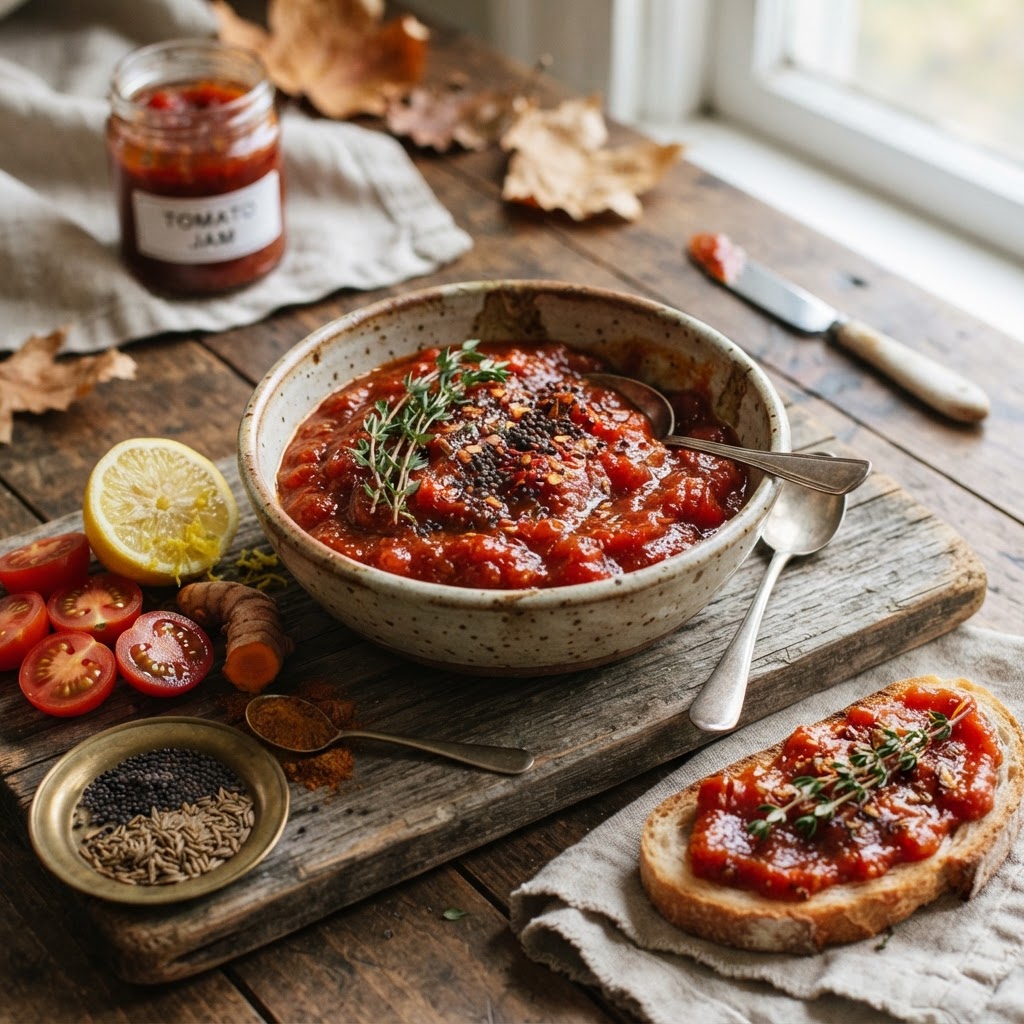
TOMATO JAM
Capture the final warmth of autumn with this spiced tomato jam. A vibrant blend of turmeric, Baharat, and zesty citrus creates a savory-sweet spread that brings cozy, seasonal joy to every morning toast.
All Other Recipes with Cumin
1 recipe featuring Cumin