
Crab
Sweet, succulent meat prized in cuisines worldwide
Buy crab live, or as fresh-picked meat, or frozen legs and claws. Live crabs should be active and heavy for their size; lethargic crabs may be dead or dying.
For picked meat, 'jumbo lump' (whole pieces from the back legs) is the premium grade for crab cakes where you want large chunks; 'backfin' and 'special' are smaller pieces for soups, dips, and crab cakes where texture matters less.
Avoid pasteurized canned crab for delicate dishes — it lacks the sweetness of fresh or well-frozen crab. Frozen king and snow crab legs, flash-frozen at sea, are excellent quality.
From sweet blue crab to giant king crab legs, each variety brings its own character:
Blue Crab
The iconic Chesapeake Bay crab — sweet, delicate meat; enjoyed steamed with Old Bay and picked for crab cakes.
Dungeness
West Coast favorite with a sweet, nutty flavor and high meat yield — the classic crab of Pacific cuisine.
King Crab
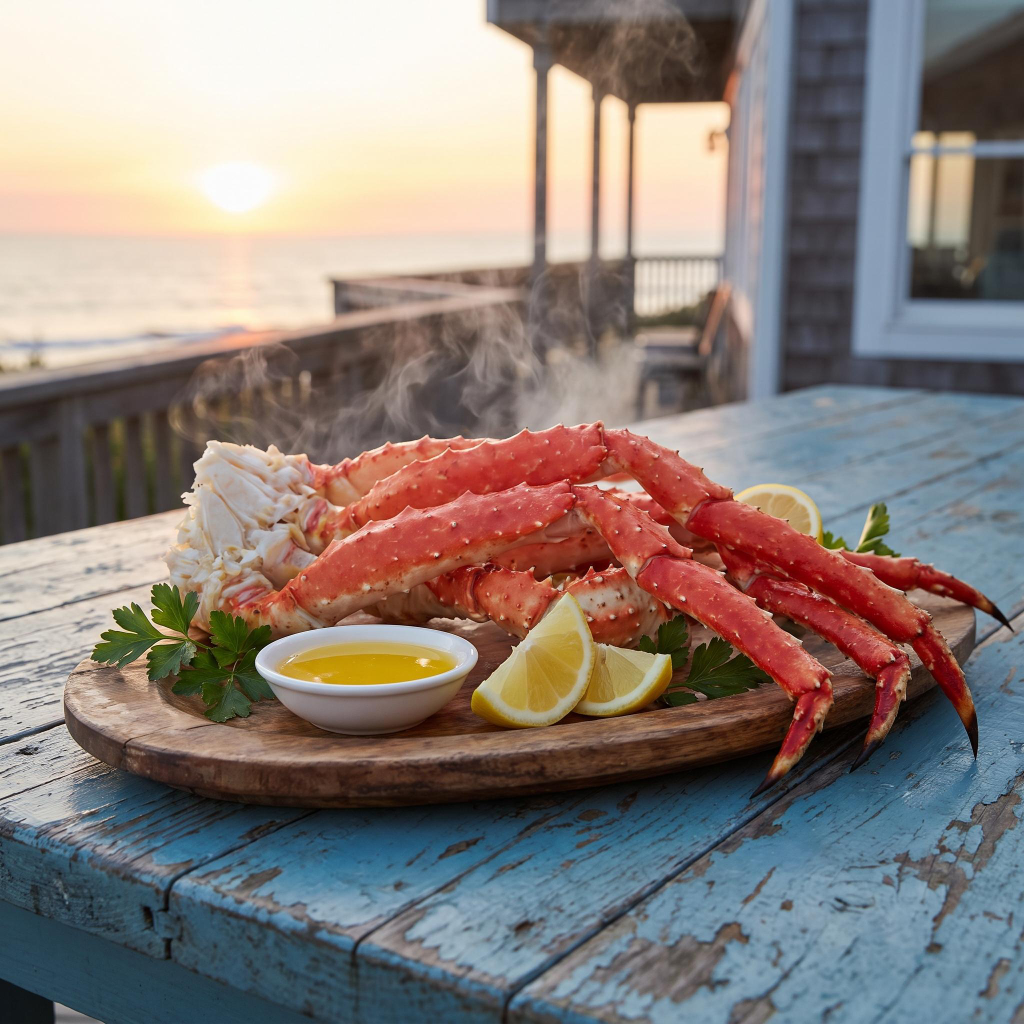
Giant legs from the cold waters of Alaska — massive, sweet, rich meat; the premium of crab legs.
Snow Crab
Long, slender legs with delicate, sweet meat — easier to crack than king crab and a buffet favorite.
Soft-shell
Blue crabs that have moltted their shells — eaten whole, sautéed or fried; a Mid-Atlantic delicacy.
Stone / Peekytoe
Small, sweet, flaky meat from the legs — prized for crab salads and the famous Maryland crab soup.
Live hard-shell crabs should be kept cold and moist — refrigerate in a damp cloth or paper bag and cook the same day. Never submerge live crabs in fresh water; they will drown.
Fresh-picked crab meat is highly perishable — refrigerate at 32°F and use within 1–2 days. Keep it on ice in the fridge if possible.
Frozen crab legs keep for several months in the freezer. Thaw overnight in the refrigerator, or steam from frozen for a few extra minutes. Cooked crab meat freezes well for up to 3 months.
Crab is best cooked gently to preserve its sweet, delicate flavor.
Steaming: The classic method for blue crab — steam with water, vinegar, and Old Bay seasoning for 20–25 minutes until bright red.
Boiling: King and snow crab legs are pre-cooked and just need reheating — boil or steam 4–6 minutes until hot.
Crab Cakes: Gently fold jumbo lump crab with minimal binder (a little mayo, mustard, cracker crumbs) and pan-fry or broil — the goal is to taste the crab, not the filler.
Sautéing: Soft-shell crabs are dusted in flour and sautéed crisp in butter — eaten whole, shell and all.
Soups & Bisques: Crab enriches bisque, Maryland crab soup, and cioppino with its sweet flavor.
Canning: Pasteurized canned crab keeps for months — acceptable for soups and dips, though fresh is always better for crab cakes.
Freezing: Cooked crab meat and whole cooked crabs freeze well for up to 3 months. Pick the meat before freezing for convenience.
Crab Stock: Shells make a rich stock — simmer with aromatics for bisque and seafood soups; freeze the stock for months.
Pickled: Pickled crab, less common, appears in some regional traditions.
Smoked: Smoked crab meat is a rare delicacy for special dishes.
Crab is a lean, high-protein seafood rich in vitamin B12, zinc, copper, and selenium. A 3-ounce serving provides about 20 grams of protein and only about 100 calories.
Crab is notably high in omega-3 fatty acids and a good source of phosphorus. Blue crab in particular is rich in chromium, which may help regulate blood sugar.
Crab is relatively low in mercury compared to some seafood, making it a safe regular choice for most people.
Crabs communicate by drumming or waving their pincers. Male fiddler crabs wave their one oversized claw to attract mates.
A blue crab's shell turns red when cooked because heat destroys the blue pigment astaxanthin, which was bound to proteins and appeared blue-green; freed, it shows its true red color.
The Japanese spider crab has the largest leg span of any arthropod — up to 12 feet from claw to claw.
Soft-shell crabs are not a separate species — they are blue crabs caught in the brief hours after they shed their old shell and before the new one hardens.
Blue crab populations in the Chesapeake have fluctuated with water quality and harvest pressure; look for crab from well-managed fisheries. Dungeness crab from the U.S. West Coast is a well-managed, sustainable choice.
King and snow crab from Alaska are certified sustainable and among the best-managed crab fisheries in the world.
Avoid imported king crab from Russia, which has significant illegal fishing and management concerns. U.S. and Canadian crab fisheries are generally the responsible choice.
Available Near You
Enter your ZIP code to find farms with crab near you.
Recipes with Crab
Coming Soon