Grains & Seeds · Summer & Fall
Corn (Maize)
Zea mays · Also: Maize, Sweet Corn, Dent Corn, Flint Corn, Hominy
Corn — maize — is the great grain of the Americas, domesticated from a wild Mexican grass some 9,000 years ago and carried by Indigenous farmers across two continents, from the deserts of the Southwest to the high Andes. More than a crop, maize was the foundation of Mesoamerican and Andean civilization — the center of the milpa, the three-sisters planting with beans and squash, and the sacred grain at the heart of harvest ceremonies from Mexico to Peru.
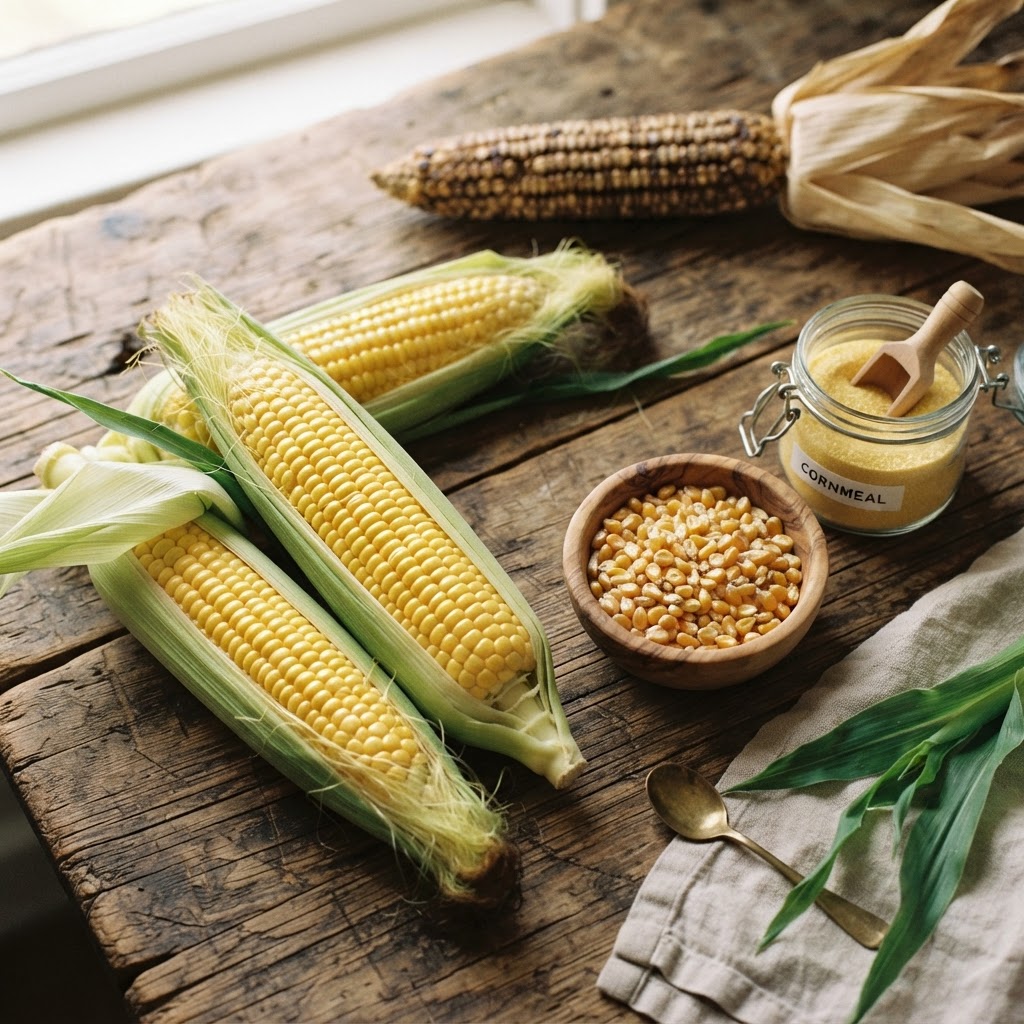
Fresh sweet corn is the tender, milky summer ear — eaten roasted, boiled, grilled, or shaved into salads and salsas. Dried and milled, corn becomes cornmeal, grits, polenta, and masa — the alkaline-treated dough of the tortilla, the tamale, and the arepa. Popped, it is the world's oldest snack; fermented, it becomes the chicha and bourbon of the Americas. From golden sweet corn at a summer barbecue to blue Hopi corn tortillas, from hominy pozole to Italian polenta, corn is a grain of stunning range — a gift of the First Peoples that now feeds more of the world than any crop but wheat.
Sweet Corn
The fresh eating corn of summer — picked while the kernels are tender and milky, high in sugars eaten before they turn to starch; yellow, white, or bicolor ears, eaten on the cob or shaved into salads and salsas.
Dent Corn (Field Corn)
The workhorse grain corn of the American Corn Belt and most of the world — a deep indentation forms on the crown of each kernel as it dries; used for cornmeal, grits, animal feed, whiskey, and industrial corn products.
Flint Corn (Indian Corn)
Hard, smooth-kernelled corn with a hard outer layer — the colorful 'Indian corn' of autumn decorations, but also the staple grain of Northern Italy (polenta), New England (johnnycake), and much of Latin America; stores exceptionally well.
Flour Corn (Masa Corn)
Soft-starched corn prized for easy milling into fine flour — the traditional corn of the Southwest Pueblos and Mexican tortillas; blue, white, yellow, and red heirloom varieties, ground into masa for tortillas, tamales, and arepas.
Popcorn
A small-kernelled flint corn with a hard moisture-sealed hull — when heated the internal steam builds until the kernel explodes into the familiar fluffy 'flower'; the oldest surviving type of corn, eaten for thousands of years in the Americas.
Heirloom & Native Corns
Hundreds of Native landraces — Hopi blue, Oaxacan green, Cherokee White Eagle, Glass Gem, Peruvian purple — each adapted to a place and a people, and saved for their flavor, color, and ceremonial meaning; the living library of maize.
Hominy (Nixtamalized Corn)
Whole dried corn kernels treated with slaked lime (nixtamalization), which removes the hull, softens the grain, unlocks the niacin, and gives masa its flavor and texture — the foundation of pozole, tamales, tortillas, and the arepa; a Mesoamerican invention.
Choclo (Andean Corn)
The large, pale, chewy-kernelled corn of the Andes — eaten fresh with cheese, dried into mote, or fermented into chicha de jora; grown in the high valleys of Peru, Bolivia, and Ecuador since Inca times.
For fresh sweet corn, look for ears with green, snug husks, moist silk, and plump kernels that release a milky juice when pressed; the sugars turn to starch quickly after picking, so buy local and eat the same day when possible — peak season is mid to late summer.
For dried corn, cornmeal, and grits, buy stone-ground when you can — it retains the germ and more flavor; steel-rolled commercial cornmeal is paler and milder. For masa, tortillas, and tamales, look for nixtamalized corn flour (masa harina); the lime treatment is what unlocks the niacin and the authentic flavor.
Heirloom and colored corns (blue, red, purple) have deeper flavor and more antioxidants than commodity yellow corn; seek out stone-ground heirloom cornmeal from regional mills and Native producers. Season: fresh sweet corn is a summer crop; dried corn, cornmeal, grits, and masa are available year-round.
Keep fresh sweet corn in the husk in the refrigerator and eat within 1–2 days — the sugars convert to starch quickly at room temperature. Whole dried corn kernels and stone-ground cornmeal keep several months in a sealed container in a cool, dry place; cornmeal with the germ should be refrigerated or frozen to preserve its oils. Masa harina and hominy keep for months sealed dry; cooked corn, tortillas, and polenta will keep 4–5 days refrigerated and freeze well.
Harvesting: Sweet corn is picked immature in mid-summer while the kernels are milky; grain corns (dent, flint, flour) are left on the stalk to dry through autumn, then harvested, shucked, and shelled when fully dry.
Nixtamalization: The defining Mesoamerican technique — dried corn is simmered in water with slaked lime (cal), which loosens the hull, softens the grain, unlocks the niacin (vitamin B3), and adds calcium; the treated corn (nixtamal) is then ground into masa for tortillas, tamales, and arepas. Without this step, a corn-only diet causes the deficiency disease pellagra.
Milling: Dried corn is stone-ground into cornmeal, grits, or polenta; fine masa harina is milled from nixtamalized corn and rehydrated with water to make fresh masa; the grind (coarse, medium, fine) determines whether you get grits, cornbread, or tortillas.
Roasted & Grilled on the Cob
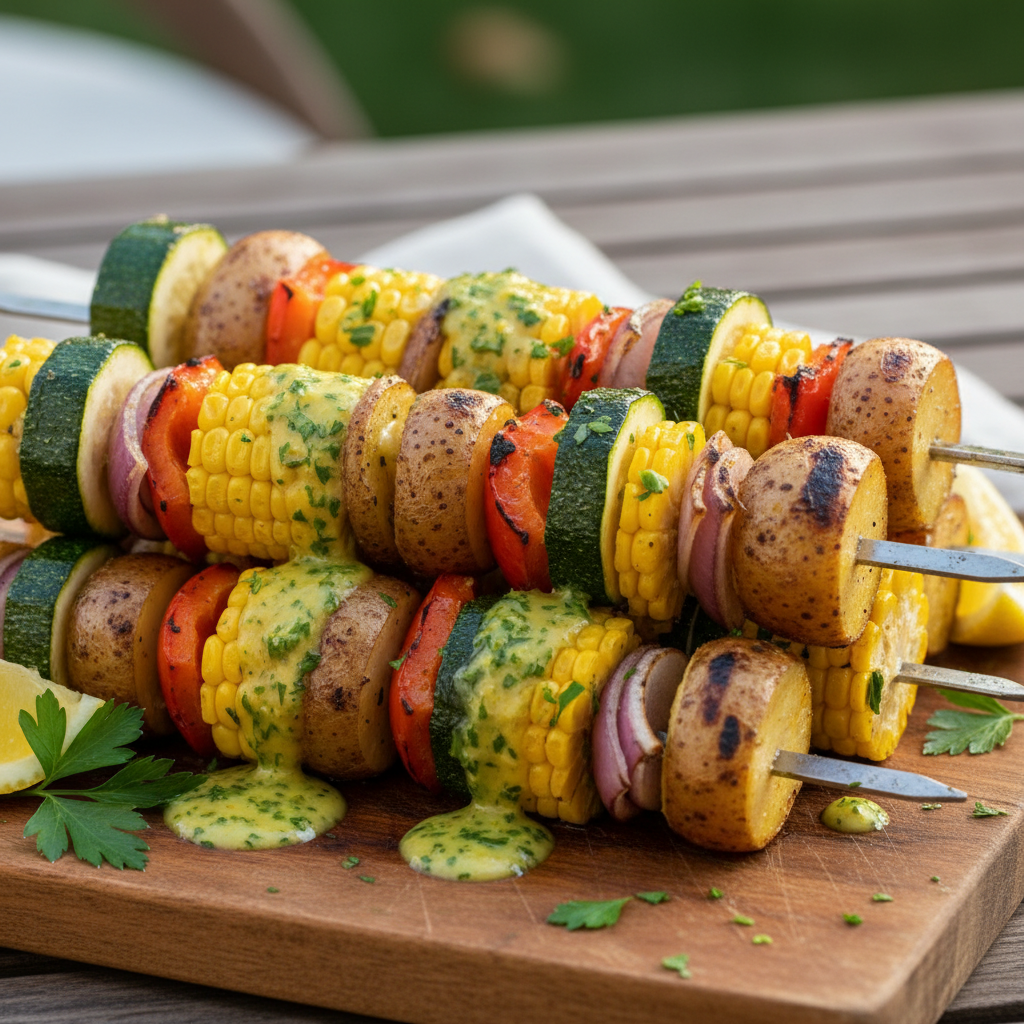
The summer classic — sweet corn roasted in the husk over coals or grilled until charred, slathered with butter, salt, and (in Mexico) lime and chili; elote, the Mexican street corn, is grilled and coated with crema, cotija cheese, chili, and lime.
Tortillas, Tamales & Arepas
Fresh masa pressed into tortillas and cooked on a comal, or wrapped in corn husks with filling and steamed into tamales; Colombian and Venezuelan arepas are round masa cakes split and stuffed — the foundation of Latin American daily bread.
Polenta & Grits
Coarse stone-ground corn simmered slowly with water or broth into a creamy porridge — Italian polenta and American Southern grits are the same idea; eaten soft and warm, or chilled, sliced, and fried, topped with cheese, mushrooms, shrimp, or ragù.
Cornbread & Johnnycake
Cornmeal baked into skillet cornbread (the American South), spoonbread, and johnnycake (New England and the Caribbean); crumbly, sweet, and golden — the traditional bread of the American corn frontier, baked in a cast-iron skillet.
Pozole & Hominy Stews
Nixtamalized hominy simmered for hours into pozole — Mexico's great celebration stew of corn, pork or chicken, chilies, and radishes; the corn swells tender and chewy, the heart of the dish, served at weddings, birthdays, and holidays.
Popcorn, Chowder & Fresh Salads
Popped in hot oil or a dry pan; sweet corn shaved into corn chowder, succotash (corn and beans), fresh corn salsa, and summer salads; the fresh milky kernels burst with sweetness when barely cooked — the simplest and purest taste of corn.
Drying: Grain corns are left to dry on the stalk and then shelled into dried kernels that keep for a year or more in a sealed container — a storable staple that carried Indigenous communities and settlers through long winters.
Nixtamalization & masa: Nixtamalized corn (hominy) and masa harina are shelf-stable forms that preserve the corn while unlocking its nutrition; the dried masa flour keeps for months and rehydrates into fresh masa with water.
Freezing & canning: Fresh sweet corn is frozen on or off the cob, canned as creamed corn or whole kernels, and made into relishes and pickles — the summer harvest preserved for winter; the milk and sugars freeze well with a quick blanch.
Corn is a good source of complex carbohydrates, fiber, and B vitamins, and provides lutein and zeaxanthin — antioxidants important for eye health. Whole-grain corn (cornmeal, grits, polenta, masa) retains the germ and bran, which hold the protein, fiber, and minerals.
The niacin in corn is bound and unavailable until the corn is nixtamalized (treated with lime) — the discovery of nixtamalization in Mesoamerica is what allowed maize-centered civilizations to thrive; without it, a diet of untreated corn causes pellagra, the niacin-deficiency disease that plagued corn-eating Europe and the American South.
Colored heirloom corns — blue, red, purple, black — are rich in anthocyanins and other antioxidant pigments, and generally higher in protein and minerals than commodity yellow corn. Naturally gluten-free in its pure form, corn is a safe grain for those with celiac disease.
Corn is entirely a human creation — it was domesticated from the wild grass teosinte in the valleys of Mexico some 9,000 years ago; teosinte's hard, few-seeded cobs barely resemble a modern ear of corn, and maize as we know it cannot survive without human planting.
The milpa — the interplanted field of corn, beans, and squash known as the Three Sisters — is one of the world's most successful agricultural systems: the corn gives the beans a pole to climb, the beans fix nitrogen for the corn, and the squash shades out weeds and conserves moisture.
Corn comes in a rainbow of colors — yellow, white, red, blue, black, purple, even multi-colored 'Glass Gem' — each carried by a different Native community; the Hopi grow blue corn, the Navajo white, the Cherokee flour corn, and the Oaxacans green corn, each for a distinct use.
Bourbon whiskey must by law be made from at least 51% corn, and the great American spirit is born of the corn frontier; chicha de jora, the fermented corn beer of the Andes, is older still — the sacred drink of the Incas, brewed from sprouted corn and shared at Inti Raymi.
From Mexican Día del Maíz to Native Green Corn ceremonies, corn is the most celebrated grain in the Americas:
Mexican Maize Festivals & El Día del Maíz
Mexico & Mesoamerica
🗓 September 29, 2026 (Día Nacional del Maíz)
Mexico celebrates its native maize with Día Nacional del Maíz on September 29, honoring the sacred grain at the heart of Mesoamerican civilization; communities gather to taste heirloom tortillas, tamales, pozole, and atole, and to defend the hundreds of native landraces of corn that are the living heritage of the milpa.
Inti Raymi & Andean Harvest
Peru & the Andes
🗓 June 24, 2026 (winter solstice)
Inti Raymi, the Festival of the Sun in Cusco, honors the Inca harvest of maize — the sacred grain of the Andes; giant kernels of choclo (Andean corn) are eaten with cheese, and chicha de jora, the fermented corn beer of the Incas, is brewed and shared at the festival.
Green Corn Festivals
Southeastern United States (Native nations)
🗓 July–August 2026 (first ripening)
Green Corn ceremonies of the Cherokee, Creek, Seminole, and other Southeastern nations celebrate the first ripening of the corn crop with dancing, feasting, and renewal; the festival marks the new year in many traditions, with fresh roasted corn, corn soup, and the ceremonial Busk.
Sweet Corn Festivals (USA)
Across the United States
🗓 August 2026 (peak harvest)
From the Sweet Corn Festival in Mendota, Illinois to Olathe Sweet Corn Festival in Colorado, late summer is corn festival season across the American Midwest — celebrating the peak sweet corn harvest with buttered ears, corn mazes, and farm stands along the Corn Belt.
Pongal & Makar Sankranti
South India & across India
🗓 January 14, 2026 (harvest solstice)
Pongal in Tamil Nadu and Makar Sankranti across India celebrate the winter harvest with dishes made of new maize — sweet pongal of rice and jaggery, and bhugga (fresh corn) in the countryside; the ripening of the winter corn crop is honored with cooking, feasting, and thanksgiving to the sun.
The milpa & three sisters: Traditional intercropping of corn, beans, and squash is one of the most sustainable agricultural systems in the world — the three plants together need little fertilizer, suppress weeds, conserve water, and produce more food per acre than monocultures of any one of them.
Heirloom diversity: The hundreds of Native landraces of corn are a living seed bank of flavor, color, and climate adaptation; saving and growing these heirlooms preserves genetic diversity that industrial monoculture erodes, and supports Native farmers and seed sovereignty.
Industrial caveat: Most corn grown today is yellow dent field corn raised in vast monocultures for animal feed, ethanol, and processed food; supporting stone-ground heirloom cornmeal, Native-grown corn, and small-mill products helps keep the diverse, sustainable corn traditions alive.
Global range: Corn originated in Mexico and spread across the Americas before 1492; after contact it spread worldwide and now grows on every continent except Antarctica, from sea level to high Andean valleys — the most widely grown grain on Earth after wheat and rice.
In-Season Recipes with Corn
Seasonal recipes featuring Corn right now
All Other Recipes with Corn
Coming Soon