
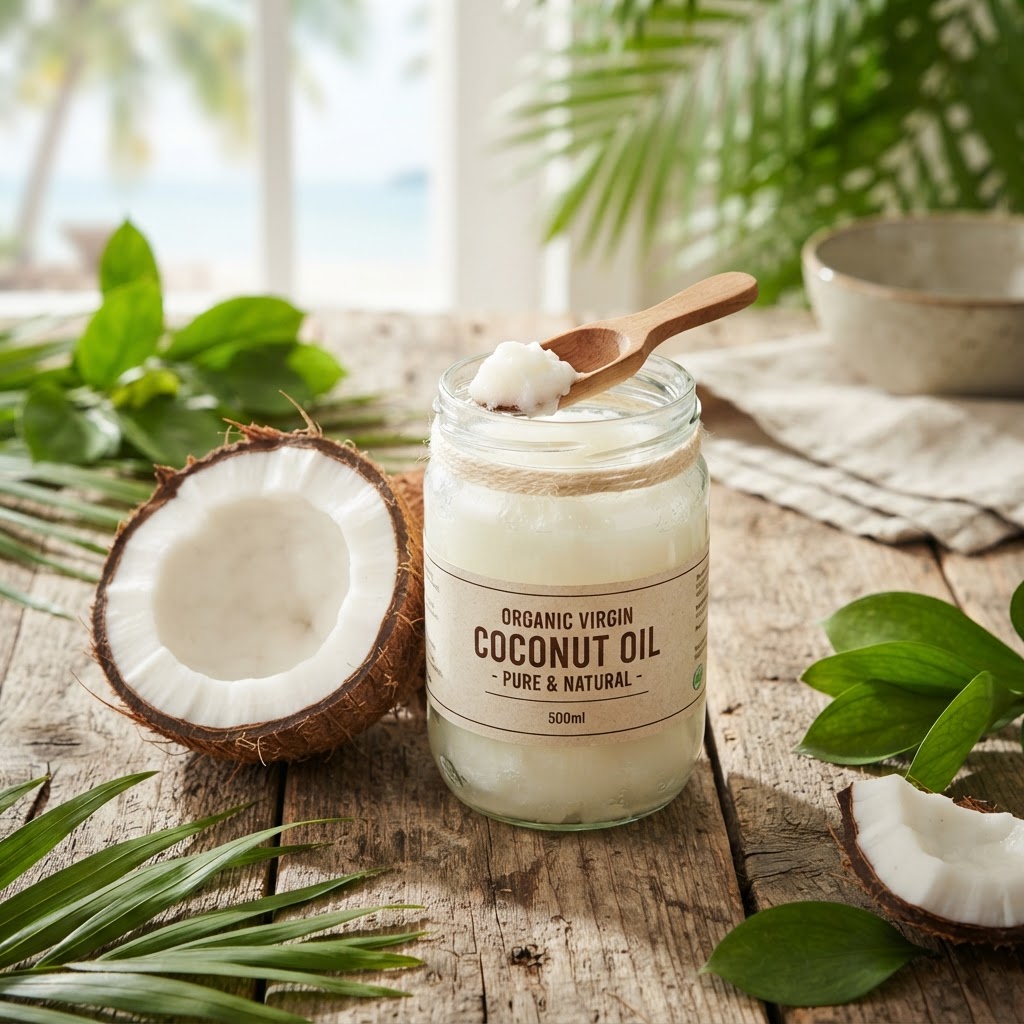
Coconut Oil
Coconut oil is the fat pressed from the meat of coconuts, a staple of tropical cooking across Southeast Asia, South Asia, and the Pacific. Virgin coconut oil has a distinctive coconut flavor and aroma, while refined coconut oil is neutral — both are solid at room temperature and prized for high-heat cooking and baking.
Choose virgin (unrefined) coconut oil for its coconut flavor and aroma — it is pressed from fresh coconut meat without chemical refining. Choose refined coconut oil for a neutral flavor and higher smoke point, better for high-heat cooking where you don't want coconut taste.
Look for cold-pressed or expeller-pressed oil in glass jars. Avoid oil that smells stale or smoky. Organic coconut oil is widely available and a good choice, as coconuts are not a heavily pesticided crop.
For skin and hair care (a common use), virgin coconut oil is the traditional choice.
Coconut oil is remarkably stable — its high saturated fat content resists oxidation. Store it in a cool, dark place; it keeps for up to 2 years. It is liquid above 76°F and solid below, which is normal and not a sign of spoilage.
No need to refrigerate. Keep it sealed and away from moisture, which can introduce spoilage. If it develops a sour or rancid smell, discard it.
Coconut oil is ideal for high-heat cooking and tropical and vegan baking.
High-Heat Sautéing & Frying: Refined coconut oil has a high smoke point (400°F+) and neutral flavor, excellent for stir-frying, sautéing, and frying.
Baking: Solid at room temperature, coconut oil behaves like butter or shortening in baking — use it in pie crusts, cookies, and vegan baked goods.
Curries & Tropical Cooking: Virgin coconut oil adds authentic flavor to Southeast Asian and South Indian curries, rice dishes, and sweets.
Popcorn & Roasting: A tablespoon for popcorn or roasted vegetables adds a subtle tropical note.
Dairy-Free Swaps: Use in place of butter for vegan and dairy-free cooking and baking.
Coconut oil's stability makes it a natural preservative — its high saturated fat resists rancidity far longer than unsaturated oils.
It can be used to seal and preserve foods (a technique used in some tropical traditions), and its long shelf life makes it a reliable pantry staple without refrigeration. Infused coconut oils (with herbs or spices) keep well at room temperature.
Coconut oil is about 90% saturated fat, mostly lauric acid — a medium-chain fatty acid that the body metabolizes differently than long-chain saturated fats. Some evidence suggests MCTs are burned for energy rather than stored, though the health effects remain debated.
Unlike most plant oils, coconut oil contains no cholesterol. Virgin coconut oil retains beneficial polyphenols. While it raises both HDL and LDL cholesterol, its overall effect on heart health is controversial — most health authorities recommend using it in moderation.
A tablespoon provides about 120 calories and 14g of fat. It is best used as one of several fats in a varied diet rather than the primary cooking fat.
Coconut oil has been a tropical staple for thousands of years — the coconut palm is called the 'tree of life' across the Pacific for its many uses.
Coconut oil was widely used in American processed foods in the mid-20th century until it was replaced by hydrogenated vegetable oils — which turned out to be worse (trans fats). Coconut oil has since made a comeback.
The oil is solid at room temperature because of its high saturated fat content, which is why it behaves like butter in baking. It melts at body temperature, giving it a smooth, cooling mouthfeel.
Beyond cooking, coconut oil is widely used for skin, hair, and even oil pulling (a traditional Ayurvedic dental practice).
Coconut palms are perennial, drought-tolerant crops that grow in tropical coastal regions, often without irrigation or heavy inputs. They support smallholder farmers across the tropics and produce for decades.
However, rising demand has led to some intensive monoculture plantations. Choosing fair-trade and organic coconut oil supports small farmers and sustainable practices, and ensures fair wages in producing countries.
Coconut oil is a long-shelf-life, low-waste product — its stability means less spoilage and waste compared to fragile unsaturated oils.
Available Near You
Enter your ZIP code to find farms with coconut oil near you.
Recipes with Coconut Oil
Coming Soon