
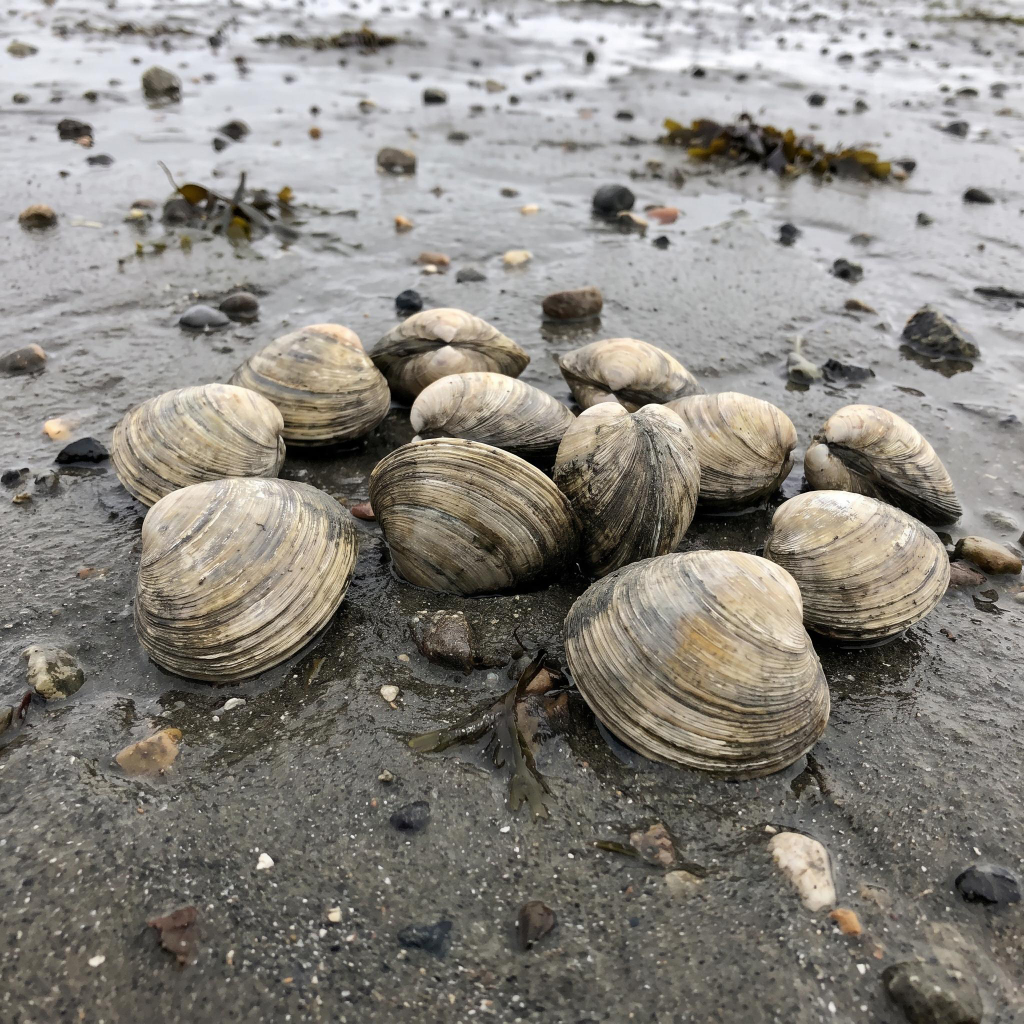
Clams
Briny, tender shellfish perfect for pasta, soups, and more
Buy clams live — they should be tightly closed or close when tapped. Discard any with broken shells or that stay open when tapped; they are dead and unsafe to eat.
Look for clean, seawater-smelling clams from a reputable fishmonger. Farmed clams (such as Manilas) are a sustainable choice and consistently high quality.
Plan on about 1 pound of clams in the shell per person for a main course, or ½ pound for a pasta or starter.
From tender littlenecks to meaty quahogs, each clam has its place in the kitchen:
Littleneck
The smallest and most tender hard-shell clam — the classic choice for raw-on-the-half-shell and pasta sauces.
Manila
Small, sweet, and buttery with a distinctive oblong shell — prized by chefs for their rich flavor and tender texture.
Cherrystone & Quahog
Larger hard-shell clams — cherrystones for stuffing and raw bars, quahogs for chowder since they toughen when cooked quickly.
Razor
Long, thin, and sweet — a delicacy quickly grilled or sautéed; prized in Spanish and Asian cuisines.
Steamers (Soft-shell)
Tender soft-shell clams with a protruding neck — the classic New England clam steam and clam bellies.
Mahogany & Surf
Large, meaty clams with dark shells — surf clams are the foundation of chopped clam dishes and chowders.
Keep live clams in the refrigerator in a breathable container — a bowl covered with a damp cloth, never sealed in plastic or in water. They need to breathe.
Store at 35–40°F and use within 1–2 days. Do not freeze live clams; they die and the texture suffers.
Before cooking, scrub the shells under cold running water and soak in cold salted water for 20–30 minutes to purge any sand. Debeard and rinse just before cooking.
Clams cook in minutes — their shells pop open when done, the signal to stop.
Steaming: The classic preparation — steam with white wine, garlic, butter, and herbs until the shells open, 4–6 minutes. Discard any that do not open.
Pasta: Toss steamed clams with linguine, their cooking broth, and a little pasta water for the iconic linguine alle vongole.
Raw: Littlenecks and Manilas on the half shell with lemon or mignonette — pristine and briny.
Chowder: Quahogs and surf clams are chopped and simmered with potatoes, onions, and cream or a clear broth for New England or Manhattan chowder.
Stuffing & Baking: Cherrystones topped with breadcrumb stuffing and broiled — clams casino and baked stuffed clams.
Canning: Pressure-canned clams keep for years — a pantry staple for quick chowders and pasta.
Smoking: Smoked clams, packed in oil, are a gourmet treat for antipasti and salads.
Pickling: Pickled clams in vinegar and spices are a tangy condiment for seafood platters.
Freezing Cooked: Shucked, blanched clams freeze well for up to 3 months for use in cooked dishes; raw clam texture suffers when frozen.
Dried: Dried clams and clam extracts add intense umami to Asian soups and sauces.
Clams are one of the most nutrient-dense foods in the sea — exceptionally high in vitamin B12, iron, and protein, with very few calories. A 3-ounce serving provides over 100% of the daily value for B12 and a remarkable dose of heme iron.
They are also rich in selenium, zinc, and omega-3 fatty acids, supporting heart and brain health. Clams are among the best dietary sources of iron, making them valuable for preventing anemia.
Clams are low in mercury and a lean protein, making them an excellent regular part of a healthy diet.
The quahog is the official state shell of Rhode Island. Native Americans carved the hard purple edge of quahog shells into 'wampum,' used as currency and ornament.
A clam's age can be counted by the growth rings on its shell, much like a tree. Ocean quahogs can live over 500 years, making them among the longest-lived animals on earth.
Clams are filter feeders — they pump seawater through their gills, straining plankton and cleaning the water. A single clam can filter gallons of water per day.
The world's largest clam, the giant clam of the Pacific, can weigh over 400 pounds — but it is a different species from the edible clams we eat.
Clams are among the most sustainable seafood you can eat. They are farmed with minimal environmental impact — no feed, no chemicals, and they actually improve water quality by filtering.
Farmed clams (and mussels and oysters) are considered a 'best choice' by seafood watchdogs because they require no inputs and leave the environment cleaner. Wild clam harvest is also generally well-managed in U.S. waters.
Because clams are filter feeders, always buy from trusted sources and check for biotoxin advisories in your region — clams can accumulate toxins from algal blooms, which is why harvest areas are closely monitored.
Available Near You
Enter your ZIP code to find farms with clams near you.
Recipes with Clams
Coming Soon