
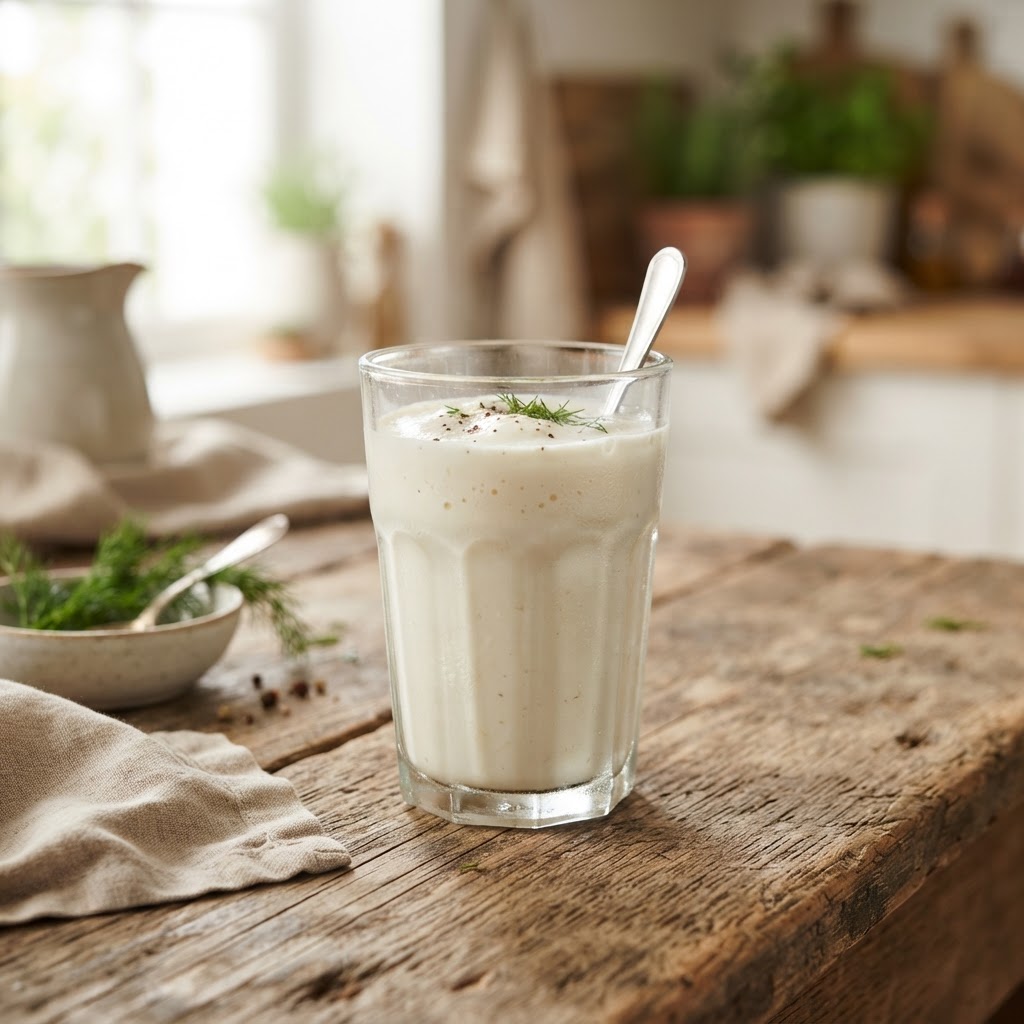
Buttermilk
Traditionally the tangy liquid left after churning butter, today's commercial buttermilk is a cultured product made by adding beneficial bacteria to low-fat milk. Its acidity and richness make it essential to tender, moist baking — from pancakes and biscuits to cakes and dressings.
Buy cultured buttermilk in the dairy aisle — it keeps far longer than its date suggests, thanks to its acidity. If you are out, a quick substitute is 1 cup of milk plus 1 tablespoon of lemon juice or vinegar, left to thicken for 5 minutes.
For baking, the real thing is worth seeking out — its consistent acidity and cultured flavor produce better results than the homemade substitute.
Traditional buttermilk (the liquid from churning cultured butter) is harder to find but richer and more complex; seek it out at farmstead dairies if you can.
From the cultured standard to traditional churned and shelf-stable powdered — the buttermilks of baking:
Cultured Buttermilk
Today's standard — low-fat milk cultured with bacteria; tangy, thick, and essential for baking.
Traditional Buttermilk
The real thing — the tangy liquid left after churning cultured butter; thinner, richer, and more complex.
Powdered Buttermilk
Dehydrated buttermilk — shelf-stable and convenient for baking; reconstitute with water or use dry in dry mixes.
Refrigerate buttermilk and use within 1–2 weeks of opening. It can often be used well past its printed date — the high acidity keeps it safe.
Buttermilk freezes well for baking; portion it into ice cube trays or small containers and thaw in the refrigerator. Stir before using, as it separates on thawing.
A little leftover buttermilk can culture a fresh batch — add a few tablespoons to warm milk and let it sit at room temperature for 12–24 hours.
Buttermilk's acidity is its superpower in the kitchen.
Pancakes & Biscuits: Buttermilk's acidity reacts with baking soda for tall, tender leavening — the secret to fluffy pancakes and flaky biscuits.
Cakes & Muffins: Adds moisture, a tender crumb, and a subtle tang that balances sweetness in red velvet, chocolate, and coffee cakes.
Marinades: Tenderizes chicken and pork while adding tang — the classic Southern fried chicken brine.
Dressings: The base for ranch, buttermilk, and green goddess dressings — lighter and tangier than mayonnaise alone.
Culturing: Buttermilk is a cultured product, so it keeps longer than fresh milk. A little leftover buttermilk can culture a fresh batch at home.
Freezing: Buttermilk freezes well for baking — portion and freeze for up to 3 months; thaw in the refrigerator and stir before using.
The acidity that preserves buttermilk also makes it a natural tenderizer and leavening agent, extending its usefulness beyond fresh milk.
Cultured buttermilk is surprisingly low in fat — it is made from low-fat or skim milk. A cup provides about 8g of protein, 280mg of calcium, and significant potassium, phosphorus, and B vitamins.
The lactic acid and live cultures in buttermilk support gut health and may improve lactose digestion, making it tolerable for many lactose-sensitive individuals.
Despite its name, cultured buttermilk is not high in fat or calories — a cup has about 100 calories, making it a lighter, tangier alternative to regular milk in cooking.
True buttermilk — the tangy liquid left after churning butter — is quite different from the cultured buttermilk sold in stores today, which is made by culturing low-fat milk. Both share a tangy flavor, but traditional buttermilk is thinner and more complex.
The name 'buttermilk' reflects its origin: it is literally the milk left after the butter has been taken out.
Buttermilk is essential to Southern American cooking — it is the secret behind fluffy biscuits, tender fried chicken, and moist layer cakes, where its acidity reacts with baking soda for lift.
Buttermilk is an efficient use of milk — traditionally it was the byproduct of butter-making, turning what would be waste into a valuable ingredient. Modern cultured buttermilk similarly makes a useful product from low-fat milk.
Its long shelf life (thanks to its acidity) reduces waste, and its role as a leavening agent reduces the need for other ingredients. Choosing buttermilk from local and organic dairies lowers the footprint further.
Available Near You
Enter your ZIP code to find farms with buttermilk near you.
Recipes with Buttermilk
2 recipes featuring Buttermilk
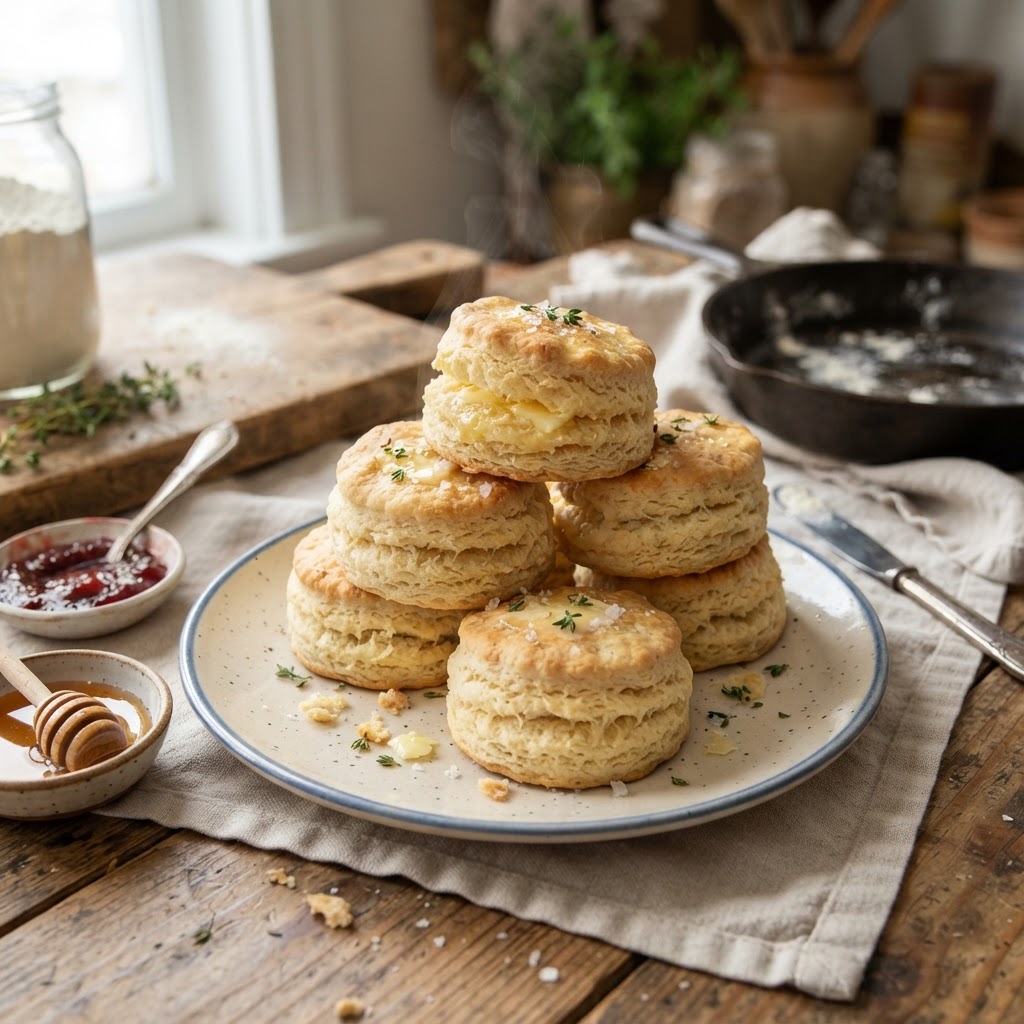
Dolly Parton's Famous Biscuits
Treat your family to these golden, sky-high biscuits, crafted with rich buttermilk and flaky shortening. They are a timeless hug on a plate, perfect for cozy mornings all year round.
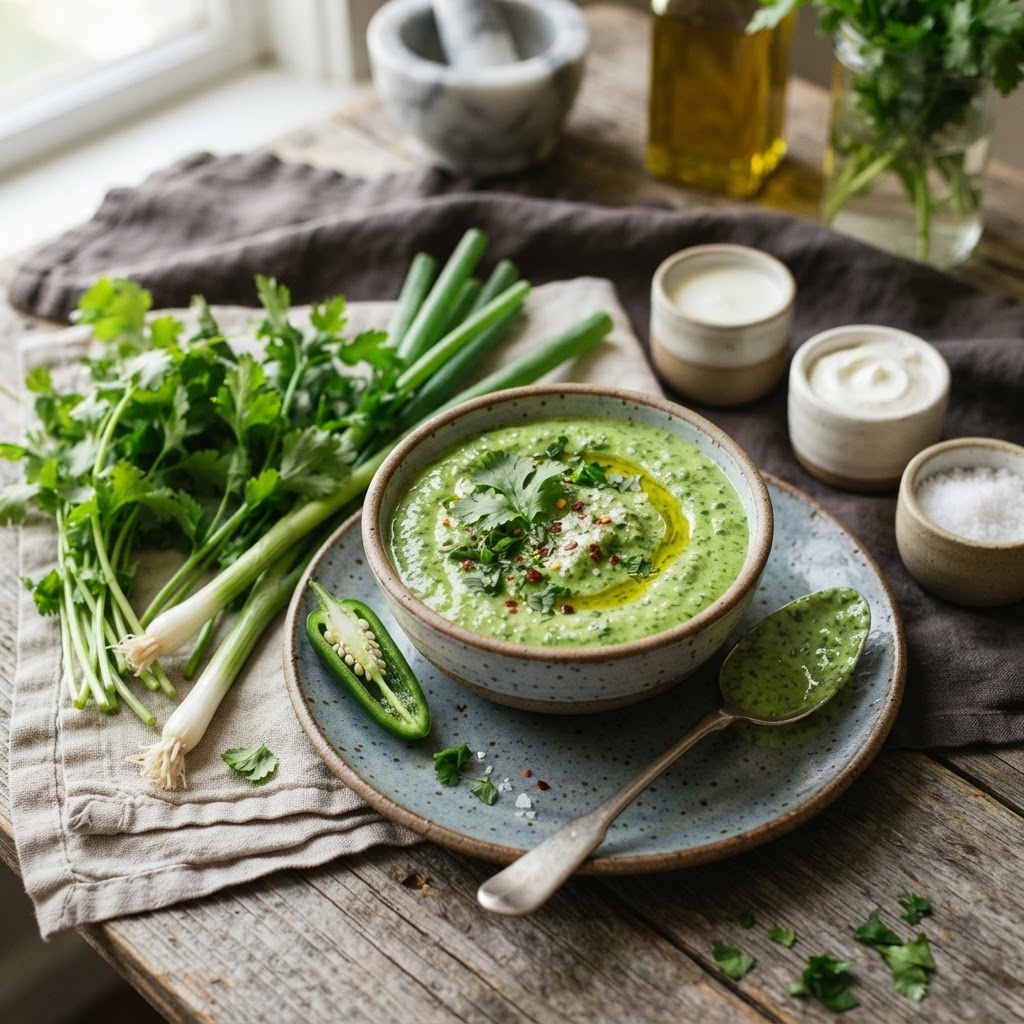
Herby Green Sauce (for Everything)
Celebrate the garden's vibrant bounty with this zesty, herbaceous green sauce. Creamy, bright, and endlessly versatile, it’s the ultimate seasonal staple to elevate every meal with a fresh, spicy kick.