
Fruit · Summer
Blackberries, Raspberries, Brambles
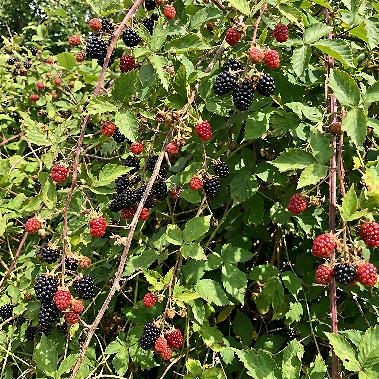
Blackberries, raspberries, and their many hybrids — the fruit of peak summer. Deeply colored, intensely aromatic, and extraordinarily versatile from fresh eating to jam, cobbler, and savory pairings.
The US is number three in global commercial raspberry production, trailing Serbia and Russia. Washington State leads the country, followed closely by Oregon and California.
Oregon leads the US in commercial blackberry production. Wild blackberries — including the Himalayan variety (originally from Germany) — grow like weeds and are considered an invasive species in Washington State, though they are prized by local foragers.
The modern bramble is a fascinating tangled web of cross-breeding experiments that have resulted in a multitude of raspberry and blackberry cultivars.
Brambles span dozens of varieties, from wild foraged types to modern hybrids. Here are the most widely available:
Blackberry
Deep purple-black, sweet-tart, with a bold, complex flavor. Used fresh, in jam, cobbler, and wine.
Raspberry
Bright red, fragrant, and delicate — sweeter and more floral than blackberry. Extraordinary in jam, pastries, and vinaigrettes.
Loganberry
A blackberry × red raspberry cross discovered in 1881. Deep red with a tangy, rich flavor — excellent for jam.
Boysenberry
Blackberry × raspberry × Loganberry cross from the 1920s. Reddish-purple with a deep, wine-like flavor.
Marionberry
An Oregon original developed in the 1950s — often called the 'Cabernet of blackberries' for its complex, rich flavor.
Tayberry
Blackberry × raspberry cross developed in Scotland in 1979. Cone-shaped, reddish-purple, with an intense aromatic flavor.
Buy brambles in season — peak summer through early fall depending on your region. Farmers' market berries are almost always superior to supermarket berries in flavor, since they haven't traveled far and are harvested at full ripeness.
Look for deeply colored, plump berries with no signs of mushiness, leaking, or mold. Berries at the bottom of the container can be crushed under the weight of those on top — check carefully. The fragrance is the best indicator: a ripe, in-season blackberry or raspberry smells intensely of itself.
In winter, supermarket berries are shipped from Mexico, Guatemala, and Chile — considerably increasing their carbon footprint and reducing quality. Freeze in-season berries instead to satisfy winter cravings.
Brambles are extremely perishable. Refrigerate immediately after purchase and plan to use within 2–3 days. They are highly susceptible to mold — keep covered with a paper towel to absorb excess moisture.
Do not wash until ready to eat, and even then, do so gently — a light spray or brief rinse. Pat dry carefully to avoid crushing.
Freezing: Arrange in a single layer on a baking sheet and freeze until solid, then transfer to a resealable bag. This prevents clumping and preserves the berries beautifully for months.
Brambles make stellar desserts — cobbler, pie, crumble, parfait, ice cream, and frozen yogurt. They add brightness to pancake breakfasts and elevate fruit smoothies.
They also shine in savory contexts: on a cheese board (especially with aged chèvre, brie, or sharp cheddar), in green salads with arugula and walnuts, or as a vinaigrette base.
Basil is an extraordinary partner — a few torn leaves takes a bramble-studded fruit salad to a new dimension entirely.
Bramble Jelly: What Americans call "blackberry jam," the British call "bramble jelly" — one of the most celebrated preserves in British cuisine.
Freezing: The easiest method — freeze on a tray, then bag. Frozen brambles retain most of their flavor and nutrition and are excellent in smoothies, baking, and sauces.
Jam & Jelly: Brambles are naturally high in pectin, making them ideal for jam without commercial pectin. A simple bramble jam with lemon and sugar captures peak-season flavor for months.
Refrigerator Jam: A quick, no-canning method — cook with sugar and lemon, refrigerate. Keeps 3–4 weeks and tastes more intensely of fresh fruit than shelf-stable jam.
Vinegar: Bramble-infused vinegar is a brilliant pantry ingredient — steep fresh berries in white wine or apple cider vinegar for two weeks. Use in vinaigrettes and sauces.
Both blackberries and raspberries are excellent sources of fiber — about 8 grams per cup — and Vitamin C, providing about a third of the daily recommended amount per cup.
Blackberries are high in Vitamin K, manganese, and Vitamin E. Raspberries are notably high in omega-3 fatty acids, which support heart health, and are an excellent source of manganese.
Brambles are particularly high in anthocyanins — the antioxidants responsible for their deep red, purple, and black pigmentation. These compounds may help reduce inflammation and lower the risk of certain cancers and heart disease.
The West Coast provides the lion's share of commercially grown brambles. Buying locally in season dramatically reduces the carbon footprint compared to off-season imports from South America.
Raspberries appear on the Environmental Working Group's "Dirty Dozen" list for pesticide load. In the Pacific Northwest, many bramble growers are not certified organic but do not spray their crops — ask your local grower about their methods. At the supermarket, buy organic when available.
Organic brambles are also widely available in the frozen section — a convenient, sustainable option year-round.
Available Near You
Enter your ZIP code to find farms with blackberries, raspberries, brambles near you.
Recipes with Blackberries, Raspberries, Brambles
Coming Soon