Banana
The world's most popular fruit — sweet, portable, and available year-round.
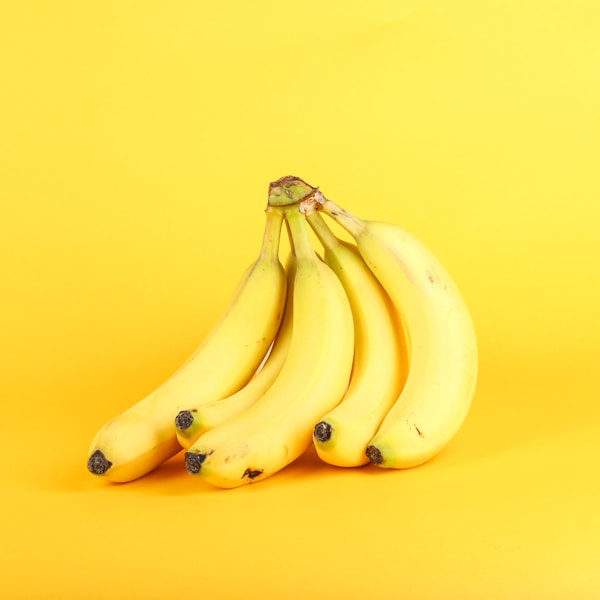
For eating bananas, choose based on your timeline: buy green if you won't eat them for several days; yellow for immediate use; spotted for baking. The Cavendish is the dominant commercial variety, but look for red bananas, Lady Fingers (smaller, sweeter), and plantains at Latin, Asian, and Caribbean markets.
Plantains should be chosen based on your intended preparation: green for tostones and chips, yellow for sweet frying, black for the sweetest caramelized preparations.
Eating Bananas: Sweet, fragrant, eaten raw. The Cavendish is the uniform yellow banana in every supermarket. Others include the smaller, sweeter Lady Finger and the red banana with raspberry notes.
Plantains: Larger, starchier, much less sweet raw. Must be cooked. Green plantains are starchy like potatoes. Yellow plantains are sweeter — fried for maduros. Black plantains are the sweetest — caramelize beautifully.
Store bananas at room temperature — refrigeration turns the skin black and dramatically slows ripening. To slow ripening, separate bananas from the bunch and wrap the crown (stem end) tightly in plastic wrap — this reduces ethylene emission from the most concentrated source.
To speed ripening, place in a paper bag with an apple. Keep bananas away from other fruit as they emit significant ethylene gas.
Freeze overripe bananas: peel, place in a zip bag, freeze up to 3 months. Perfect for banana bread and smoothies.
Banana Bread: The definitive use for overripe, blackened bananas — the darker the better. Overripe bananas have more sugar and intense flavor. The starch has converted to sugar, making the bread naturally sweet and intensely banana-flavored.
Bananas Foster: The New Orleans classic — sautéed in butter, brown sugar, cinnamon, and banana liqueur, flambéed with rum and served over vanilla ice cream. One of the great tableside preparations.
Frozen Banana Ice Cream: Blend frozen ripe banana alone in a food processor until creamy — produces a one-ingredient 'nice cream' with the consistency of soft-serve ice cream.
Smootbie Base: Frozen banana is the gold standard smoothie thickener — adds natural sweetness, creamy body, and nutrition without dairy or added sugar.
Tostones (Plantain): Slice green plantains into coins, fry once until golden, smash flat with a tostonera or flat pan, fry again until crispy. Served with garlic mojo, black beans, or as a base for toppings.
Freezing: The primary and best preservation method — peel ripe bananas, freeze whole or sliced in bags. Excellent for smoothies, banana bread, and nice cream. Quality maintained for 3 months.
Dehydrating: Banana chips are made by dehydrating or frying sliced bananas. Dried bananas concentrate the sugar and flavor dramatically — a calorie-dense snack.
Banana Vinegar: A traditional preparation in some Asian cultures — overripe bananas fermented and then fermented further into vinegar with a distinct fruity flavor.
Bananas are one of the most nutrient-dense convenient foods available. A medium banana provides 105 calories, 3g of fiber, 1.3g of protein, and an impressive array of micronutrients: 12% of the daily value for potassium, 20% for vitamin B6, and 17% for vitamin C.
The potassium in bananas supports heart health, blood pressure regulation, and proper muscle function — particularly important for athletes. Bananas are the most popular pre- and post-workout food for good reason.
Green bananas contain resistant starch — a prebiotic fiber that feeds beneficial gut bacteria and causes a lower glycemic response than ripe bananas. As bananas ripen, resistant starch converts to simple sugars, increasing sweetness and the glycemic index.
The global banana trade is almost entirely dependent on a single variety — the Cavendish. This genetic uniformity makes the entire world supply vulnerable to a single pathogen. The Cavendish replaced the Gros Michel in the 1950s when Panama disease (Fusarium wilt) wiped out commercial Gros Michel production. The same disease (in a new strain, Tropical Race 4) now threatens the Cavendish.
Bananas are technically herbs, not trees — the banana 'tree' is the world's largest herbaceous plant. What looks like a trunk is actually tightly packed leaf sheaths. The banana plant dies after fruiting and is replaced by suckers from the root system.
Bananas are slightly radioactive due to naturally occurring potassium-40. The amount is harmless, but the 'banana equivalent dose' is a real unit used informally to explain radiation exposure.
Banana production is one of the most significant agricultural industries in the world, employing millions in tropical countries. However, conventional banana production raises serious concerns: heavy pesticide use, worker rights issues, and significant water consumption.
Fairtrade and organic certification provide some assurance of better practices. The environmental cost of shipping bananas from the tropics is relatively low — bananas are transported by ship, not air, and the caloric value per transportation cost is very favorable.
The Cavendish monoculture represents a serious sustainability risk. Investing in research for disease-resistant varieties and supporting genetic diversity in banana cultivation is critical for long-term food security.
In-Season Recipes with Banana
Seasonal recipes featuring Banana right now
Coming Soon
All Other Recipes with Banana
Coming Soon