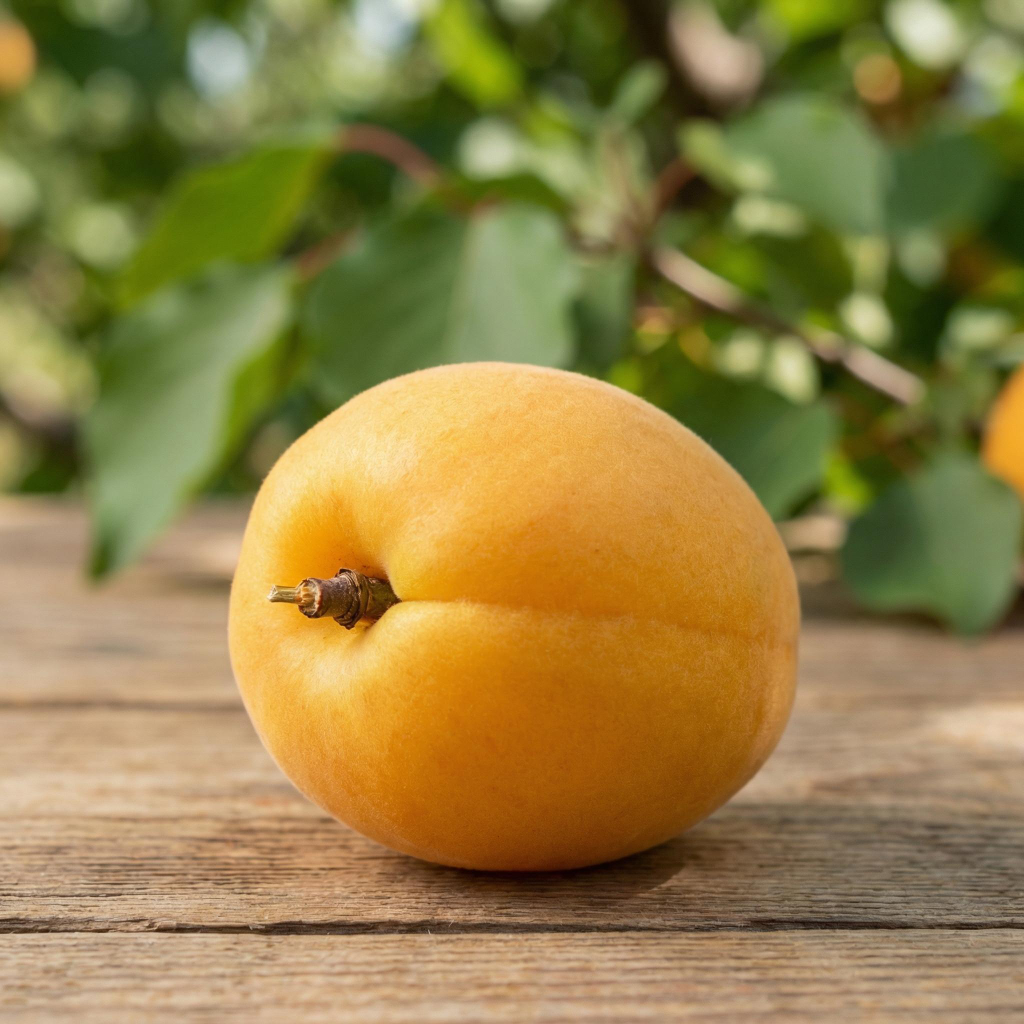
Apricot
Small, golden stone fruits with a velvety skin and intensely sweet-tart flavor. One of the most aromatic of all stone fruits — extraordinary fresh in their brief summer season, and essential dried, in jam, and in savory dishes.
Apricots only ripen on the tree — once picked, they will become softer but never more flavorful. Look for fruit that is bright and colorful with no tinge of green. Ripe apricots yield to gentle pressure, but mushy texture is a sign of over-ripeness.
Peak season is mid-spring to mid-summer (typically May–July in California). Buy from farmers' markets when possible — commercial apricots are often picked underripe for shipping and never develop full flavor.
For dried apricots, those treated with sulfur dioxide are the vivid orange ones; untreated dried apricots are dark brown and are a better choice for those with sulfur sensitivity.
Notable varieties: Blenheim (the most popular US variety — sweet and soft), Early Cot (tart, firm, early season). Hybrid crosses include the aprium (75% apricot, 25% plum) and the pluot (75% plum, 25% apricot).
Blenheim (Royal)
The most popular US variety — sweet, fragrant, and soft. The benchmark California apricot. Best for eating fresh and jam.
Early Cot
An early-season variety that is tart and firm. Good for cooking and preserving.
Aprium (75% apricot / 25% plum)
A hybrid with apricot flavor and slightly firmer, plum-like flesh. Extends the fresh-eating season.
Pluot (75% plum / 25% apricot)
Plum-dominant with apricot sweetness. More juice, firmer texture, longer shelf life.
Apricots are very delicate and do not ship well. Handle gently to prevent bruising and eat as soon as possible. They maintain their fullest flavor and fragrance at room temperature, but fully ripe apricots can be stored in the refrigerator for 1–2 days.
Slightly under-ripe apricots that are fully colored but firm can be ripened by placing in a paper bag for 1–2 days. Add a banana or apple to the bag to speed up the process with ethylene gas.
Dried apricots keep 6–12 months in a cool, dry place or up to 18 months refrigerated in an airtight container.
Baked Goods: Apricots are delicious in tarts, pies, and muffins — their sweet-tart flavor and moderate acidity make them ideal baking fruit. They hold their shape better than peaches when baked.
With Pork & Poultry: Like peaches, apricots pair wonderfully with pork and chicken. Sliced apricots added to a roast meld with pan juices to create a naturally sweet, balanced sauce.
Salads: Toss fresh or halved apricots in spring green salads with sharp cheeses such as chèvre or ricotta salata — the fruit's sweetness tames their salty, tangy bite.
Grilling & Broiling: Halve and pit apricots, grill or broil until caramelized — serve with ice cream, crème fraîche, or alongside grilled meats. The heat concentrates the sugars dramatically.
Chutneys & Sauces: Apricot chutney is a classic — cooked with vinegar, ginger, and spices into a complex condiment. Excellent with lamb, pork, and cheese.
Jam & Preserves: Apricots make some of the most luscious jams — their naturally moderate pectin content and bright acidity create a beautiful set without added pectin. Apricot jam is the classic glaze for pastries and tarts.
Canning: Halved apricots in light syrup are a traditional preserve. The vibrant color and flavor hold well through water bath canning.
Drying: Dried apricots are one of the most beloved dried fruits. Sun-drying or dehydrating concentrates the sweetness and flavor dramatically. Untreated (sulfite-free) dried apricots are dark brown but have a more complex, caramelized flavor.
Apricot Liqueur: Apricot brandy and amaretto-style liqueurs use apricot kernels (the seed inside the pit) for their characteristic almond-like flavor — the same flavor found in traditional amaretti cookies.
Fresh apricots are light and low-calorie (about 17 calories each), providing fiber and vitamins A and C. A medium apricot provides about 13% of the daily value for vitamin A as beta-carotene — the orange pigment that supports eye health and immune function.
Dried apricots are considerably more concentrated — a one-cup serving provides more than 25% of your daily fiber needs and 20% of vitamin A. However, dried apricots are also concentrated sources of sugar and should be enjoyed in moderation.
Apricots contain a variety of flavonoids and other phytonutrients — including quercetin, catechins, and chlorogenic acid — that may play a role in preventing cell damage, reducing inflammation, and preserving skin health.
Apricots are the national fruit of Armenia — a connection enshrined in their scientific name, Prunus armeniaca (Armenian plum). The duduk, the iconic Armenian woodwind instrument, is traditionally made from apricot wood.
The Arabic saying 'bukra fil mish-mish' translates to 'when the apricots are in season' — used to describe something with little chance of happening, a reference to the apricot's notoriously brief and unreliable season.
The seeds inside apricot pits (called kernels) are toxic when raw due to amygdalin, which converts to cyanide in the body. Yet these same kernels are used sparingly in some cuisines — traditional amaretti cookies get their almond-like flavor from apricot kernels, and Disaronno Amaretto was originally made with them.
Apricot trees bud so early in spring that a single late frost can destroy the entire crop — a constant challenge for growers in regions with unpredictable springs.
Ninety percent of the US domestic apricot crop grows in California, followed by Washington and Utah. Globally, Turkey is the dominant producer — apricots are as popular there as apples are in the US.
Apricot trees are often heavily sprayed — like all soft stone fruits, they can be difficult to grow organically. When shopping, look for organic or Integrated Pest Management (IPM)-certified growers to minimize pesticide exposure.
On the positive side, apricot trees are drought-resistant once established and remarkably long-lived — some trees fruit for over 100 years — making them an inherently sustainable perennial crop with minimal soil disturbance. Their early budding makes them vulnerable to climate change-driven shifts in spring frost timing.
In-Season Recipes with Apricot
Seasonal recipes featuring Apricot right now
Coming Soon
All Other Recipes with Apricot
Coming Soon