Legumes, Beans & Nuts · Fall
Acorns
Quercus species · Also: Oak Nuts, Acorn Nuts
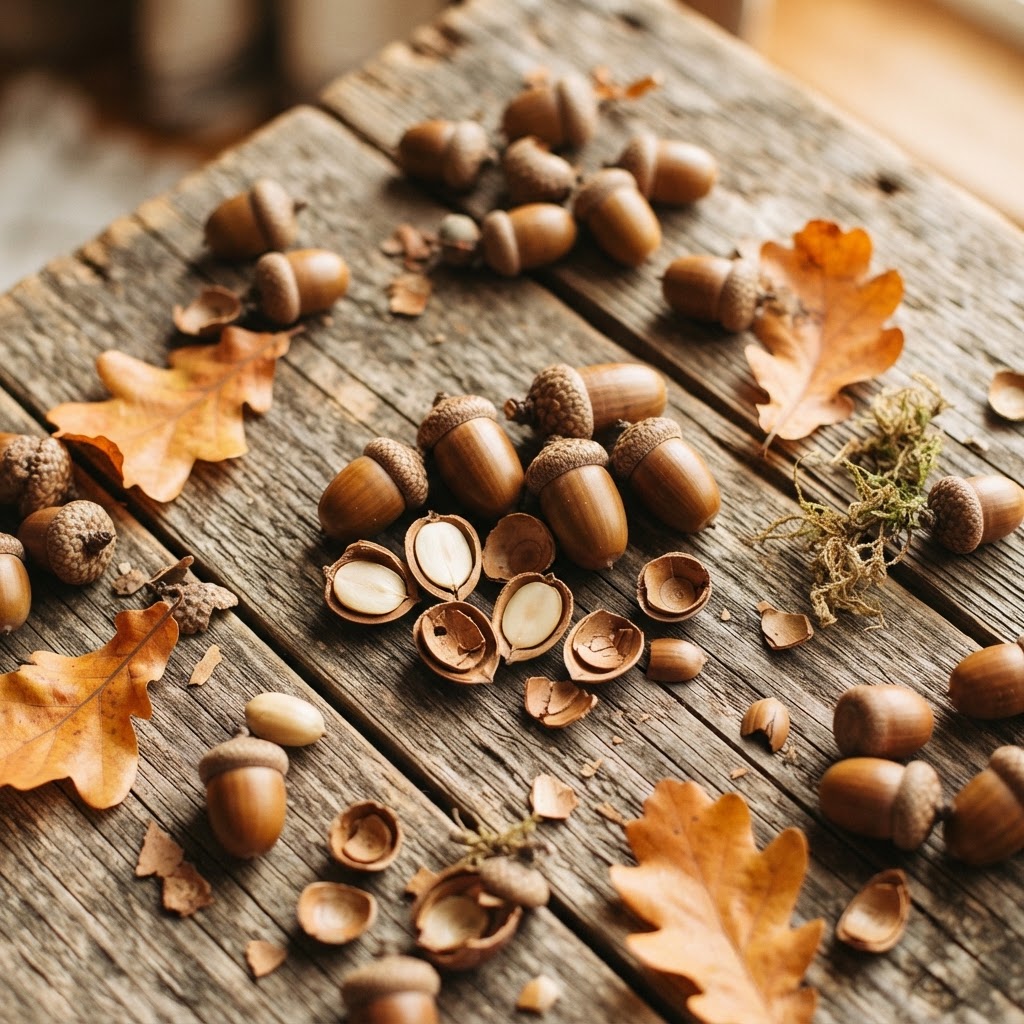
Acorns are the nuts of oak trees — one of the oldest and most abundant wild foods on earth. For thousands of years they were a staple grain for Indigenous peoples across North America, Europe, Asia, and North Africa, ground into flour and baked into breads, porridges, and cakes.
Raw acorns are bitter and astringent due to high levels of tannins, but once leached they reveal a sweet, nutty, chestnut-like flavor. They ripen and drop in autumn, making the acorn harvest a defining seasonal event wherever oaks grow — from California's tribal lands to the acorn-jelly kitchens of Korea.
White Oak Acorns
From the white oak group (Quercus alba and relatives). Lower in tannins and naturally sweet — many can be eaten raw or with only light leaching. Prized by foragers.
Red Oak Acorns
From the red oak group (Quercus rubra and relatives). Higher in tannins and more bitter, requiring thorough leaching. They take two years to mature on the tree.
Live Oak Acorns
Small, plump nuts from the evergreen live oak (Quercus virginiana), common across the American South. Relatively sweet and a traditional food of Gulf Coast peoples.
Bur Oak Acorns
Large acorns with a fringed cap, from Quercus macrocarpa. Among the biggest North American acorns, with a good flavor once leached and a favorite for flour.
Cork Oak Acorns
From the Mediterranean cork oak (Quercus suber). Sweet nuts traditionally eaten in Iberia and used to fatten the famed Iberian pigs.
Serrata (Sawtooth) Acorns
Asian species (Quercus acutissima) valued in Korea and Japan for dotorimuk and acorn starch; the source of much commercial acorn powder.
Acorns fall from September through November. Gather them promptly once they drop — they spoil quickly on damp ground and are eaten by wildlife. Choose nuts that are plump, heavy, and free of small exit holes (a sign of weevil infestation).
Float-test your harvest in water: acorns that sink are sound and worth keeping; those that float are often hollow, moldy, or grub-eaten and should be discarded.
White oak acorns (rounded lobes on the leaves) are sweeter and need less processing; red oak acorns (pointed lobes) are more bitter but store better thanks to their higher tannin content. In markets, look for Korean or Italian acorn flour and jelly, which are shelf-stable, leached, and ready to use.
Dry freshly gathered acorns in a single layer in a warm, well-ventilated spot for one to two weeks until the kernels rattle loosely inside the shell. Once fully dry, whole acorns keep for months in a cool, dry place. Shelled and leached kernels should be frozen; acorn flour keeps several months refrigerated or up to a year frozen.
Why leach: Raw acorns are rich in bitter tannins that make them unpalatable and can cause digestive distress. Leaching removes these tannins and reveals the sweet, nutty flavor.
Cold leaching: Crack the shells, remove the kernels, and grind them coarsely. Submerge the meal in cold water, changing the water several times a day for 3–7 days until the water stays clear and the bitterness is gone. Cold leaching preserves the starch, making the resulting meal ideal for baking.
Hot leaching: Boil the shelled kernels in several changes of water until the bitterness subsides — much faster (hours rather than days) but washes out some starch, leaving a meal better suited to porridge and jelly than bread.
After leaching: Drain thoroughly and dry the meal in a low oven or dehydrator, then grind to flour. Store in the fridge or freezer.
Acorn Flour Bread
Use leached, dried acorn flour alone or blended with wheat flour to bake dense, nutty loaves and flatbreads — a staple of Indigenous and early European baking.
Dotorimuk (Acorn Jelly)
A Korean classic — simmer acorn starch with water, then set into a firm, earthy jelly. Served sliced with a savory soy-sesame dressing as a cooling salad.
Acorn Porridge
Cook leached acorn meal with water or milk into a hearty porridge, sweetened with honey or maple. A traditional breakfast across many acorn cultures.
Roasted Acorns
Roast leached acorns in oil and salt for a snack resembling chestnuts, or grind roasted nuts as a coffee-like caffeine-free brew.
Acorn Soup
Simmer leached acorns into thick, comforting soups, often enriched with squash, beans, or bone broth — a cold-weather tradition.
Acorn Cake
Fold acorn flour into cakes and cookies for a moist, nutty crumb; pairs beautifully with autumn spices and maple glaze.
Drying: Fully dried whole acorns keep through the winter in a cool, dry, rodent-proof container — the traditional way to store a year's supply of acorn flour.
Flour: Leached, dried, and ground acorn flour freezes beautifully for up to a year, preserving its oils from going rancid.
Canned/Jarred: Commercial Korean acorn starch (dotorimuk garu) and Italian acorn products are shelf-stable pantry options for home cooks who don't forage.
Acorns are remarkably nutritious — rich in complex carbohydrates, healthy unsaturated fats, and protein. A single ounce provides a good amount of energy, which is why they were a survival staple.
They are a good source of vitamin B6, folate, manganese, potassium, and dietary fiber. The high tannin content, once leached, leaves behind beneficial antioxidants.
Acorn flour is naturally gluten-free, making it a valuable baking alternative for those avoiding wheat, and its low glycemic carbohydrates provide sustained energy.
A single mature oak can drop more than 10,000 acorns in a good year — yet oaks only produce these massive "mast" crops every 2–5 years in events called mast years.
Acorns were so central to Native California life that whole cuisines, songs, and ceremonies revolved around the harvest, and acorn mush is still served at tribal gatherings today.
The famed Iberian ham (jamón ibérico) is often finished on acorns (bellota); pigs fattened on fallen acorns produce some of the world's most prized pork.
Korea's dotorimuk is so beloved that acorn starch is sold commercially nationwide — and the jelly's earthy flavor is considered a taste of autumn nostalgia.
Wherever oaks grow, autumn acorn harvests are marked by festivals and gatherings celebrating this ancient food:
Dotorimuk Festival
Namwon, South Korea
🗓 October 2026 (annual autumn harvest)
Celebrates the Korean tradition of making dotorimuk (acorn jelly). Visitors can forage acorns in the forests and watch the traditional leaching and jelly-making process.
California Indigenous Acorn Gathering
Various tribal lands, California, USA
🗓 September–November 2026
Native California tribes such as the Miwok and Pomo host acorn harvest gatherings, honoring a staple food that sustained Indigenous peoples for thousands of years.
Festa della Ghianda (Acorn Festival)
Sardinia & rural Italy
🗓 October 2026
Rural Italian communities celebrate the autumn oak harvest, traditionally using acorns to feed pigs (prosciutto di ghianda) and grinding sweet acorns for rustic breads and cakes.
Wild abundance: Acorns require no plowing, planting, or irrigation — oak forests produce them freely each autumn, making acorn foraging one of the most sustainable food sources available.
Ecosystem keystone: Oaks are keystone species supporting hundreds of insects, birds, and mammals. Harvesting a modest share of acorns leaves plenty for wildlife and forest regeneration.
Global range: Oaks span the temperate Northern Hemisphere — North America, Europe, the Mediterranean, and East Asia — and acorn traditions survive from California's tribal nations to Korea, Italy, and the Iberian peninsula.
In-Season Recipes with Acorns
Seasonal recipes featuring Acorns right now
Coming Soon
All Other Recipes with Acorns
Coming Soon